


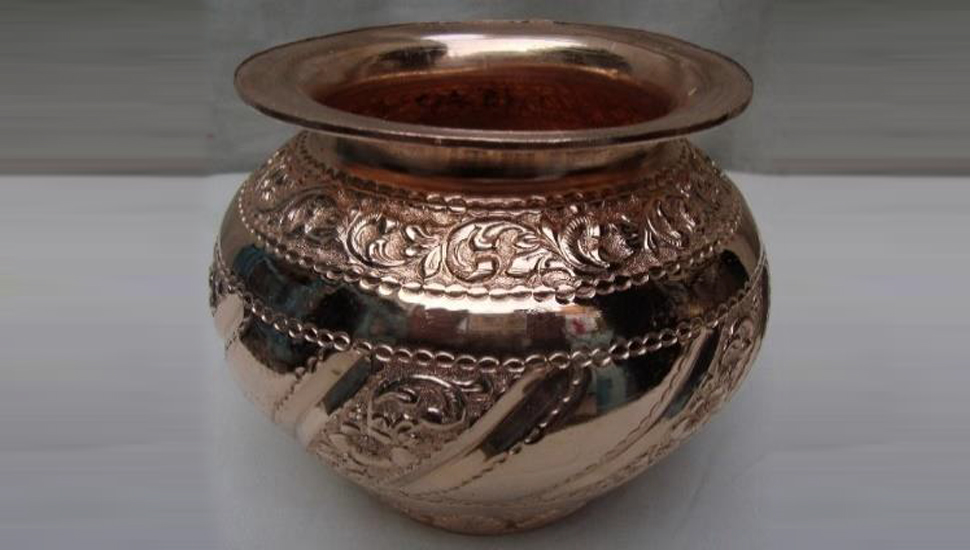
Banaras, also known as Varanasi or Kashi, is famed not just for its spiritual and cultural significance but also for its rich heritage in traditional crafts. Among these, metal casting stands out as a time-honored tradition that showcases the city’s artistic excellence and deep-rooted connection to sacred rituals. This intricate craft, passed down through generations, continues to enchant art lovers and spiritual seekers alike.
In This Article:
Historical Background:
Metal casting in Banaras dates back over a thousand years, with its origins deeply intertwined with temple culture. Ancient scriptures and archaeological findings suggest that metal idols and ritual items were crafted here during the Gupta period and gained further prominence in the medieval era when Banaras became a thriving center of Hindu learning and devotion.
The art was historically practiced by a community known as the Kansaris, who were experts in working with bronze, brass, copper, and even panchaloha (a sacred alloy of five metals). These artisans played a vital role in creating idols, temple bells, ritual lamps (deepams), and other sacred articles used in daily puja.
Crafting Process and Techniques:
The traditional method used is the “lost-wax casting technique” or “cire-perdue”, a highly skilled and time-consuming process. The steps include:
- Model Creation: A wax model of the object is sculpted by hand.
- Clay Moulding: Layers of fine clay are applied over the wax model to create a mould.
- Wax Removal: The mould is then heated, causing the wax to melt and drain out, leaving a cavity.
- Metal Pouring: Molten metal is poured into the cavity.
- Cooling and Breaking: Once cooled, the clay mould is broken to reveal the metal piece.
- Finishing: The surface is polished, carved, and sometimes inlaid with silver or gold.
This method allows for high precision and intricate detailing, which is why Banaras metal icons are revered for their lifelike expressions and sacred geometry.
Types of Items Produced:
- Religious Idols: Of gods like Vishnu, Shiva, Lakshmi, and Ganesha.
- Temple Bells & Ghantas: Tuned for specific aural frequencies.
- Arti Lamps & Kalash: Used in daily rituals and temple ceremonies.
- Urli Bowls & Decorative Plates: Often gifted during weddings or festivals.
- Customised Orders: For temples across India and abroad.
Cultural and Spiritual Significance:
Each piece cast in Banaras is more than an artifact; it is a sacred embodiment of devotion. Artisans often perform ritual purification before casting idols, and recite mantras to ensure spiritual sanctity. The objects are not just decorative—they’re infused with meaning, energy, and tradition.
Challenges Faced:
- Declining Artisan Population: Younger generations are shifting to other professions due to lack of stable income.
- Cheap Machine-Made Alternatives: These threaten the market for handcrafted pieces.
- Rising Raw Material Costs: Copper and bronze are expensive, making the craft less affordable.
- Lack of Government Support: Compared to other crafts, metal casting receives limited promotion or subsidies.
Preservation and Revival Efforts:
- GI Tag Recognition: Varanasi Metal Reposée and Casting Crafts have received a Geographical Indication (GI) tag, ensuring protection for authentic products.
- Skill Training Centers: NGOs and design institutes like NID are collaborating with artisans for design innovation and product diversification.
- ODOP Scheme: Under the One District One Product scheme, metal casting has been identified for support in Varanasi.
- Online Marketplaces: Artisans are now selling directly through e-commerce platforms, expanding their reach globally.
Moving Ahead:
Banaras metal casting is not just a form of livelihood—it is a living tradition rooted in devotion, precision, and beauty. As we move forward in a mechanized world, preserving this ancient art form becomes a responsibility shared by governments, consumers, and cultural custodians. Every handcrafted bell, every cast idol, is a timeless whisper from the past, resonating with spiritual and artistic depth.
By – Nikita
Also Read – Igniting Change: An Interview with Deepa Baldoshia Chaudhary