


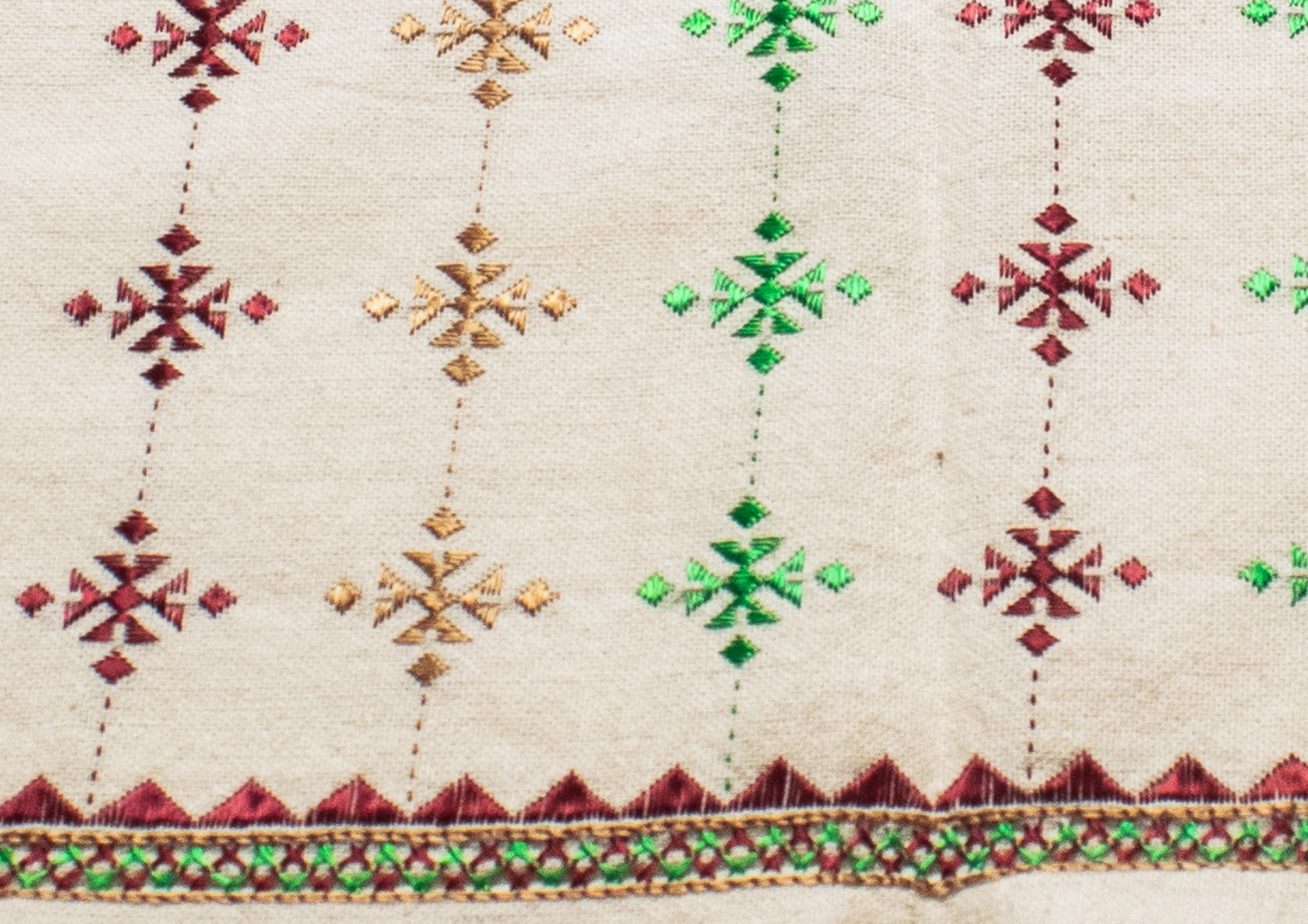
In the arid landscapes of Kutch, where tradition is stitched into everyday life, Suf embroidery continues to stand out as one of Gujarat’s most intellectually rich and visually striking textile arts. Known for its precise geometry and meditative process, Suf embroidery is once again in focus as artisans, designers, and cultural institutions work to preserve and reintroduce the craft to contemporary audiences. The Gujarat Suf Embroidery was granted the GI tag in 2024, thus marking it as a symbol of culture.
What Is Suf Embroidery?
Suf embroidery is a traditional hand-embroidery technique practiced primarily by the Meghwal and Sodha communities of Kutch, Gujarat. Unlike freehand embroidery styles, Suf is entirely based on counted threads, meaning the artisan never draws the design on fabric. Instead, the motif emerges from carefully counting warp and weft threads on a coarse cotton base, usually khadi.
The result is a geometric, symmetrical pattern that resembles Islamic architectural forms, mandalas, or kaleidoscopic mirrors. The embroidery is traditionally done using silk or cotton threads in rich shades of red, black, indigo, maroon, and ochre.
The Philosophy Behind the Craft
The word Suf is derived from “Sufism,” and the embroidery mirrors its philosophy. Artisans describe the process as deeply spiritual and introspective. Since the design exists only in the mind, the act of embroidery becomes a form of concentration and inner discipline.
A single mistake in counting threads can disrupt the entire pattern, making patience and mental clarity essential. Traditionally, women embroidered Suf pieces during quiet hours, often working in silence.
Motifs and Design Language
Suf embroidery is instantly recognisable for its sharp geometry. Common motifs include:
- Eight-pointed stars
- Squares within squares
- Diamonds and concentric patterns
- Floral geometry interpreted through straight lines
The embroidery is always worked from the reverse side of the fabric, a unique feature that ensures the final design appears perfectly neat and symmetrical on the front.
Traditional Uses
Historically, Suf embroidery adorned household textiles such as:
- Pillow covers
- Torans (door hangings)
- Wall panels
- Dowry textiles
These pieces were often heirlooms, passed down through generations, carrying both aesthetic and emotional value.
Challenges and Decline
Like many indigenous crafts, Suf embroidery faced decline due to industrial textiles, migration, and lack of sustained income. The time-intensive nature of the craft, sometimes taking weeks for a single piece, made it economically unviable for younger artisans.
Additionally, the craft’s dependence on mental calculation rather than templates made it difficult to teach quickly, limiting large-scale production.
Revival and Contemporary Interest
In recent years, Suf embroidery has witnessed renewed attention. Craft organisations, NGOs, and design institutions have begun working closely with Kutchi artisans to ensure fair wages and market access. Designers are incorporating Suf motifs into modern products such as
- Cushion covers and upholstery
- Handbags and clutches
- Wall art for urban homes
- Limited-edition fashion panels
Museums and exhibitions focusing on Indian textile heritage have also played a crucial role in repositioning Suf embroidery as a slow, luxury craft rather than a folk curiosity.
Suf Embroidery in Today’s Cultural Landscape
At a time when handcrafted, sustainable, and mindful products are gaining global appeal, Suf embroidery aligns seamlessly with contemporary values. Its emphasis on precision, patience, and minimalism resonates strongly with modern aesthetics while remaining rooted in tradition.
Kutch artisans are now gaining recognition beyond regional markets, as national craft fairs and international textile platforms showcase their Suf pieces.
A Craft That Thinks Before It Stitches
More than an embroidery technique, Suf is a discipline of the mind. Each stitch is a decision, each pattern a quiet meditation. As Gujarat’s Suf embroidery adapts to new contexts without losing its essence, it continues to remind us that some of the most powerful designs are not drawn but remembered. In every counted thread lies a legacy, patiently waiting to be seen.
By – Sonali