


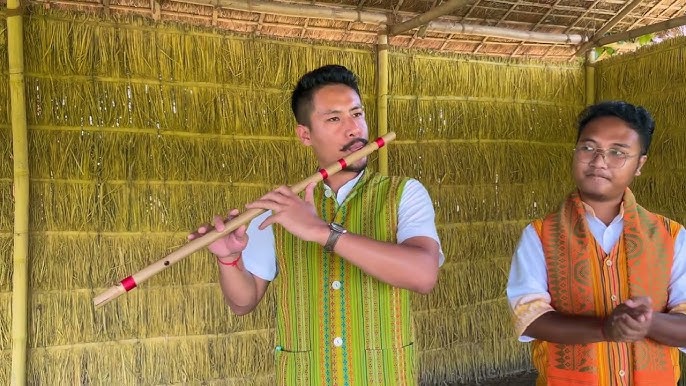
The soft, resonant notes of the Sifung, the traditional flute of the Bodo community, are once again finding prominence in Assam’s cultural landscape. Rooted deeply in the indigenous heritage of the Bodos, the Sifung is not merely a musical instrument but a symbol of identity, ritual, and oral tradition. Recent cultural initiatives, academic interest, and youth-led performances have contributed to a renewed focus on preserving and popularising this ancient wind instrument.
What is the Sifung?
The Sifung is a long bamboo flute traditionally played by the Bodo people of Assam and neighbouring regions. Typically made from a single piece of bamboo with five finger holes, the Sifung produces a mellow, earthy sound that closely mirrors nature. Unlike modern flutes, it does not follow standardized musical scales but relies on oral knowledge and intuitive playing styles passed down through generations.
Historically, the Sifung has been associated with pastoral life, especially among Bodo youths who played it while grazing cattle or during leisure hours in villages.
Cultural and Ritual Significance
The Sifung holds a sacred place in Bodo cultural practices. It is an integral part of folk dances such as Bagurumba, where its tunes accompany rhythmic movements inspired by nature. The instrument is also played during community festivals like Bwisagu, the Bodo New Year celebration, symbolising renewal, harmony, and joy.
In Bodo folklore, the Sifung is often linked to themes of love, longing, and connection with the land. Elders recall how the sound of the flute once served as a form of communication, expression, and storytelling in pre-modern Bodo society.
Decline and Modern Challenges
Over the years, the Sifung witnessed a decline due to urbanisation, shrinking bamboo groves, and the dominance of electronic and mainstream musical instruments. Many traditional artisans who knew the art of making and playing the Sifung aged without successors, putting the craft at risk.
Additionally, the lack of formal documentation and structured training systems made it difficult for younger generations to learn the instrument in an era driven by digital music education.
Revival Efforts and Youth Participation
In recent times, cultural organisations, local artists, and educational institutions have stepped in to revive interest in the Sifung. Workshops, folk music festivals, and school-level cultural programs across Bodoland Territorial Region (BTR) have reintroduced the flute to young learners. Also, it received a GI tag in 2024, adding to it’s revival flame.
Young Bodo musicians are now blending Sifung melodies with contemporary arrangements, presenting them on social media platforms and regional music events. This fusion approach has helped the instrument reach wider audiences while retaining its traditional essence.
Academic and Institutional Support
Researchers from universities in Assam have also started to write about Bodo music traditions, such as the Sifung, in research papers, audio archives, and ethnographic studies. Cultural bodies and autonomous councils are supporting such initiatives by funding folk art preservation and promoting traditional performances at state and national platforms.
There is also growing demand for including indigenous instruments like the Sifung in formal music and cultural studies curricula.
A Living Heritage Moving Forward
The resurgence of the Sifung flute reflects a broader movement to reclaim and celebrate indigenous knowledge systems. For the Bodo community, the instrument is a reminder of their close relationship with nature, simplicity of life, and rich artistic legacy.
As Assam continues to embrace its diverse cultural roots, the Sifung’s gentle notes stand as a testament to the resilience of folk traditions in a rapidly modernising world. With sustained support and youth engagement, the Bodo Sifung flute is poised to remain a living, breathing symbol of cultural pride for generations to come.
By – Sonali