


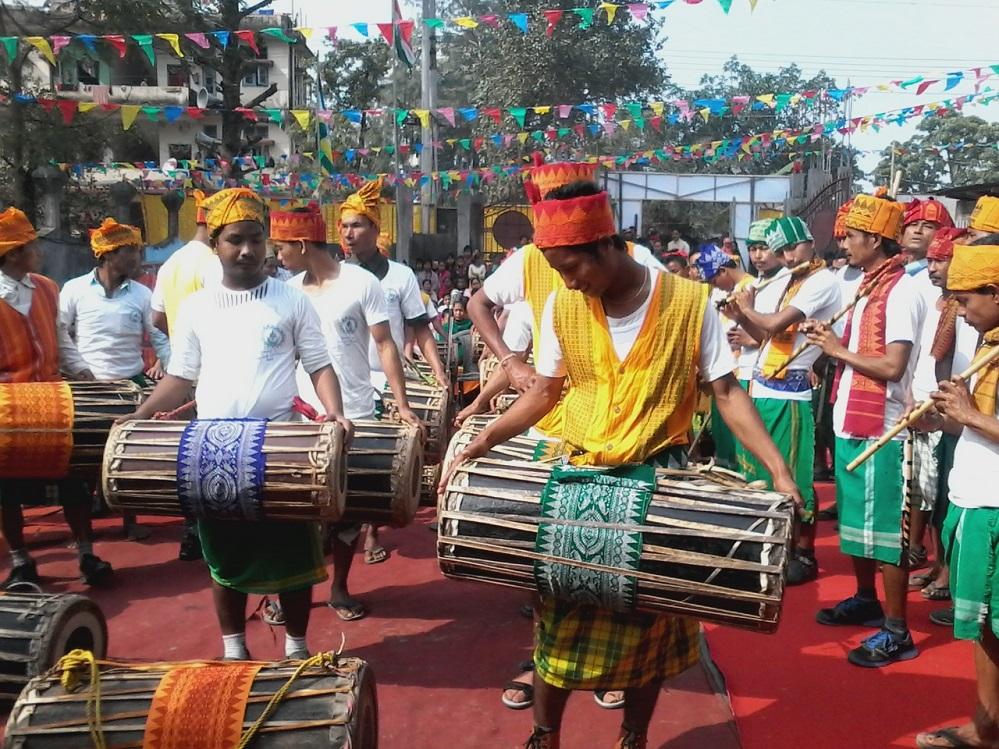
The Bodo Kham, a traditional drum of the Bodo community in Assam, has emerged as not just a musical instrument but a symbol of cultural identity and artistic heritage in the Bodoland Territorial Region (BTR) and beyond. Recently, it received formal recognition with a Geographical Indication (GI) tag in 2024, acknowledging its unique craftsmanship and cultural significance.
What’s the Bodo Kham?
The Kham is a long cylindrical drum indigenous to the Bodo people, one of the largest tribal communities in Northeast India. Roughly 3½ to 4 feet in length and about 2½ to 3 feet in diameter, the instrument is typically crafted from the trunk of hardwood trees like Alstonia scholaris, jackfruit, mango, or Sterculia villosa. The drumheads are traditionally made from goatskin, producing a deep, resonant sound that lays the rhythmic foundation for Bodo music and dance.
Unlike smaller regional drums, the Bodo Kham is notable for its size and the distinctive tonal richness it delivers. Its asymmetric shape, smaller on one end and larger on the other, and robust construction enable it to sustain powerful beats that drive traditional performances.
Cultural Significance and Traditions
For the Bodo community, the Kham is more than a musical instrument; it is a cultural emblem. It plays a central role in festivals such as Bwisagu (the Bodo spring festival), religious ceremonies like Kherai and Garja pujas, and performances of traditional art forms, especially the renowned Bagurumba dance.
During Bwisagu celebrations, rhythmic beats of the kham resonate across villages, accompanying dancers and musicians. Young and old, clad in traditional attire like dokhnas and aronai, join in song and dance, embodying the community spirit and continuity of ancestral practices.
Beyond its ceremonial use, the Kham is integral to Bodo folk music ensembles, often played alongside other instruments such as the sifung (bamboo flute), serja (stringed instrument), and jotha (percussion). These ensembles create the auditory landscape of Bodo cultural life.
Craftsmanship and Heritage Protection
The Geographical Indication (GI) tag, granted in 2024, represents an important turning point in the protection and promotion of the Kham. A GI tag ensures that only authentic drums produced in designated regions and using traditional methods can be marketed as Bodo Kham. This recognition boosts local artisans, preserves age-old craftsmanship, and safeguards the instrument from imitation.
Artisans often spend weeks to months crafting a single Kham, combining their profound understanding of materials with traditional techniques. The involved process and cultural embedment underscore the instrument’s value not just as music gear, but as living heritage passed down through generations.
Community Engagement and Revitalization
Recent cultural programs have further spotlighted the importance of the Kham. In early 2022, traditional Bodo musical instruments, including the Kham, were ceremonially distributed at cultural stages during pre-Bwisagu events in Udalguri, fostering renewed interest among youth and village performers alike.
Local organizations, community leaders, and cultural bodies such as Bodo Sahitya Sabha continue to champion awareness, often integrating musical education and cultural heritage into larger language and art initiatives throughout Assam and neighboring regions. These efforts connect the younger generation with their ancestral roots, ensuring that traditions like Kham-making and performance remain vibrant and relevant.
Looking Ahead: Preserving Rhythm and Identity
As the Bodo community experiences broader recognition for its language, art, and identity—including government policies to promote the Bodo language in official and educational spheres—instruments like the Kham serve as powerful cultural anchors.
In a world of rapid cultural change, the Bodo Kham stands as a testament to resilience, continuity, and pride, echoing not only the rhythms of traditional festivals but also the enduring spirit of a community holding fast to its heritage.
By – Sonali