


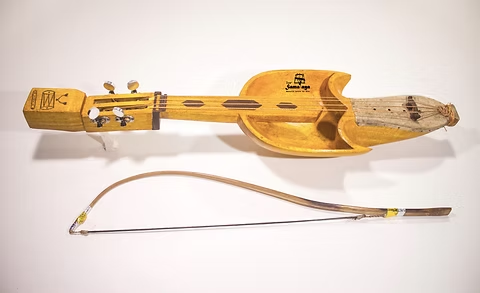
The Bodo Serja, a traditional string instrument associated with the Bodo community of Assam, is seeing renewed attention as heritage stakeholders push to document, teach, and protect Bodo musical traditions. Official listings now place the Serja within India’s Geographical Indications (GI) ecosystem—an important marker for cultural identity and artisan recognition.
What Is the Bodo Serja?
The Serja is described in Government of India handicrafts documentation as a traditional string instrument used in Bodo cultural life, historically accompanying prayers and folk songs.
In form, it is presented as a harp-like instrument with three strings and crafted to produce melodic tones suited for traditional performance contexts.
GI Recognition: What It Means for the Serja
A GI tag does not automatically stop imitation in practice, but it strengthens legal protection for the name and identity of the product and supports artisan communities by formalising origin-linked recognition.
How the Serja Is Made: Materials and Craft
According to the Government of India handicrafts profile, artisans typically select wood such as Alstonia scholaris and Artocarpus heterophyllus for acoustic and carving suitability. The process described includes careful body carving, fitting and tuning, and then attaching three strings, traditionally made from natural fibres.
The same official profile highlights that the Serja is generally kept close to its natural wood finish, with minimal ornamentation, keeping the focus on function, resonance, and craftsmanship.
Cultural Transmission: Training, Performance, and Visibility
One of the strongest indicators of “revival” is structured training for youth and students. In September 2024, a 10-day cultural workshop held at Bodoland University offered hands-on training in traditional Bodo dance forms and instrumental skills, specifically mentioning training on the Kham, Sifung, and Serja.
This matters because instruments like the Serja survive not just through display but through practice—learning how to tune, play, and perform in ensembles across festivals and community events.
Challenges and the Road Ahead
Even with formal recognition, the Serja faces familiar pressures: changing entertainment preferences, fewer apprentices for artisan crafts, and limited monetisation pathways for folk musicians. A realistic preservation agenda therefore needs two tracks:
- Skills continuity: regular workshops, school/college-level culture programs, and community mentorship (so making and playing both survive).
- Market access: curated performances, institutional procurement for cultural centres, and ethical e-commerce storytelling that credits origin and makers—consistent with GI identity.
Why the Serja’s Spotlight Matters
The Bodo Serja is more than a musical object—it is a living cultural practice tied to community memory, spiritual expression, and folk performance traditions. With GI recognition now appearing in official lists and structured training efforts underway, the challenge is to ensure the instrument’s future is defined not only by documentation but also by continued performance, craftsmanship, and intergenerational transfer.
By – Sonali