


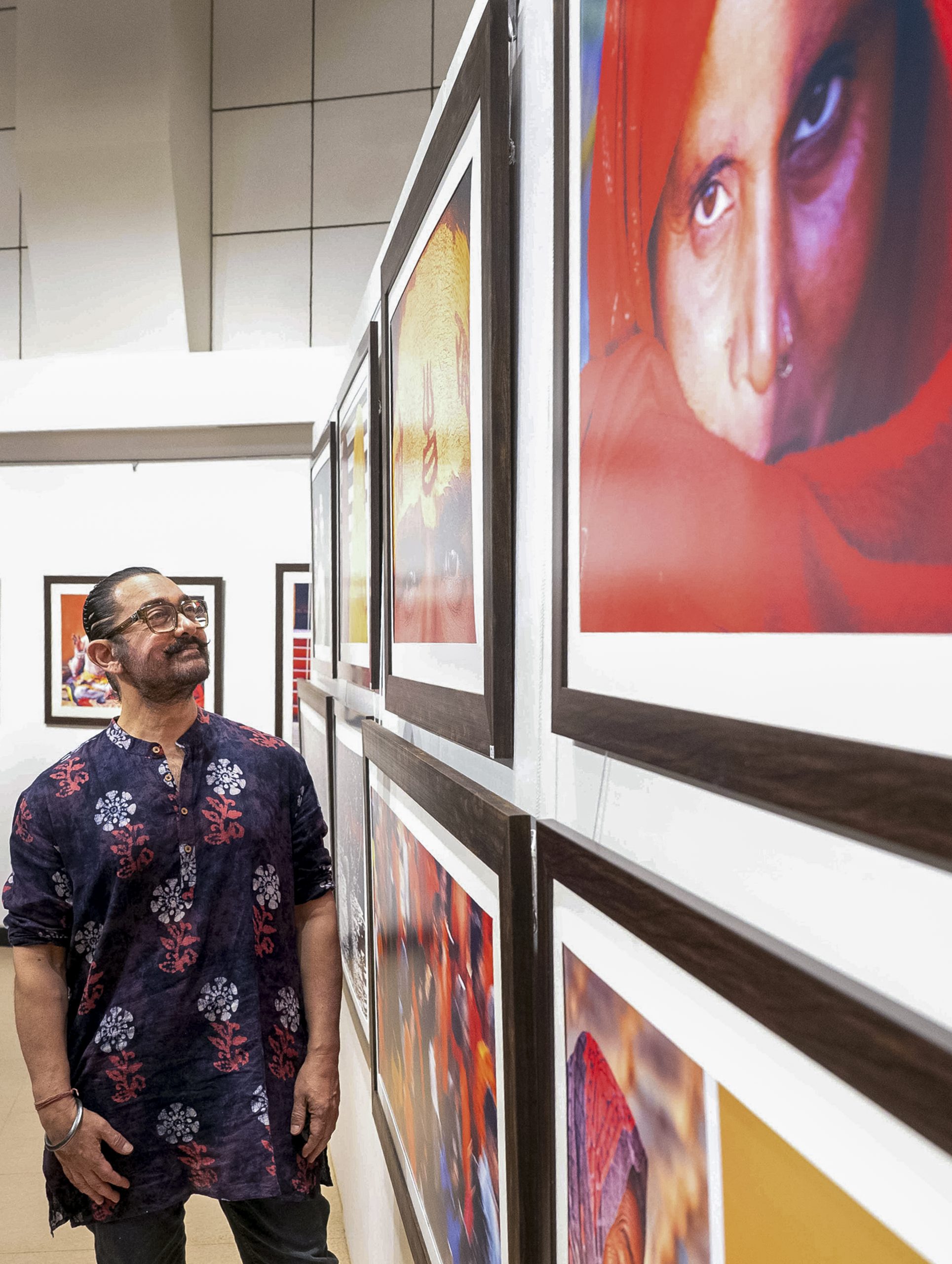
Aamir Khan has once again underlined why his long-discussed Mahabharat dream remains on pause: because, in his words, it cannot afford to be handled casually. In an interview, the actor-producer described the epic adaptation as a “big responsibility”—not merely a film idea, but a project tied to Indian cultural memory and expectations across generations.
The Quote That Sets the Weight
Aamir’s core point is simple: if you do it, you must do it right. He noted that Indians are deeply connected to the epic and said he wants to proceed only when he is confident the final work can make the country feel proud. He also repeated his oft-quoted line: “You can let Mahabharata down, Mahabharata will never let you down.”
“Not Just a Film” — Why He Calls It a Cultural Mission
The interview coverage describes Aamir’s approach as rooted in cultural sensitivity: Mahabharat, for him, is not an ordinary entertainer pitch but a cultural mission, precisely because it is “fundamental” to how many Indians grow up hearing and interpreting its ideas of duty, ethics, conflict, and consequence.
Scale, Ambition — and the Global Pitch
Aamir also argued that the epic’s storytelling scale is unmatched, comparing it to global blockbuster franchises like The Lord of the Rings and Avatar, and calling Mahabharat the “mother of it all.” The subtext is clear: done well, it can be a world-stage Indian narrative—not a borrowed template.
Where the Project Actually Stands
At this stage, what’s verified is intent and caution, not production specifics. In earlier conversations (including with trade analyst Komal Nahta), Aamir has indicated that the writing process is the real starting line—and that it will take time. He has even described the undertaking in spiritual terms: “It is not a film, it’s a yagna.”
A Civilisational Horizon Awaits
Aamir’s message is not hype—it is restraint. In an era of fast announcements, he is signalling slow reverence: if Mahabharat comes, it must arrive as an honourable adaptation—worthy of the weight it carries.
-By Manoj H