


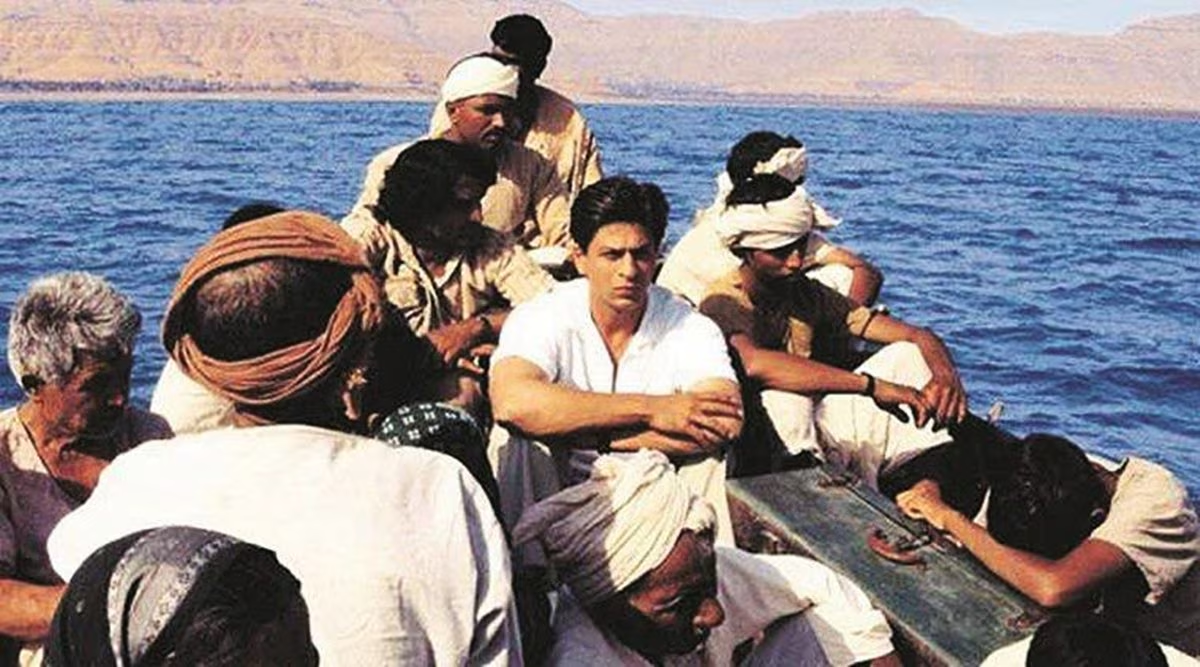
Patriotic cinema has long mirrored India’s evolving identity—capturing courage, sacrifice, and national pride from the early years after Independence to the era of streaming-led blockbusters. From black-and-white nation-building narratives in the 1950s to contemporary biographical dramas and war films in the 2020s, these stories have shaped collective memory and stirred public emotion. Below is a curated timeline of three defining patriotic films from each decade, tracing how the idea of “nation” has been imagined on screen.
1950s: Foundations of National Sentiment
Jagriti (1954) – A landmark film that fused entertainment with nation-building ideals. Set in post-Independence India, it follows a troubled boy transformed by education, discipline, and civic duty—values that resonated strongly in a newly sovereign nation.
Nastik (1954) – A socially charged drama remembered especially for its iconic patriotic song, “Dekh Tere Sansar Ki Haalat…,” which echoed post-Partition introspection, grief, and resilience.
Mother India (1957) – A defining national allegory where personal sacrifice becomes a metaphor for the country’s moral backbone and survival instincts in the aftermath of colonial rule.
1960s: War, Heroism, and the Republic’s Voice
Haqeeqat (1964) – One of Indian cinema’s most enduring war dramas, inspired by the 1962 Sino-Indian War. Its portrayal of soldiers’ grit and sacrifice helped set the template for later military narratives.
Shaheed (1965) – Manoj Kumar’s celebrated portrayal of Bhagat Singh brought revolutionary zeal and historical memory into the mainstream, shaping how generations visualised the freedom struggle.
Upkar (1967) – A quintessential nation-first story that linked individual responsibility with collective progress, propelled further by its stirring patriotic music and agrarian self-reliance message.
1970s: Identity, Belonging, and Moral Nationhood
Purab Aur Paschim (1970) – A diaspora-versus-roots narrative that framed cultural pride and Indian values as integral to patriotism, becoming a defining film of its decade.
Garam Hawa (1973) – A powerful, human portrait of Partition’s aftermath that explores belonging, loss, and the choice to stay—patriotism expressed through endurance rather than spectacle.
Hindustan Ki Kasam (1973) – A war-era drama that reinforced themes of duty and sacrifice, reflecting the decade’s growing appetite for stories that tied national security to personal courage.
1980s: Grand Historical Frames and Mainstream Patriotism
Kranti (1981) – A sweeping historical drama that anchored patriotic storytelling in larger-than-life resistance, blending spectacle with an emotional call to national unity.
Vijeta (1982) – A reflective coming-of-age film set against the Indian Air Force, presenting patriotism through training, discipline, and personal transformation rather than jingoism.
Karma (1986) – A mass entertainer that channelled the decade’s high-emotion nationalism, positioning love for the nation as both personal conviction and public duty.
1990s: The Military Film as a Mainstream Event
Roja (1992) – A turning point in patriotic cinema, bringing terrorism and internal security into the national conversation through an emotionally grounded narrative.
Border (1997) – A Republic Day staple that dramatised the 1971 Battle of Longewala with camaraderie, sacrifice, and rousing set pieces—cementing the modern war film’s place in popular culture.
Sarfarosh (1999) – Expanding the canvas beyond the battlefield, it connected policing, cross-border threats, and national integrity, redefining “patriotism” for a new era.
2000s: Globalised Patriotism and New Idioms
Lagaan (2001) – A sports drama that doubled as a colonial resistance story, turning collective unity and defiance into a globally understood metaphor.
LOC: Kargil (2003) – A large-scale recreation of the 1999 Kargil conflict, notable for its breadth, ensemble cast, and memorial-like tone.
Swades (2004) – A major shift in patriotic storytelling: the nation is not only defended at borders but also rebuilt through grassroots responsibility, service, and civic reform.
2010s: Nuance, Intelligence, and Contemporary Conflict
Airlift (2016) – Patriotic in a modern, civilian sense—centred on crisis leadership and the logistics of saving lives, rather than battlefield heroics.
Raazi (2018) – A restrained, emotionally complex thriller where duty is intimate and costly, presenting patriotism as silence, sacrifice, and moral ambiguity.
Uri: The Surgical Strike (2019) – A high-energy action drama that reflected the decade’s appetite for mission-focused narratives and contemporary military confidence.
2020s: Contemporary Patriotism and Heroic Biopics
Tanhaji: The Unsung Warrior (2020) – A spectacle-driven historical that blends identity, bravery, and cultural pride through a larger-than-life warrior narrative.
Sardar Udham (2021) – A deeply researched biographical drama that frames patriotism as memory, justice, and moral reckoning in the shadow of Jallianwala Bagh.
Shershaah (2021) – A widely watched modern-war biopic that made valour personal—rooting battlefield heroism in family, love, and loss.
Patriotism on Screen: A Living Legacy
From early classics that helped define civic ideals to modern films that explore intelligence operations, national trauma, and individual conscience, patriotic cinema has continuously evolved with India’s social and political landscape. Each decade has added a new lens—freedom struggle, war epic, identity drama, anti-terror narrative, social responsibility, or biographical tribute—making patriotic cinema a living archive of how India sees itself, remembers its past, and negotiates the meaning of national pride.
By – Sonali