


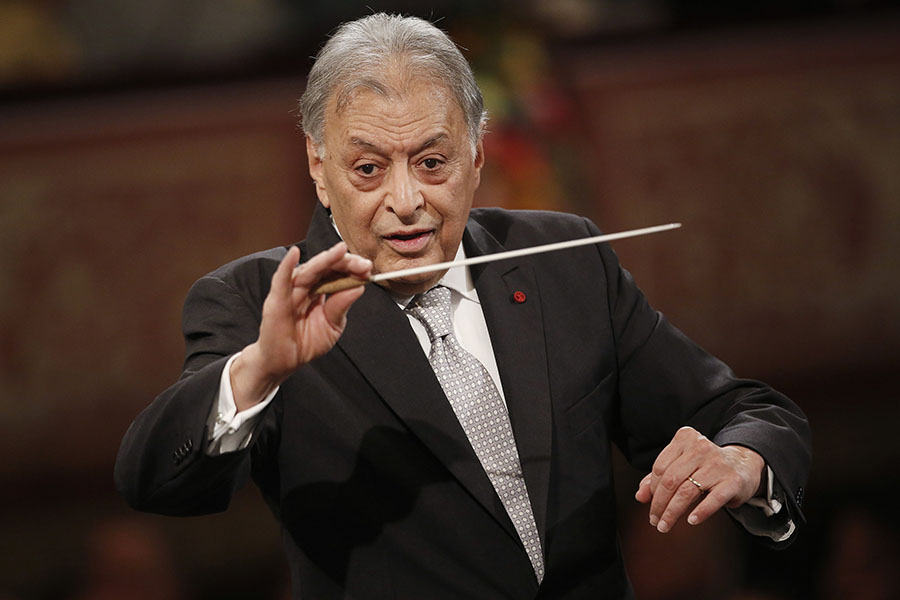
At 89, maestro Zubin Mehta remains a towering presence in global classical music—yet his most striking moment in a recent conversation with journalist Rajdeep Sardesai wasn’t about legacy or acclaim. It was a simple admission: he still has a lot to learn.
The conversation featured in India Today’s The Legends: Lives That Shaped A Nation, launched on Republic Day, spotlighting the lives and mindsets of India’s most enduring icons.
“Only the music…”
When asked what keeps him going after decades on the podium, Mehta’s answer returned to first principles—music itself. He spoke about the privilege of interpreting a tradition built over centuries, treating each rehearsal as a renewed responsibility rather than a routine.
He also brushed off praise with characteristic understatement—calling Sardesai’s introduction “highly exaggerated”—before joking that he doesn’t feel 90 at all.
The Mumbai roots that never left
Mehta credited his earliest immersion in music to his father, Mehli Mehta, who helped build Bombay’s Western classical ecosystem through the Bombay Symphony Orchestra—an influence Mehta openly acknowledges as foundational.
Why the line landed
In a culture that often equates seniority with certainty, Mehta’s learning-first posture is what makes the remark travel. The point wasn’t modesty for effect—it was a philosophy: longevity in art comes from staying curious.
Still on the world stage
Mehta is Music Director Emeritus of the Israel Philharmonic Orchestra, having retired from the post in October 2019 after a historic tenure.
And his schedule around his 90th year has included high-profile appearances tied to his Mumbai homecoming: the Belgrade Philharmonic’s announcements place him with major centres such as Vienna, Florence and Berlin, with Mumbai performances (Jan 15–16, 2026) also highlighted.
In the end, the takeaway is uncomplicated—and rare: the biggest legends don’t declare themselves finished. They keep showing up as students.
—By Manoj H