


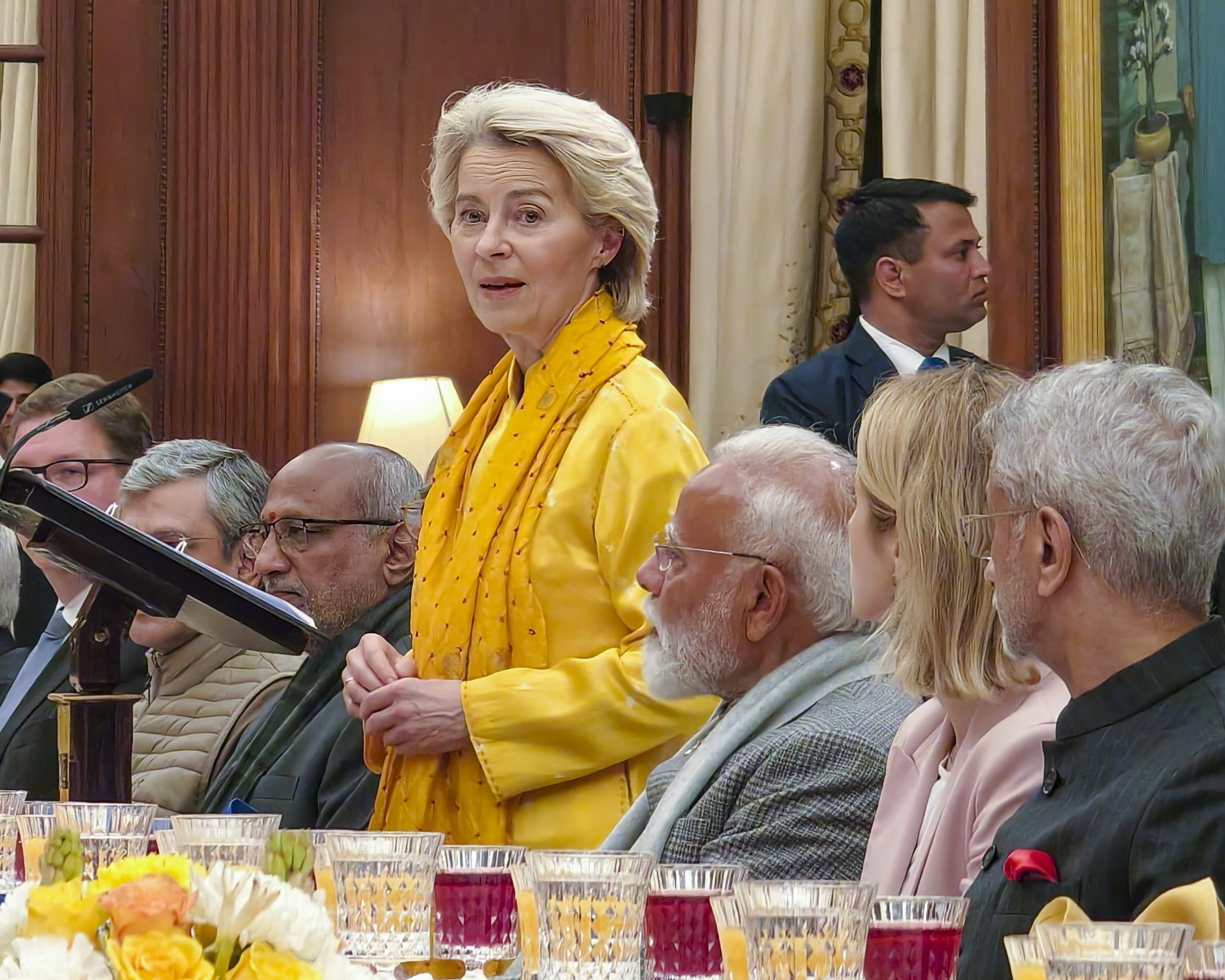
European Commission President Ursula von der Leyen, one of the chief guests at India’s 77th Republic Day celebrations alongside European Council President António Costa, drew attention not just for the high-level optics of the visit—but also for wardrobe choices that spotlighted Indian craftsmanship.
From Kartavya Path to summit engagements in New Delhi, her looks were widely read as soft diplomacy in silk—a cultural salute layered over a week of serious strategic and economic conversations.
Republic Day Look: A Banarasi Brocade Tribute
At the Republic Day parade on January 26 at Kartavya Path, von der Leyen wore a maroon-and-gold Banarasi (Benarasi) silk brocade bandhgala jacket, paired with off-white trousers. The ensemble, featuring traditional motifs and zari-style detailing, was widely viewed as a respectful nod to India’s handloom heritage on one of the country’s most symbolic national stages.
Lifestyle coverage credited the Republic Day bandhgala to designer Rajesh Pratap Singh, reinforcing the broader narrative of spotlighting Indian design and artisanship through a global diplomatic lens.
Summit Style: Euro-Blue Bandhgala by Anamika Khanna
The fashion narrative continued on January 27, with von der Leyen stepping out in a Euro-blue bandhgala attributed in lifestyle reporting to designer Anamika Khanna—a structured, contemporary take on an Indian silhouette, paired again with light-toned trousers. Commentators noted how the look balanced modern tailoring with Indian craft aesthetics, extending the “fashion diplomacy” thread beyond Republic Day.
Beyond the Outfit: When Soft Power Meets Hard Outcomes
Von der Leyen’s visit coincided with a major diplomatic and economic moment: the conclusion of the India-EU Free Trade Agreement, announced jointly by PM Narendra Modi along with António Costa and Ursula von der Leyen.
Official statements around the visit and the 16th India-EU Summit (Jan 25–27, 2026) framed the week as a milestone in the partnership—making the cultural symbolism of her attire feel aligned with the broader message of deeper India-EU ties.
Bottom line: the optics landed because the choices felt intentional, India-forward, and context-aware—a reminder that in modern statecraft, what leaders wear can quietly reinforce what they sign.
By – Sonali