


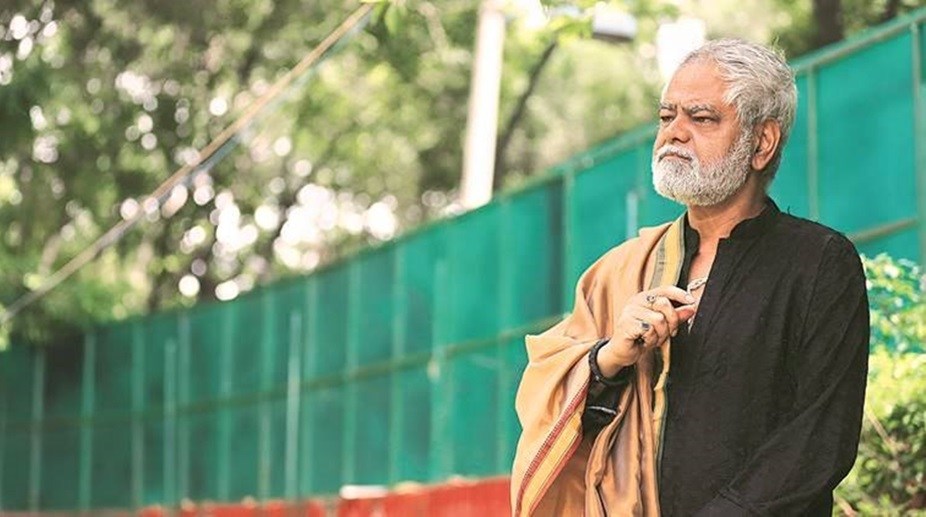
For an actor as prolific as Sanjay Mishra, the label of “comic relief” is both a compliment and a cage. In a recent interaction with the media, the veteran performer admitted that being repeatedly slotted into the same humour-driven space can get “irritating”—even as he acknowledged that the very stereotype has also kept the phone ringing through lean phases of his career.
It’s a conflict many character actors quietly live with: the industry’s need for predictable “ingredients” versus an artist’s urge to be seen in full spectrum.
“Producers know what they’re buying”
Mishra framed the issue with a simple metaphor—casting, he suggested, often works like cooking. Producers reach for what they believe will reliably deliver the desired flavour, and if a film needs a dependable punch of comedy, they call the actor who has done it consistently before.
That’s where the typecast starts to harden into a pattern: an actor becomes shorthand for a specific effect. In Mishra’s case, filmmakers have come to trust his timing, his spontaneity, and his ability to land laughs efficiently—sometimes even being perceived as someone who can “finish” comic beats quickly and cleanly.
The irritation is real—so is the gratitude
What makes Mishra’s comment resonate is the candour with which he holds both truths at once. On one hand, being offered the “same zone” repeatedly can feel creatively limiting, a flattening of craft into a single function. On the other, he pointed out that those familiar offers mattered when he had little to no work—typecasting, in that sense, wasn’t just an artistic compromise, but economic stability.
That duality is especially sharp in the Hindi film ecosystem, where “bankable” casting is often treated as risk management, and character actors—no matter how versatile—can be assessed through the narrow lens of what is easiest to sell.
A career bigger than the punchline
Mishra’s body of work has long suggested more range than the “funny guy” tag implies. A trained actor and a familiar face across decades of Hindi cinema, he has frequently slipped between tones—sometimes within the same film—without drawing attention to the mechanics of the switch. It’s precisely this ease that can become a trap: when an actor makes something look effortless, the industry begins to demand that effortlessness on repeat.
Recent coverage of his remarks also underlines that the frustration isn’t about comedy itself; it’s about only being seen as comedy, even after years of proving otherwise.
What’s next: Vadh 2 brings him back to a darker canvas
The timing of Mishra’s comments is notable because he’s also returning to the more intense universe of Vadh 2, once again sharing screen space with Neena Gupta. Reported details indicate the film is positioned as a “spiritual sequel” to Vadh and is written and directed by Jaspal Singh Sandhu, with production backed by Luv Ranjan and Ankur Garg under Luv Films.
That context matters: when an actor known for comedy steps into a darker, quieter narrative space, it becomes a live rebuttal to the stereotype—an attempt to expand how the industry (and audiences) categorise them.
The larger takeaway
Mishra’s honesty cuts through the usual binary of “artist vs. commerce.” He isn’t romanticising struggle, nor dismissing the value of the roles that made him popular. He is simply naming a professional reality: typecasting can be creatively suffocating, and still be the very thing that keeps an actor employed.
For audiences, it’s also a reminder to look twice. The next time Mishra appears as the “funny side character,” it may be worth noticing the craft beneath the punchline—and asking why an industry that benefits so much from that craft hesitates to offer him more kinds of stories.
By – Juhi