


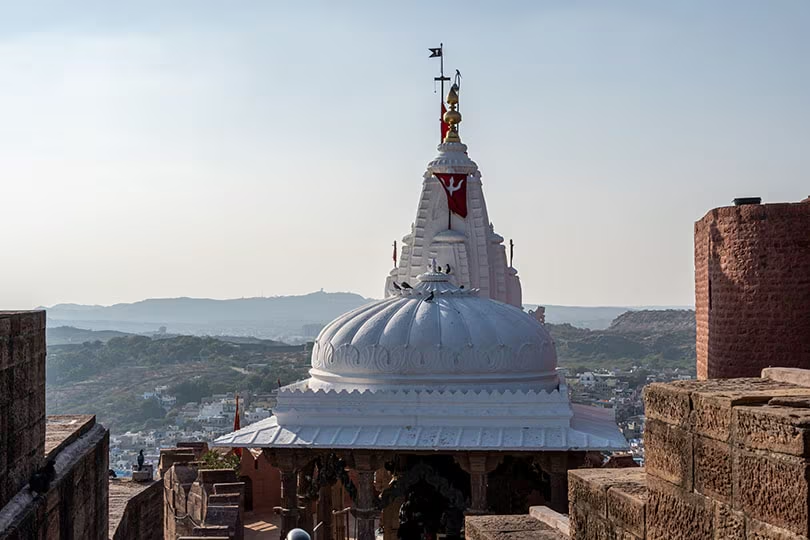
India’s sacred landscape continues to draw millions of devotees and tourists in 2025–26. Across regions, traditional pilgrimage routes are being supported by improved connectivity, site amenities, and annual yatra calendars—while communities and institutions work to preserve the rituals and heritage that make these journeys meaningful. From the Himalayan heights to ancient temples and Sikh shrines, these circuits reflect long-standing spiritual traditions embedded in India’s diverse religious life.
Char Dham Circuit – The Pinnacle of Hindu Pilgrimage
The Char Dham circuit, deeply rooted in Hindu tradition, consists of four sacred temples associated with the cardinal directions of India—Badrinath (North), Dwarka (West), Puri (East), and Rameshwaram (South). Together, these dhams are widely revered as a unifying pilgrimage across the subcontinent, often linked in popular belief to spiritual merit and the pursuit of liberation.
In parallel, the Chota Char Dham within Uttarakhand—Yamunotri, Gangotri, Kedarnath, and Badrinath—remains a major Himalayan circuit focused on devotion and purification in the mountains. This “small circuit of four abodes” typically sees peak pilgrim movement from April/May to October/November, when high-altitude routes and temples are generally open, depending on weather conditions.
A notable convergence within the Char Dham tradition is the Ramanathaswamy Temple at Rameshwaram, which is also counted among the 12 Jyotirlingas of Lord Shiva—bringing two revered pilgrimage streams together at one destination.
Shakti Peeth Circuit – Centres of Divine Feminine Energy
The Shakti Peeth tradition maps mythological sites associated with the goddess Sati, where, according to belief, parts (or ornaments) of her body are said to have fallen. Different texts and traditions enumerate the Shakti Peethas in varying ways—commonly cited lists include 51 or 52, while some traditions count more—across the Indian subcontinent. Many of these shrines in India are revered as powerful centres of the Divine Feminine, with strong regional histories and devotional practices.
Unlike the more standardised Char Dham yatra, Shakti Peeth journeys are often planned as custom multi-site pilgrimages, shaped by geography, family traditions, and regional devotional priorities. Devotees frequently include major Shakti shrines such as Kamakhya (Assam) and Kalighat (Kolkata); other prominent Shakti destinations—such as Vaishno Devi—are also widely visited and are regarded as Shakti centres in popular devotion (and as Shakti Peetha in some traditions).
Jyotirlinga Circuit – The Path of Shiva Worship
The 12 Jyotirlingas form another major pillar of Hindu pilgrimage, each representing a sacred manifestation of Lord Shiva. These shrines are spread across India—from Somnath in Gujarat and Kashi Vishwanath in Varanasi to Mallikarjuna in Andhra Pradesh, Mahakaleshwar in Ujjain, and Rameshwaram in Tamil Nadu.
Jyotirlinga temples are closely tied to sacred narratives, distinctive temple traditions, and historic architecture, offering pilgrims a blend of spiritual practice and cultural immersion. Completing all 12 is often viewed by devotees as a significant, once-in-a-lifetime journey of faith and introspection.
Sikh Pilgrimage Circuit – Gurudwaras & Spiritual Heritage
Sikh pilgrimage traditions centre on key Gurudwaras and historical sites associated with the lives of the Sikh Gurus. At the heart of this circuit is Sri Harmandir Sahib (Golden Temple) in Amritsar—among Sikhism’s most revered shrines—celebrated for its message of devotion, seva, and equality, with the Guru Granth Sahib enshrined at its spiritual core.
Other essential Sikh pilgrimage sites include the Takhts (seats of authority), such as Takht Sri Keshgarh Sahib in Anandpur Sahib—strongly associated with the founding of the Khalsa—and Takht Sri Hazur Sahib in Nanded. Additionally, high-altitude shrines like Hemkund Sahib in Uttarakhand draw thousands annually during the usual May–October window when access routes are open, with the season marked by ceremonial prayers.
State-level routes also shape Sikh travel patterns. For example, the Sikh Circuit in Bihar links Gurudwaras connected to Guru Gobind Singh’s life and legacy, highlighting pilgrimage narratives that extend beyond Punjab’s traditional heartland.
Evolving Traditions and Pilgrim Experiences
Pilgrimage circuits remain central to the cultural and spiritual identity of millions. With ongoing improvements in access, safety, and site facilities—alongside heritage and cultural initiatives—many sacred journeys are becoming more approachable for wider groups of pilgrims and visitors. At the same time, the enduring appeal of these circuits lies in the living traditions they carry: ritual practice, community memory, and the shared experience of faith that continues to shape India’s spiritual map in the 21st century.
By – Sonali