


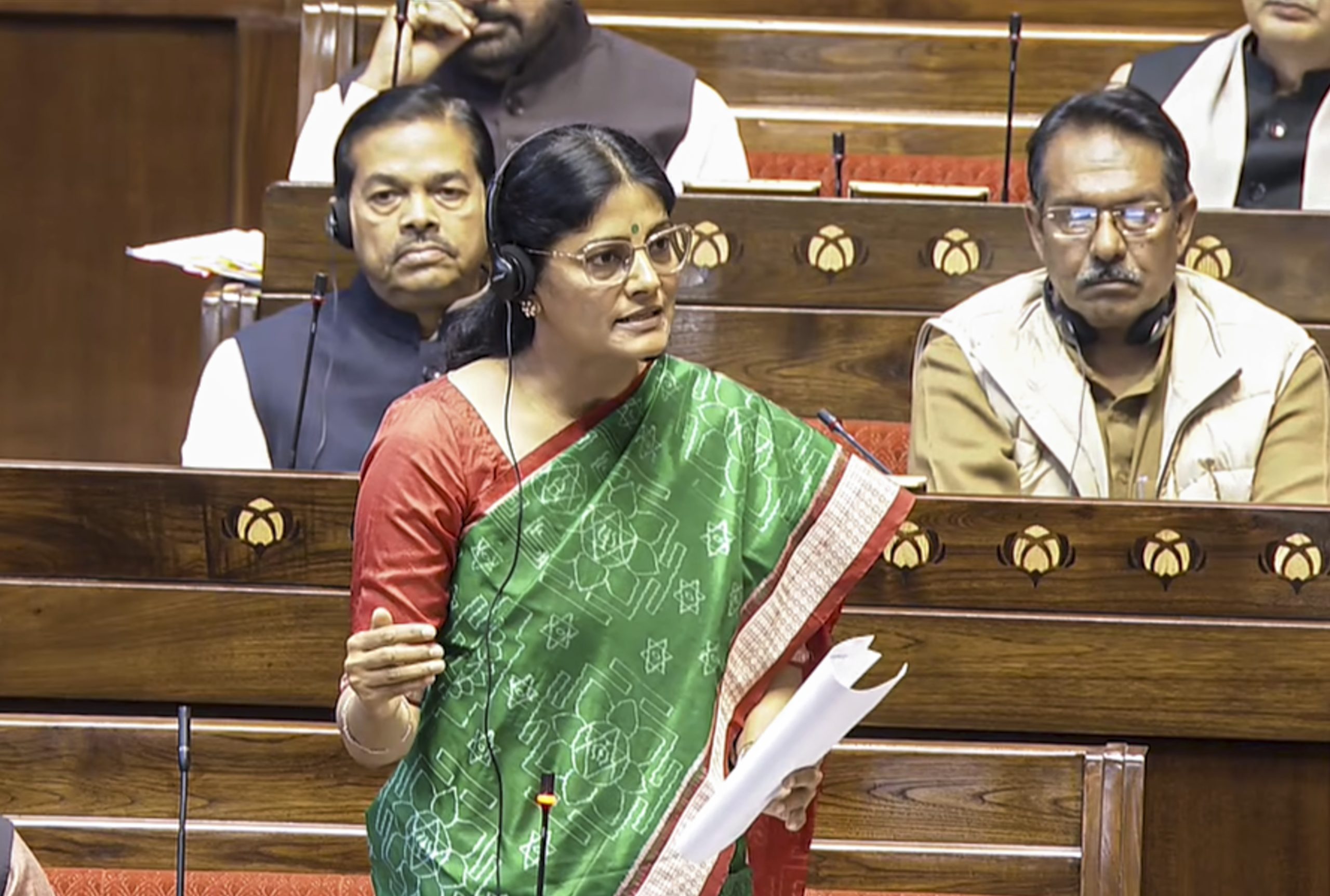
New Delhi, Feb 18: Minister of State for Health Anupriya Patel on Tuesday said India’s approach to AI in healthcare is not just about advanced algorithms or precision, but about how effectively technology reaches people and reduces health inequities across the country.
Addressing a session titled ‘Innovation to Impact: AI as a Public Health Game-Changer’ at the India AI Impact Summit 2026 at Bharat Mandapam, Patel said “AI for India”, as envisioned by Prime Minister Narendra Modi, should be understood as “All-Inclusive Intelligence”.
Linking the theme to the goal of a Viksit Bharat by 2047, she said health is among the key pillars of development. She pointed to challenges posed by India’s large and diverse population, the rural-urban divide, and the dual burden of communicable and non-communicable diseases, arguing that AI can act as an essential enabler in such a setting.
Patel said AI is being used across the healthcare continuum—from surveillance and prevention to diagnosis and treatment. She cited the AI-enabled Media Disease Surveillance System, which tracks disease trends in 13 languages and generates real-time alerts to strengthen outbreak preparedness.
Under the One Health Mission, she said the Indian Council of Medical Research has introduced AI-based tools for genomic surveillance that can help predict potential zoonotic outbreaks even before animal-to-human transmission occurs, calling it a major shift for preventive public health.
On tuberculosis, Patel highlighted the use of AI-enabled handheld X-ray machines and computer-aided detection tools (CA-TB), saying these have helped bring advanced diagnostics closer to communities and contributed to around 16% additional TB case detection. She also said AI tools that predict adverse TB treatment outcomes have aided in achieving a 27% decline in negative treatment results.
Stressing affordability and scale, Patel said solutions in a resource-constrained setting must be scalable, frugal and designed to address systemic gaps. She said the government is building an AI ecosystem in healthcare, including three AI centres of excellence at AIIMS Delhi, PGIMER Chandigarh and AIIMS Rishikesh to integrate AI expertise into public healthcare delivery.
Patel underlined that AI is meant to augment and assist, not replace clinicians. By reducing routine and high-intensity tasks, she said, AI can allow doctors to focus more on complex cases and clinical decision-making, adding that healthcare ultimately depends on human touch, empathy and communication.
She also said the medical workforce must be AI-literate, noting that the National Board of Examinations in Medical Sciences has launched an online training programme on AI in healthcare to build essential digital competencies among doctors.
By Juhi | With inputs from PTI