


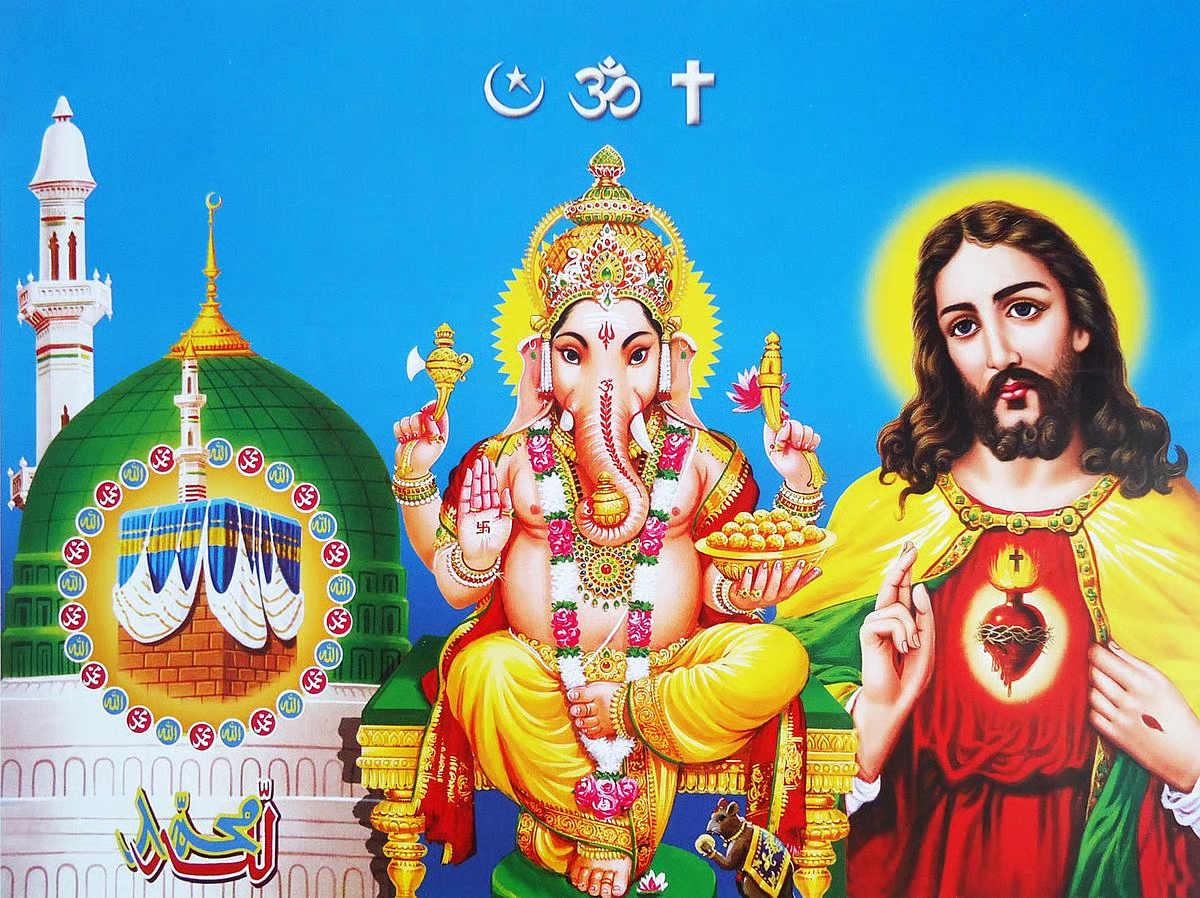
India is often described as a land of a million gods—and the number is really a way of pointing to how wide and living the tradition is. From village deities to pan-Indian figures like Shiva, Vishnu, Durga, Ganesha, Hanuman, Lakshmi, Krishna, Rama, Kali, Kartikeya and countless local forms, the pantheon feels vast because it never grew as a closed list. In practice, this “why so many gods?” question is mainly about Hindu traditions (even though India is home to many faiths). The answer is fairly straightforward—and it sits in history, philosophy, and the way worship evolved over thousands of years.
One Ultimate Reality, Many Expressions
At the core of many Hindu philosophies—especially Vedanta—is the idea of one supreme reality: Brahman, the ultimate, infinite ground of existence. Because that ultimate truth is beyond language and imagination, people approach it through forms, names, and qualities that feel closest to their heart. A mother may see the divine as protective and nurturing (Durga or Lakshmi), a student as wisdom (Saraswati), a child as playful and obstacle-removing (Ganesha), a seeker as detachment and inner power (Shiva). These are not “competing gods” so much as different doorways to the same deepest reality.
Every Region, Community, and Need Got Its Own Form
India’s geography and social history are incredibly diverse—mountains, deserts, coasts, forests, river plains, islands—so worship also grew locally. Communities shaped divine forms around what they lived with daily: sea-linked deities for fishing communities, rain and harvest forms for agrarian life, protective spirits for mountain or forest regions. Over time, many local deities were also linked to broader pan-Hindu frameworks—for example, a local mother goddess being understood as a manifestation of the wider Goddess tradition (Durga/Parvati/Lakshmi), without losing her local identity.
Stories, Poetry, and Devotion Kept Multiplying Forms
Indian spirituality has always been story-rich and emotionally intimate. The epics and Puranic tradition gave the divine vivid personalities people could love and relate to—Rama as the ideal ruler, Krishna as the playful beloved, Shiva as the yogi, the Goddess as fierce protection and compassion. The Puranas themselves are often sectarian (devoted to Shiva, Vishnu, or the Goddess), yet they still engage with multiple deities rather than erasing them—so the world of forms keeps expanding, not narrowing.
And the bhakti stream deepened this even more by centering devotion to a personal god—one you can sing to, argue with, cry to, celebrate with—making divine form feel close rather than abstract.
Addition Instead of Exclusion
A major reason the “many gods” landscape stayed large is that Hindu practice has often been additive: new forms were layered in rather than forcing old ones out. Pluralism is not an accident here—it’s built into a worldview that doesn’t insist truth must be trapped inside one rigid creed. That’s why it was historically easier for traditions to absorb, interpret, and relate deities across regions and communities than to declare one final, single “correct” form for everyone.
Practical Spirituality for Every Stage of Life
Hindu life also recognizes that people want different kinds of support at different times: beginnings and obstacles (Ganesha), prosperity and stability (Lakshmi), courage and protection (Durga/Kali), duty and ideals (Rama), love and intimacy (Krishna), discipline and detachment (Shiva). The many forms become emotional and spiritual tools for one human journey toward meaning and liberation—so the diversity isn’t “extra,” it’s functional.
—By Manoj H