


While samosas and pani puri often dominate conversations on Indian snacks, a treasure trove of regional bites with rich origin stories remains underexplored. From the western stretches of Gujarat to the bylanes of West Bengal, these lesser-known snacks carry narratives as compelling as their flavours. In this article, we spotlight a few snacks that are quietly forging culinary identities across the subcontinent.
1) Bakarwadi — West India’s Spice Spiral
A cross-cultural icon of Gujarat and Maharashtra, bakarwadi is a crispy, sweet-spicy pinwheel that was already popular in the pre-1960 Bombay State era, when today’s Maharashtra and Gujarat were still one administrative unit.
Its most famous modern avatar—Chitale Bakarwadi—is widely traced to the mash-up of a fiery “pudachi vadi” style roll and the more aromatic Gujarati-style bakarwadi, and it entered the market in 1976, eventually becoming a tea-time staple across western India.
The dough is rolled with a spiced filling (often coconut, poppy, sesame and more), then deep-fried for that signature crunch.
2) Kutchi Dabeli — The Pressed Chaat of Mandvi, Kutch
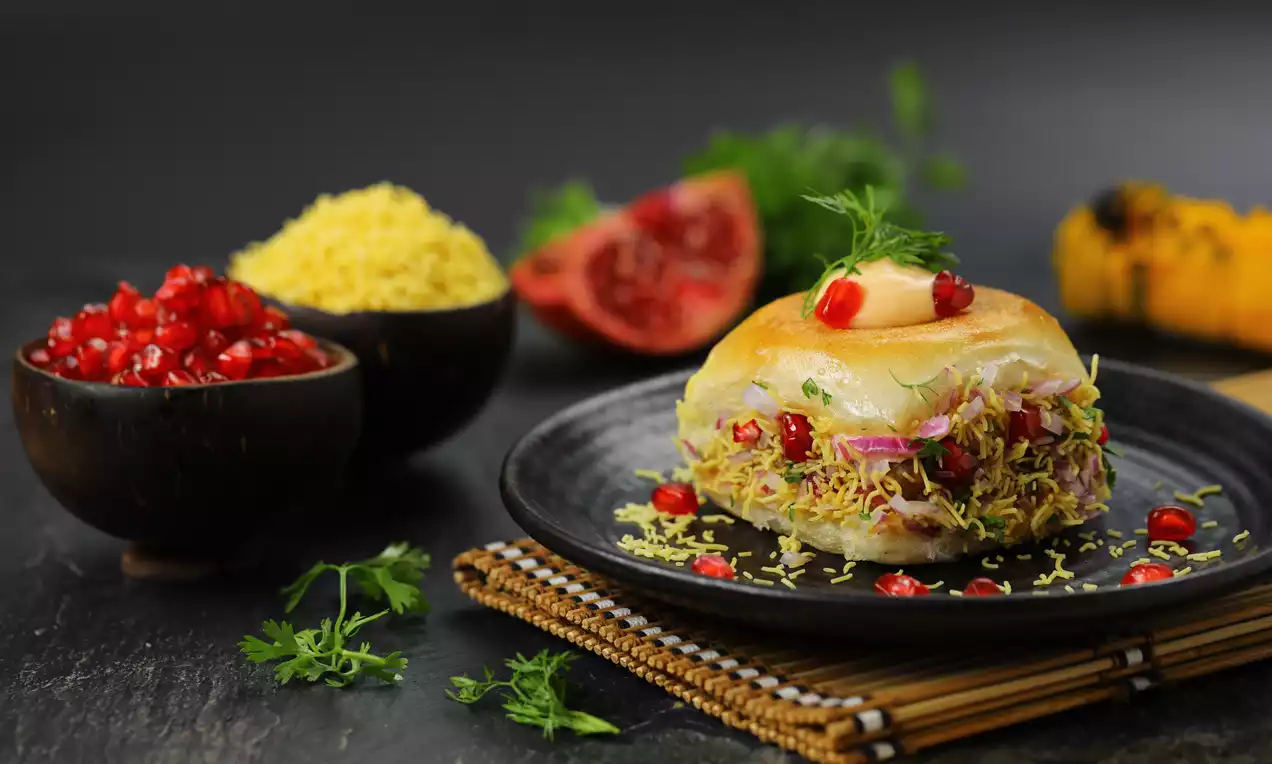
Originating in Mandvi, Kutch, dabeli literally means “pressed”—which fits the snack perfectly: a ladi pav stuffed and pressed with a sweet-spicy potato filling, tangy chutneys, and the pop of pomegranate and peanuts.
Many accounts credit its 1960s rise to Keshavji Gabha Chudasama (Kesha Malam) (with some versions also noting earlier roots and later popularisation), and early sales are often described at the price of one anna (or six paisa)—a detail that adds to its street-food legend.
3) Panskurar Chop — Bengal’s Railway Bite
While the potato chop is familiar across eastern India, Panskurar Chop carries its own station-side identity linked to Panskura in Purba Medinipur, West Bengal—especially in the orbit of railway snack culture.
Local origin stories commonly trace it to 1955, when vendor Madan Mohan Dolai reportedly reworked the traditional aloor chop into a more distinct, spiced croquette that became a traveller’s favourite.
Even if its peak hype has softened over time, the chop still holds a quiet, iconic status for those who know exactly what to ask for.
4) Masala Puri — Karnataka’s Tangy Crunch
Far from the usual pani puri and sev puri, masala puri is a distinctly Karnataka take on chaat—often linked to the Mysore region and later thriving across the state’s street-food circuits.
Crushed puris get drenched in a hot, spiced gravy (typically built around peas/puffed elements and masala), then finished with onions, tomatoes, coriander and sev. It’s bold, messy, and extremely satisfying—yet still oddly under-the-radar outside South India.
5) Avarekalu Mixture — The Winter Favourite from Karnataka
In Karnataka’s cooler months, avarekalu (hyacinth beans) takes centre stage—especially during the December–February season when it’s widely eaten fresh.
The mixture version leans into pure snack logic: de-skinned/fried or roasted avarekalu tossed with crunchy companions like peanuts (often with poha/avalakki in some versions), curry leaves and spices to create a fragrant, addictive namkeen-style bite.
It’s the kind of seasonal snack that tastes like a local winter evening.
6) Tekeli Pitha — Assam’s Steam-Kissed Delight
From Assam, tekeli pitha is a traditional steamed rice cake where technique is the story. The term “tekeli” refers to a pitcher/kettle, and the pitha is associated with being steamed on/over the mouth/lid of the vessel, giving it that special, homey aroma and texture.
Typically, rice batter (or rice flour batter) is paired with a sweet filling like coconut and jaggery, and it’s often enjoyed in winter—especially alongside black tea.
Cultural Commentary
Food historians often point out that India’s regional snack culture thrives on local ingredients, climate, and oral traditions—many of which remain undocumented outside their home regions. As food travel, creator-driven discovery, and quick-commerce platforms spotlight local snack makers, these “hidden” culinary narratives are getting a fresh moment with urban foodies and global travellers alike.
Happy Snacking!!!
—By Sonali