


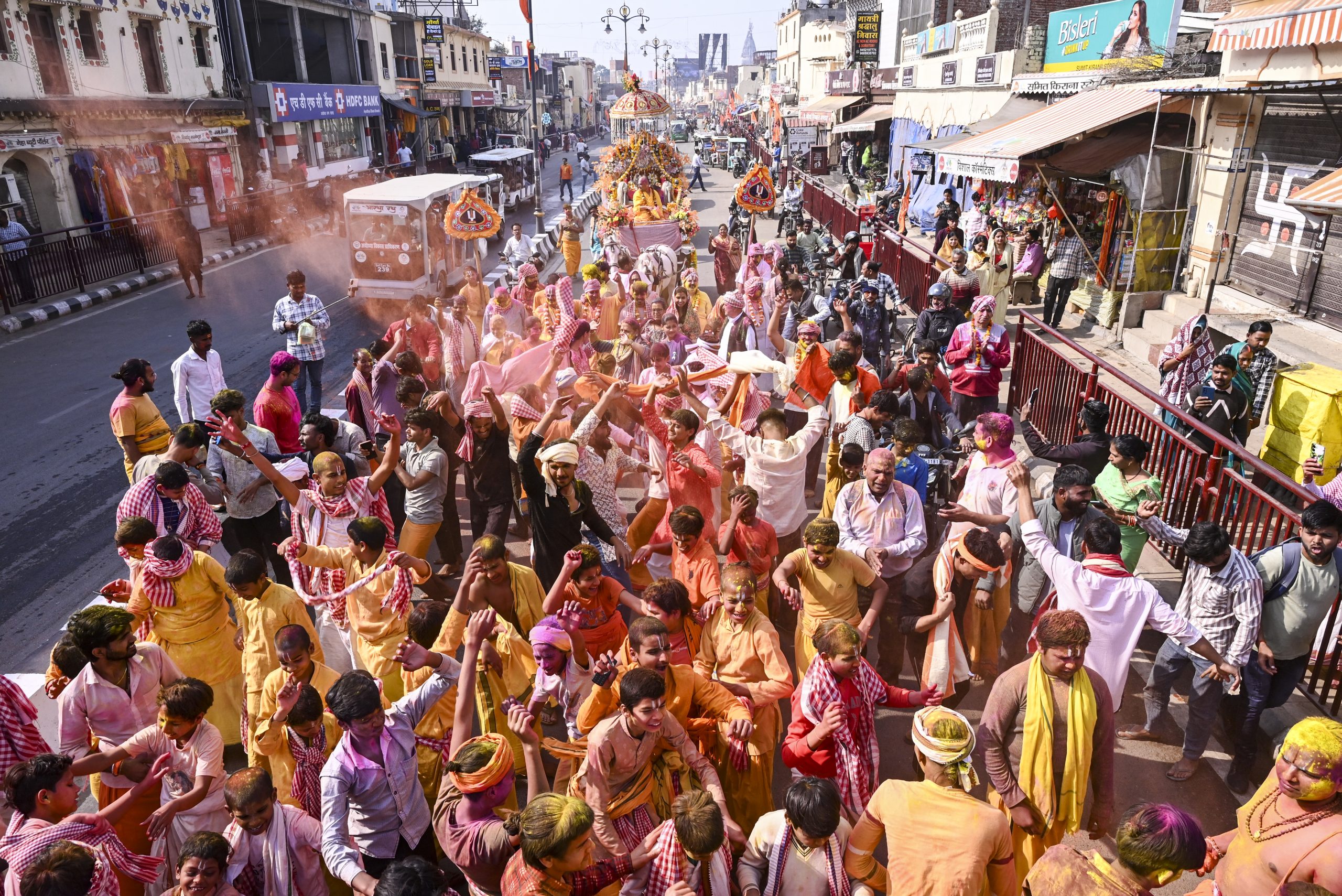
If Holi is India’s loudest celebration of colour, Rangbhari Ekadashi is the spiritual “opening note” that sets the mood—where devotion, music, and gulal begin to spill into temple courtyards and old city lanes.
Celebrated on Phalguna Shukla Ekadashi, Rangbhari Ekadashi is widely observed as Amalaki Ekadashi too—marked by fasting, worship of Lord Vishnu and the amla (Indian gooseberry) tree, and, in many places, the ceremonial beginning of Holi festivities.
What is Rangbhari Ekadashi?
The phrase Rangbhari literally evokes “filled with colours.” While Ekadashi days are typically associated with restraint, prayer, and sattvic discipline, this particular Ekadashi carries a festive undercurrent because it arrives just days before Holi—and tradition allows the first, symbolic “touch of colour” to appear in sacred spaces.
In many North Indian towns, Rangbhari Ekadashi functions like a cultural signal: Holi is near, and the celebrations have officially started.
The Kashi Legend: When Shiva Brings Parvati Home
In Varanasi (Kashi), Rangbhari Ekadashi is tied to a beloved local legend—Lord Shiva returning to Kashi with Goddess Parvati after their wedding, welcomed by the city with gulal, rituals, and colourful processions, especially around the Kashi Vishwanath Temple.
That’s why Kashi’s Holi doesn’t feel like a single-day event; it unfolds as a sequence of temple-centric celebrations, with Rangbhari Ekadashi as the emotional “launch”—joyful, devotional, and intensely local in flavour.
The Braj-Vrindavan Mood: Gulal in Krishna’s Courtyard
In the Mathura–Vrindavan region, where Holi is a season rather than a date, Rangbhari Ekadashi draws enormous crowds to temples—most famously Thakur Banke Bihari in Vrindavan.
Reports from this year describe packed temple premises where devotees played Holi with gulal, and priests showered colour as part of traditional celebrations.
Hindi coverage from Vrindavan also notes that the celebrations often include “phoolon wali holi” (flower Holi) followed by gulal, with heavy footfall and crowd-management arrangements.
Why Amalaki Ekadashi Matters on This Day
Rangbhari Ekadashi’s other name—Amalaki Ekadashi—adds a devotional layer that goes beyond colours. Many households observe a vrat (fast) and worship Vishnu along with the amla tree, which is considered auspicious in this tradition.
For devotees, it’s not just “pre-Holi vibes”; it’s also about purification, gratitude, and preparing the mind and home for the festival season.
Puja and Vrat: A Simple, Widely Followed Practice
Ritual details vary by region and family tradition, but the commonly followed flow looks like this:
- Sankalp and morning bath
- Vishnu puja + amla worship
- Sattvic food or nirjala (as per capacity)
- Kirtan / Vishnu sahasranama / Ekadashi katha
- Dwadashi parana (breaking the fast)
When is Rangbhari Ekadashi in 2026?
According to festival timing reports, Amalaki (Rangbhari) Ekadashi falls on February 27, 2026, with Ekadashi tithi beginning after midnight and ending late evening (IST timings as listed).
Note: Ekadashi tithi and parana windows can differ by city and panchang system—always check your local calendar for the final observance time.
How to Celebrate Responsibly (Especially in Temple Towns)
If you’re visiting Kashi, Mathura, Vrindavan, or Ayodhya during this period, expect very high crowd density and temple-specific rules.
A few practical, respectful tips:
- Prefer dry, herbal gulal; avoid harsh chemical colours.
- Don’t force colour on anyone—many temple towns explicitly discourage it. (Local advisories are common during heavy footfall.)
- Keep minimal belongings, stay hydrated, and follow queue systems.
- Respect temple instructions on photography and movement—especially during aarti and darshan windows.
Rangbhari Ekadashi’s Real Message: Joy Without Losing the Sacred
What makes Rangbhari Ekadashi special is its balance—the discipline of Ekadashi with the warmth of Holi’s arrival. In Kashi, it’s Shiva and Parvati’s homecoming joy. In Braj, it’s Krishna-bhakti taking on the language of colour.
In both, the subtext is the same: celebration feels richer when it begins with reverence.
— By Juhi