


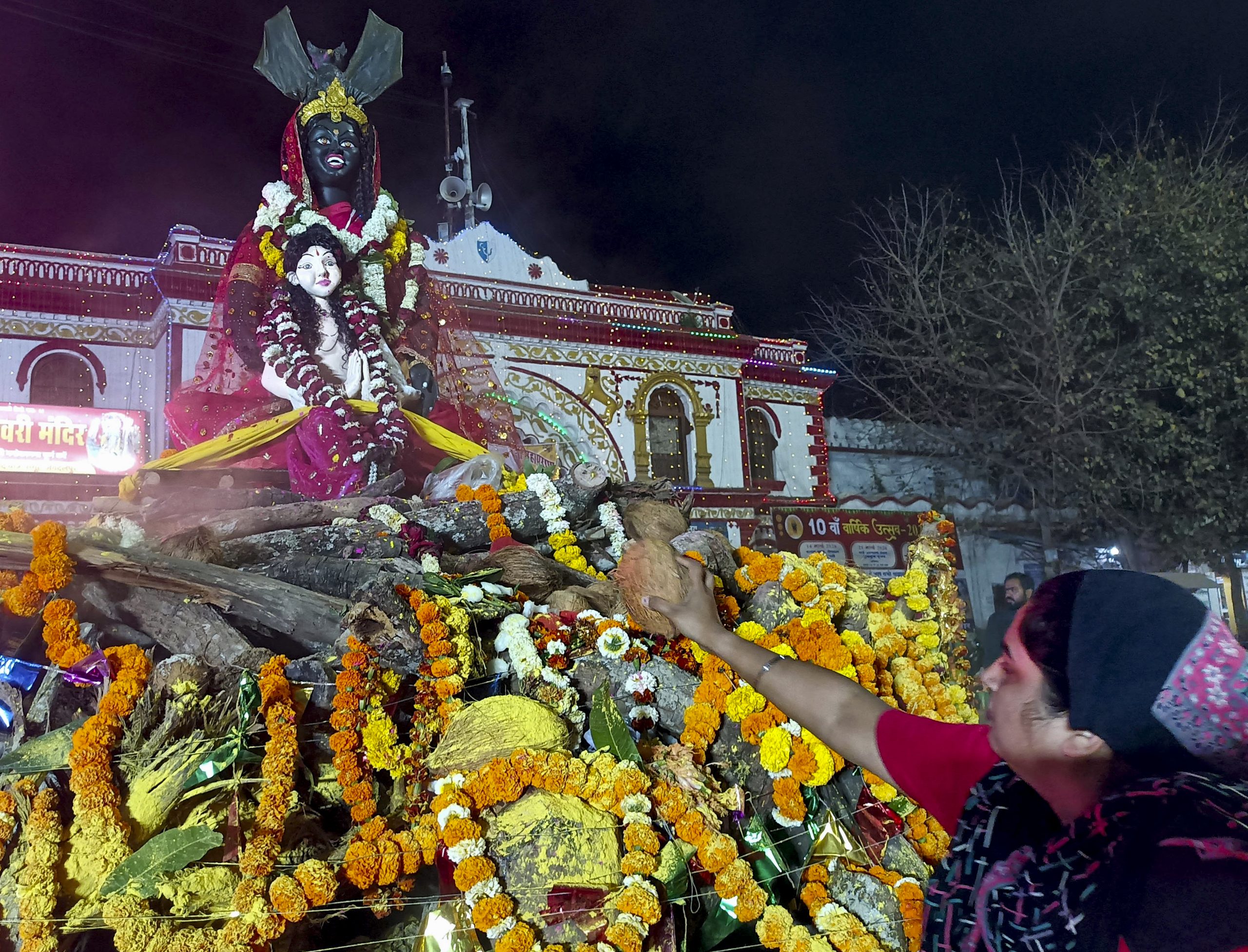
As India prepares to celebrate Holi, communities across the country will gather on the evening/night of March 3, 2026 for Holika Dahan—the traditional bonfire ritual symbolising the triumph of good over evil and the spiritual cleansing of negativity. (Local muhurat can vary by city and panchang; this year also coincides with a lunar eclipse window in the evening, so many families follow local guidance on timing.)
Observed on Phalguna Purnima, Holika Dahan marks the spiritual beginning of Holi festivities and reflects centuries-old beliefs rooted in mythology, devotion, and seasonal transition.
Rituals: Fire as a Sacred Medium of Purification
The central ritual of Holika Dahan involves lighting a ceremonial bonfire in public spaces or community grounds. Preparations begin days in advance, with people collecting wood, dried leaves, and cow dung cakes to build the pyre.
On the evening of the ritual, devotees perform a puja before lighting the fire, offering items such as coconut, grains, flowers, and sweets. Many circle the fire (parikrama) while chanting prayers and seeking blessings for protection, prosperity, and well-being.
In some households and regions, people take home ashes from the bonfire, believing they possess protective and purifying qualities. The ritual is also symbolic of burning away negative thoughts, emotional burdens, and obstacles, paving the way for renewal and positivity.
Recent environmental initiatives have encouraged the use of eco-friendly materials such as compressed cow dung logs (gau-kasht), reflecting growing awareness about sustainability while preserving tradition.
Symbolism: The Legend of Prahlad and Holika
The ritual is linked to Hindu mythology—most popularly the story of Prahlad, a devoted follower of Lord Vishnu, and his tyrannical father, King Hiranyakashipu. According to the legend, Holika attempted to harm Prahlad in a fire, but Prahlad was saved while Holika was burned.
This story gives Holika Dahan its core meaning: the victory of truth, devotion, and righteousness over arrogance, evil, and oppression. Beyond mythology, Holika Dahan also symbolises the arrival of spring and the renewal of life, marking a seasonal transition from winter’s darkness to warmth and colour.
Regional Names and Diverse Cultural Expressions
Holika Dahan and Holi are observed across India under different names, reflecting regional traditions and linguistic diversity:
- Chhoti Holi / Holika Dahan (North India): Commonly used for the night before Rangwali Holi.
- Kama Dahanam (parts of South India): Linked to the legend of Shiva burning Kamadeva, adding another mythological layer.
- Phaguwa / Phagua (Bihar and Jharkhand): Local Holi traditions often feature folk songs and community celebrations.
- Dol Purnima / Dol Jatra (West Bengal and Odisha): A devotional Holi observance centred on Krishna worship; some places also have pre-Dol burning customs.
These variations demonstrate how a shared spiritual theme adapts to local cultures while retaining its core symbolism.
Contemporary Relevance: Tradition Meets Modern Consciousness
Even in modern urban India, Holika Dahan remains a vibrant symbol of community bonding, spiritual renewal, and cultural continuity. Families, neighbours, and communities gather together, reinforcing social harmony and collective identity. At a deeper level, the ritual continues to resonate as a reminder to overcome personal struggles, injustice, and fear—reaffirming timeless values of faith, resilience, and hope.
As the sacred flames rise this year, Holika Dahan once again illuminates India’s enduring belief that goodness, truth, and devotion will always triumph over darkness.
By – Sonali