


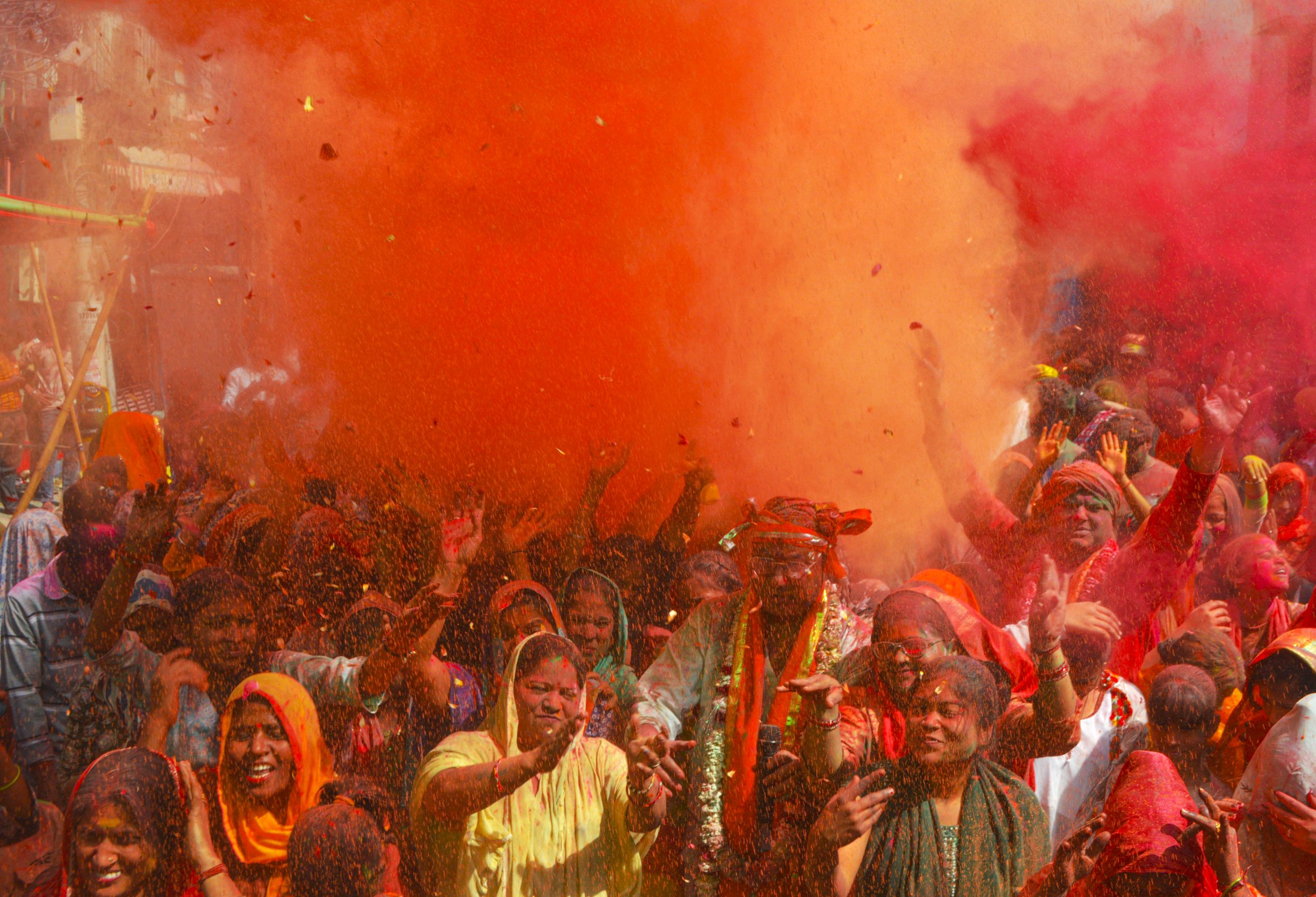
As India celebrates Holi each spring, the festival of colours once again becomes a vivid reminder of the country’s extraordinary cultural diversity. The core idea remains constant—welcoming spring, celebrating renewal, and recalling the triumph of good over evil—but the way Holi is lived, sung, performed, and shared changes dramatically from one region to another.
In most parts of India, Holi unfolds over two key days: Holika Dahan (the bonfire night) followed by Rangwali Holi/Dhulandi (the day of colours). In 2026, Holika Dahan falls on March 3 and Rangwali Holi on March 4, though local customs can stretch celebrations well beyond these dates.
Uttar Pradesh: Where mythology comes alive
In the Braj region—Mathura, Vrindavan, Barsana and Nandgaon—Holi is not just a festival, but a living retelling of Krishna lore. Celebrations begin well before the main day, with temple towns turning into stages for rasiyas (folk songs), devotional gatherings and colour rituals rooted in local tradition.
One of the most iconic expressions is Lathmar Holi in Barsana and Nandgaon, where the festivities recreate Krishna’s playful banter with Radha and the gopis through a spirited (and symbolic) mock chase. Vrindavan’s famed “Phoolon ki Holi” replaces gulal with flower petals, offering a softer, deeply devotional atmosphere—often described as equal parts celebration and darshan.
Punjab: A warrior’s Holi
In Anandpur Sahib, Holi takes a distinctive form as Hola Mohalla, a Sikh festival anchored in martial tradition and collective discipline. Established by Guru Gobind Singh, it features Gatka demonstrations, mock battles, sword skills, horseback displays and processions—a powerful shift from colour play to courage, readiness and seva.
In recent years, organisers have also pushed for more responsible celebrations. For Hola Mohalla 2026, local preparations have highlighted a “green” and plastic-free approach, including measures like reducing single-use plastic and improving waste management during langar and public events.
West Bengal: Holi meets art, literature and Vaishnav devotion
In West Bengal, Holi carries both cultural elegance and devotional colour. At Shantiniketan, it becomes Basanta Utsav, shaped by Rabindranath Tagore’s vision of welcoming spring through music, dance and coordinated attire—often dominated by shades of yellow and the aesthetics of seasonal change.
Alongside this, many parts of Bengal also celebrate Dol Jatra (Dol Purnima), a Vaishnav tradition where Radha-Krishna idols are placed on swings and taken out in processions—blending devotion, community gathering and colour in a distinctly eastern idiom.
Odisha and Assam: Swing processions, community rituals and local flavour
In Odisha, Holi is closely tied to Dola Purnima/Dola Jatra, often observed as a multi-day festival in many areas. Krishna idols are carried in decorated vimanas/palanquins to neighbourhoods and homes, culminating in gatherings where multiple palanquins meet, accompanied by kirtans, drums and community celebration.
In Assam, Holi is widely known through Doul/Deul Utsav, particularly at Vaishnav institutions such as satras, where devotion and organised festivities take centre stage—often spanning several days depending on local tradition.
Northeast India: Spiritual devotion, sport and community bonding
In Manipur, Holi is celebrated as Yaoshang, a five-day festival that blends colour play with rituals, music, dance and community sports. Evenings often come alive with Thabal Chongba, a traditional folk dance performed in groups, turning public spaces into vibrant circles of celebration.
Bihar and Jharkhand: Folk songs, “Phaguwa” spirit, and village rhythms
In parts of Bihar, eastern Uttar Pradesh and Jharkhand, Holi is popularly known as Phaguwa/Fagua in local speech and song traditions. The festive mood is often carried through folk singing, dholak-led gatherings, playful banter in lyrics, and tightly knit neighbourhood celebrations that feel as musical as they are colourful.
Central India: Tribal fairs and springtime energy
In parts of Madhya Pradesh, Holi season is also marked by the famous Bhagoria/Bhagoriya tribal festival, celebrated a few days before Holi in districts such as Alirajpur and Jhabua. It is known for exuberant local markets, music, dance and spring gatherings—showcasing how Holi season can overlap with distinct regional harvest and community traditions.
Western India: Folk pageantry, harvest celebrations and royal traditions
In Goa, Holi season overlaps with Shigmo/Shigmotsav, a spring festival marked by folk performances and float parades depicting scenes from regional mythology—blending community celebration with theatrical pageantry.
Maharashtra extends the festival mood through Rang Panchami, observed a few days after the main Holi festivities in many places. In parts of Rajasthan, Holi is also remembered for its royal-style ceremonies and traditional processions, where the spectacle carries both heritage and local pride.
Uttarakhand: Holi in melody and devotion
In Uttarakhand—especially the Kumaon region—Holi is famously expressed through music traditions such as baithki holi (seated classical/folk singing gatherings) and khadi holi (standing group singing and dancing). The emphasis is often on collective participation, cultural memory, and a devotional sense of celebration—where rhythm and raga can be as central as colour.
A festival that unites beyond differences
Despite its many regional forms, Holi continues to symbolise unity, renewal and social mixing. It dissolves barriers of age, status and background—at least for a day—by inviting everyone into the same shared space of laughter, colour, food, music and reconciliation.
At the same time, modern celebrations are changing: many cities now promote skin-safe herbal gulal, reduced water usage, and cleaner community practices—showing how tradition can evolve without losing its soul.
By – Sonali