


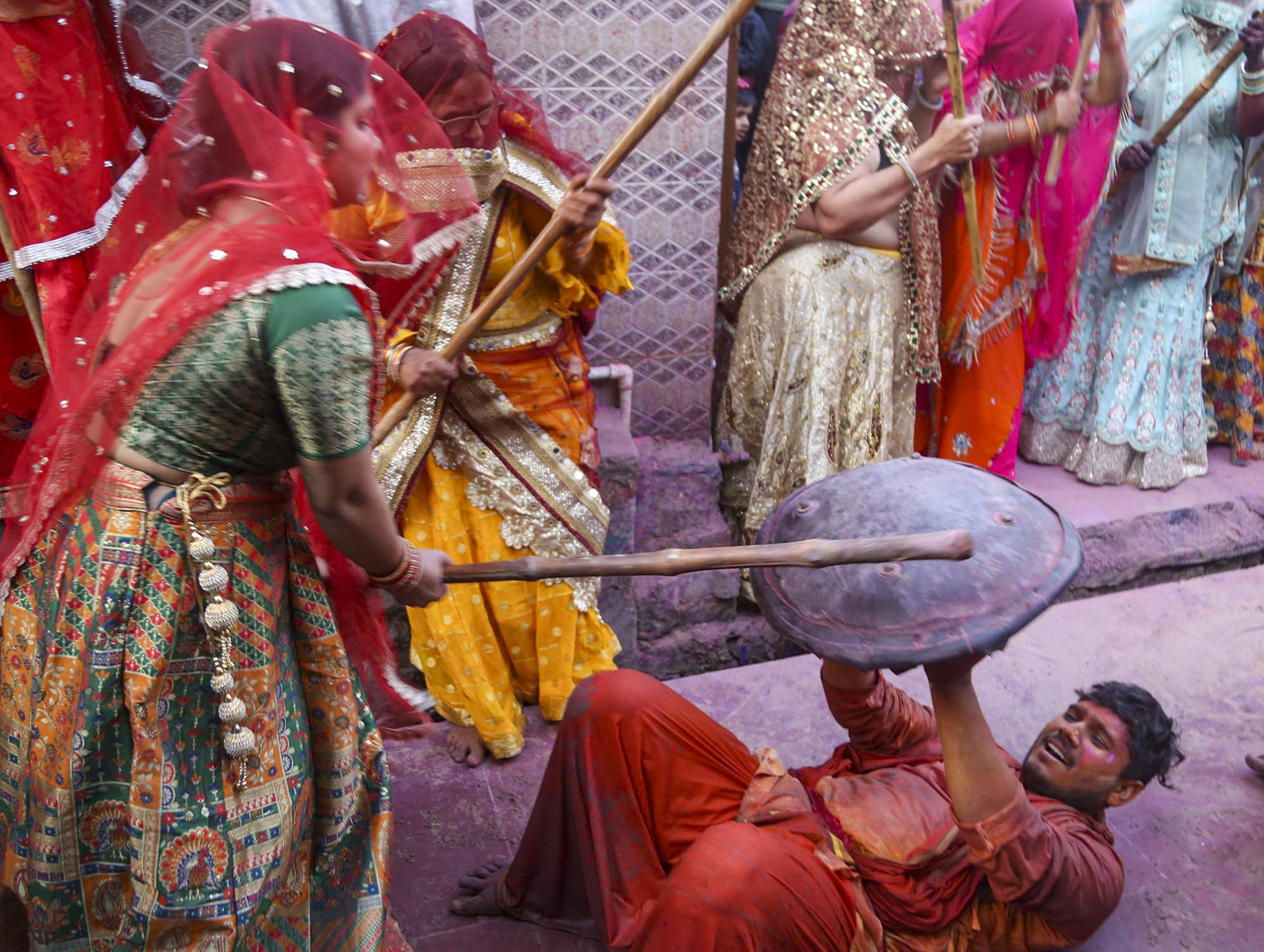
As India steps into Holi season, the festival of colours does more than brighten streets and courtyards—it reactivates a vast ecosystem of folk arts that communities have carried for generations. Across regions, Holi becomes a public stage for songs, dance-drama, ritual performance, and even traditional colour-making—turning a “festival day” into a living archive of India’s cultural memory.
Where festival meets folk heritage
Holi’s pan-India message—springtime renewal and the victory of good over evil—travels through local languages, rhythms, and performance traditions. In many places, celebration isn’t complete without community singing circles, folk ensembles, and temple-ground performances featuring instruments like dholak, manjira, and drums, where the artistic act is also a social act: gathering, greeting, teasing, reconciling, and belonging.
Folk songs: Holi’s most enduring “oral tradition”
Braj’s Hori and the poetry of Radha-Krishna
In the Braj belt, Holi is inseparable from Hori—a song genre traditionally sung during the festival in Braj Bhasha, steeped in playful Radha-Krishna imagery and the festival’s signature mischief and joy. These compositions keep mythology intimate: not distant scripture, but sung storytelling that lives on the tongue and in the crowd.
Kumaon’s Baithki and Khadi Holi: ragas before colours
In Uttarakhand’s Kumaon region, Holi often begins not with gulal, but with weeks of music. Baithki Holi leans into raga-based compositions in a seated format, while Khadi Holi brings group singing with coordinated movement and village-to-village participation—proof that Holi can be a festival of melody as much as colour.
Phag, Ragini and campus/community revivals
Across parts of North India, Holi-season folk repertoires—often described through terms like Phag and Ragini—continue to surface in organised cultural programmes, especially where institutions and local bodies try to reconnect younger audiences with folk forms. Recent events explicitly positioned Holi-season folk singing as a tool for cultural continuity and community bonding.
Folk dances: springtime movement, regional identity
Rajasthan’s Chang/Dhamal: the drum-led surge of Holi
In Rajasthan’s Shekhawati region, Chang dance (also linked with “Dhamal” traditions) is widely associated with the Holi season—performed in groups to the beat of the chang (tambourine) and drums, with celebratory singing and a strong community pulse.
Central India’s Bhagoria: the pre-Holi tribal fair as performance space
In parts of Madhya Pradesh, the Bhagoria festival—held in the days leading up to Holi—blends market-fair energy with music, dance, and collective celebration, strongly associated with tribal communities and springtime gatherings. It’s a reminder that Holi season is also a cultural calendar of fairs and folk performance circuits.
Malwa’s Phulpati and community women’s traditions
In the Malwa region, the Phulpati dance is described in multiple folk-dance listings as a women-led tradition (often associated with unmarried girls) performed around the Holi period—illustrating how regional Holi arts can also be spaces for women’s community expression and seasonal celebration.
Braj’s Charkula: lamps, devotion, and post-Holi performance
In Braj, the spectacular Charkula dance—women balancing multi-tiered lamp structures—has a specific place in the Holi calendar, commonly described as performed a few days after Holi, tied to local devotional narratives and festive sequencing.
Folk theatre and ritual performance: Holi as “community storytelling”
Raslila and Holi enactments in Krishna towns
In Mathura and surrounding Krishna-linked regions, Holi season often includes staged or semi-staged folk performances that reenact Krishna narratives for public audiences—bringing together devotion, drama, music, and collective festivity in temple grounds and community spaces.
Karnataka’s Bedara Vesha: a local Holi-tied dance-drama
Holi-linked folk performance isn’t limited to North India. In Sirsi (Karnataka), Bedara Vesha is documented as a distinctive folk dance-drama performed in the days leading up to Holi—showing how regional Holi calendars absorb highly local traditions and costume-based storytelling.
Manipur’s spring performances and UNESCO-recognised heritage
Manipur’s broader performance culture during religious occasions is internationally recognised: Sankirtana (ritual singing, drumming and dancing) is inscribed on UNESCO’s Representative List (2013). While Holi in Manipur is popularly linked with Yaoshang and community dance traditions, this wider Vaishnava performance ecology shows how deeply festivals and performing arts intertwine in the region.
Folk visual culture and the art of “seeing Holi”
Holi has long existed not only as celebration, but as imagery. Indian miniature painting traditions documented Holi scenes—both romantic and courtly—capturing how colour-play moved through social spaces, from lovers’ play to royal revelry. These artworks act as historical snapshots of festivity, costume, and leisure—folk life preserved in pigment.
The colours themselves: craft, ecology, and tradition
Natural gulal as a revived folk practice
Traditional Holi colours were often derived from natural sources—plants and herbs such as palash/tesu, turmeric, neem and others—used as powders or liquid splashes. This isn’t just nostalgia; it connects to older knowledge systems around seasonal change and botanical colourants.
Today’s revival: women-led SHGs and herbal colour-making
Across parts of India, Holi has become a livelihood window for community groups producing natural colours—using ingredients like palash flowers, turmeric, beetroot, spinach and marigold, among others—framing Holi colour-making as both heritage craft and local enterprise.
Why this matters now
Public advisories and expert commentary around Holi increasingly warn about the risks of synthetic dyes and promote safer, certified herbal alternatives—pushing cultural practice to evolve without losing its folk core. In many ways, this shift is also folk resilience: adapting tradition to modern health and environmental realities.
A festival that paints culture, not just faces
Holi endures because it is participatory: you don’t merely watch it—you sing it, dance it, perform it, make it, and pass it on. From raga-based Holi in Kumaon to Chang rhythms in Rajasthan, from Bhagoria fairs to Bedara Vesha streets, Holi remains one of India’s strongest public platforms for folk arts—where heritage doesn’t sit in museums, but moves through people.
By – Sonali