


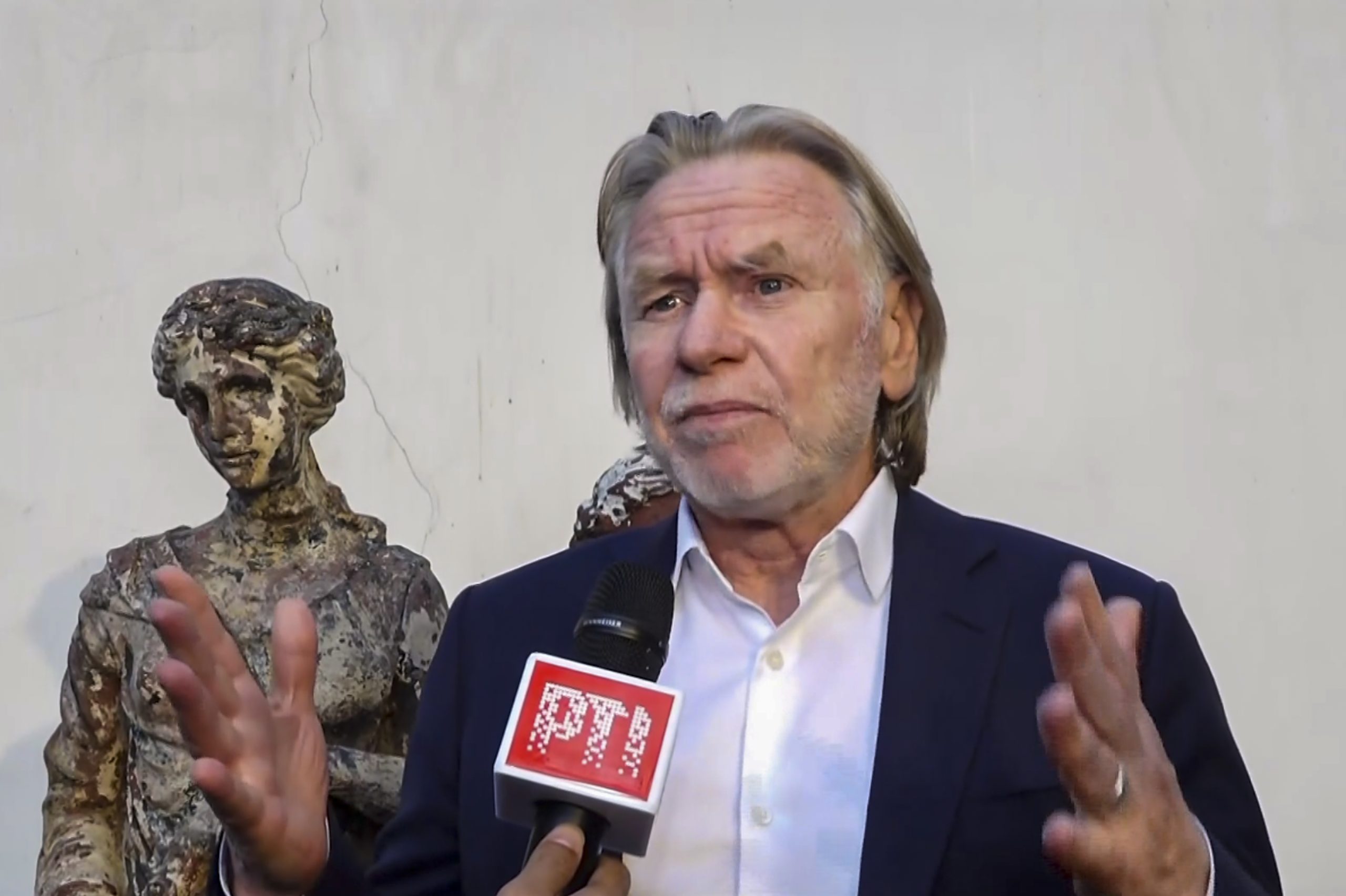
New Delhi, Mar 22 (PTI) The next phase of the Renewable Energy Partnership between Australia and India involves using the strong platform built by climate change leaders to leverage the complementary skills of both nations, a top official of the Australian High Commission said.
In an interview with PTI Videos, Philip Green, Australian High Commissioner to India, said the next phase of Renewable Energy Partnership (REP) is about the commercialisation options that exist between Australia and India under the climate banner, and that there is a real synergy between Australian innovation and Indian scale – manufacturing, deployment, and global reach.
In 2024, India and Australia officially launched the REP aimed at boosting two-way investment in the renewable energy sector.
Emphasising the clean energy cooperation between the two nations, the Australian envoy said the Australia-India Rooftop Solar Training Academy in Gujarat will train more than 2,000 young people, with a specific focus on women.
He noted that the programme aims to provide the skills necessary not just for installing solar rooftops, but also for the advanced techniques required to ensure power returns to the grid stably.
Green also emphasised Australia’s interest in helping India produce more effective and cheaper solar panels.
“This partnership marks a strategic shift toward integrating Australian technical expertise directly into the ground-level operations of India’s rapidly expanding renewable energy sector,” Green told PTI.
Speaking about how environmental cooperation is being integrated into the Comprehensive Economic Cooperation Agreement (CECA), he said the priority is making it simpler and cheaper for important ores to enter India’s battery, electric vehicle, and broader renewable energy supply chains.
“For example, copper cathodes exported from Australia enter India with a 5 per cent duty. While that is not a high amount, we must reduce impediments to a climate-friendly trading environment,” the Australian envoy told PTI.
“Among Australia’s various objectives for the CECA – the second phase of our free trade agreement – we would certainly want the tariff on copper cathodes reduced or eliminated,” he said.
Green also said that Australia is aiming for a “straight line” supply chain of critical minerals from Australia to India’s battery and electric vehicle production system.
“There are two fundamental elements to it. First, we must ensure Indian firms get access to the critical ores they need in Australia, either through equity arrangements or offtake arrangements with Australian firms.
“The second phase is to develop the processing necessary to ensure the material reaches the end user, such as a car company,” Green said.
He added that while challenges exist, the pathway they are looking for involves “finding smart routes and using technologies” to enhance both climate action and continued growth in jobs and the economy.
Green also pointed to a bilateral roadmap identifying four “super-highways” for growth that includes agrifood, education, tourism, and the green energy supply chain, highlighting that the strategy prioritises expanding Australian exports of technologies and essential minerals, such as copper and lithium, to support India’s industrial transition. PTI ABU ARI ARI
Category: Breaking News
SEO Tags: #swadesi, #News, Must leverage platform built by climate leaders to further renewable energy ties: Australian Envoy Green