


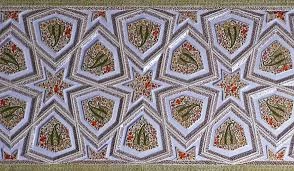
Khatamband is one of the most exquisite and intricate woodcraft traditions of Kashmir, especially prominent in Srinagar. Known for its geometrical precision and artistic brilliance, Khatamband ceilings are a testament to the region’s rich cultural heritage and masterful craftsmanship. With no use of nails or glue, this ancient art form showcases how geometry, aesthetics, and woodwork can harmoniously blend to create architectural marvels.
In This Article:
Origins and Historical Significance
The word Khatamband is of Persian origin, meaning “interlocking” or “binding.” It is believed that the craft was introduced to Kashmir in the 14th century by the Persian Sufi saint Mir Sayyid Ali Hamadani, who brought skilled artisans from Central Asia. Another account traces its arrival to the Mughal period in 1541 under Mirza Hyder Tughlaq.
Initially, Khatamband was used to adorn the ceilings of shrines, mosques, palaces, and homes of the nobility. Some of the finest examples of this work can be seen in the Khankah-e-Moula, Dastgeer Sahib Shrine, and other heritage buildings across the Kashmir Valley.
Crafting Process
Creating a Khatamband ceiling is a highly meticulous and time-consuming process that requires extraordinary skill and patience.
1. Selection of Wood:
Artisans typically use lightweight yet durable woods such as fir (budloo), walnut, and deodar. Fir is preferred for its resistance to moisture and its ability to retain shape over decades.
2. Designing:
Designs are drawn by hand and often feature symmetrical floral or geometric patterns, inspired by Persian and Islamic art.
3. Carving:
The wood is cut into small polygonal or floral pieces. Each piece is finely chiseled and shaped using traditional tools.
4. Assembling:
Using a unique tongue-and-groove interlocking technique, these wooden pieces are fitted together like a jigsaw puzzle—without nails, glue, or screws. The pieces are so precisely cut that they hold together through tension and craftsmanship alone.
5. Installation:
The completed panels are fitted onto a framework installed on the ceiling. Often, these ceilings are further adorned with chandeliers or painted embellishments.
A standard 10×10-foot Khatamband ceiling may take weeks or even months to complete, depending on the complexity of the design.
Design Aesthetics
Khatamband designs range from simple motifs to elaborate floral and geometric arrangements. Common patterns include:
- Chinar leaf motifs, symbolic of Kashmir
- Rosettes and stars representing unity and divinity
- Honeycomb patterns with Islamic influence
These designs not only enhance the beauty of interiors but also have functional benefits—such as providing insulation and acoustic dampening.
Current Status and Revival
Once reserved for royalty and religious spaces, Khatamband has now found a place in contemporary architecture—luxury homes, hotels, conference halls, and traditional houseboats (shikaras).
Several artisans in Srinagar, like Ali Mohammad Giru from Safakadal, are renowned for keeping this legacy alive. The younger generation is also showing interest in reviving the craft, especially after Srinagar was designated a UNESCO Creative City of Crafts and Folk Art in 2021, largely due to traditional arts like Khatamband.
However, despite this recognition, the craft faces challenges such as:
- Decline in the number of skilled artisans
- Lack of government support
- Competition from cheaper, machine-made imitations
Where to See and Buy Khatamband
Visitors to Srinagar can witness authentic Khatamband craftsmanship at:
- Khankah-e-Moula Mosque
- Dastgeer Sahib Shrine
- Mughal-era houses in downtown Srinagar
Those interested in purchasing or commissioning Khatamband work can approach traditional woodcraft workshops in areas like Safakadal, Nowhatta, and Rajbagh. Some artisans also accept custom orders for home interiors.
Moving Ahead
Khatamband is more than just a decorative ceiling—it’s a symbol of Kashmir’s spiritual, cultural, and artistic identity. Every interlocking piece tells a story of precision, tradition, and enduring beauty. In a rapidly modernizing world, preserving and promoting such crafts is essential to keeping the soul of Kashmir alive.
By – Nikita