


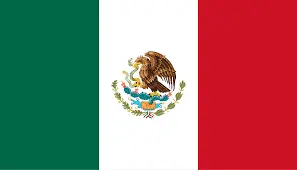
The Mexican government has initiated legal action against tech giant Google over its decision to rename the “Gulf of Mexico” to the “Gulf of America” on Google Maps for U.S. users. President Claudia Sheinbaum confirmed the lawsuit, emphasizing that the Gulf is an international body of water shared by Mexico, the United States, and Cuba. She argued that no single nation has the authority to unilaterally alter the name of such a significant geographical feature.
In This Article:
Background of the Dispute
The controversy began when former U.S. President Donald Trump signed an executive order directing federal agencies to change the name of the Gulf of Mexico to the Gulf of America. Google promptly updated its Maps service to reflect this change for users in the United States. However, for users in Mexico, the Gulf retained its original name. For users outside both nations, Google Maps displayed both names: “Gulf of Mexico (Gulf of America).” Despite requests from Mexico to reverse the change, Google maintained its stance, leading to the current legal proceedings.
Mexico’s Legal Arguments
Mexico contends that the U.S. has no legal grounds to alter the name of a body of water that lies within its territorial boundaries. Citing the United Nations Convention on the Law of the Sea, President Sheinbaum emphasized that a country’s sovereign territory extends only up to 12 nautical miles from its coastline. Therefore, any renaming should be confined to the U.S. portion of the Gulf. She further argued that Google’s decision to apply the new name beyond U.S. jurisdiction constitutes an overreach and violates international law.
International Reactions and Precedents
The renaming has sparked reactions from various quarters. In the United States, the move has been met with mixed responses. While some officials support the change as a reflection of American heritage, a poll by Marquette University found that 71% of respondents opposed the renaming. Internationally, tech companies have taken varied approaches. Apple Maps complied with the new naming convention, while MapQuest resisted, citing adherence to the Geographic Names Information System (GNIS). This divergence highlights the complexities tech companies face in navigating national and international naming conventions.
Implications for Google
The lawsuit against Google raises significant questions about the role of tech companies in determining geographical nomenclature. As platforms like Google Maps become integral to daily life, their influence on public perception of geographical boundaries and names grows. This case could set a precedent for how tech companies handle international disputes over naming conventions and the extent of their responsibility in such matters.
The legal battle between Mexico and Google over the renaming of the Gulf of Mexico underscores the complexities of international relations in the digital age. As technology continues to bridge global gaps, it also brings to the forefront issues of sovereignty, jurisdiction, and cultural identity. The outcome of this lawsuit may have far-reaching implications for how digital platforms navigate the delicate balance between national interests and global operations.
By – Sonali