


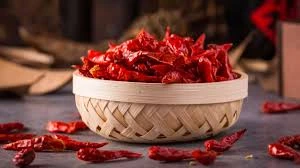
Locally known as Canacona mirchi, the Khola chilli is cultivated primarily by tribal farming communities in the Khola village of Canacona taluka. Grown on the rugged, rain-fed slopes of the Western Ghats, this bright red chilli is small, slender, and packs a pungent punch with a lingering aroma.
In This Article:
Unlike mass-produced varieties, the Khola chilli is cultivated using organic, traditional methods passed down over generations. Farmers avoid chemical fertilizers and instead rely on natural manure and rainwater. The harvesting process is entirely manual, with women playing a significant role in sorting and sun-drying the chillies.
Flavour Profile and Culinary Use
Khola chilli stands out for its distinct flavour — a mix of mild smokiness, moderate heat, and earthy sweetness. It is less spicy than Guntur or Byadgi chillies, making it ideal for Goan cuisine, especially for preparing the famous recheado masala, xacuti, and sukem dishes.
Goan chefs and restaurateurs are championing the chilli’s revival. “The Khola chilli gives an authentic flavour that no other variety can replicate,” says Chef Savio Fernandes of a popular restaurant in Panaji. “Its colour, aroma, and heat balance are perfect for both traditional and fusion recipes.”
GI Tag and Revival Efforts
In 2019, the Khola chilli earned a Geographical Indication (GI) tag, providing it with much-needed recognition and legal protection. This has encouraged local cooperatives and government bodies to invest in sustainable farming practices and marketing strategies.
The Canacona Chilli Growers Association, formed in 2019, has been instrumental in organizing farmers, standardizing quality, and ensuring fair pricing. With support from Goa’s Department of Agriculture and the Indian Council of Agricultural Research (ICAR), the association is also working to expand cultivation to neighboring villages while preserving the unique topography that gives the chilli its distinctive flavor.
Women Farmers Lead the Way
A striking aspect of the Khola chilli story is the active participation of women. In many villages, women have taken charge of sorting, grading, and drying the chillies, forming self-help groups (SHGs) that now manage post-harvest processing and sales.
“Khola chilli is our pride,” says Sushila Naik, president of a local SHG. “Earlier, it was just a crop we grew for our kitchens, but now it’s a source of income and identity.”
Market Demand and Challenges
With the GI tag and rising popularity, demand for Khola chillies has surged not just in Goa, but also in markets across Mumbai, Delhi, and Bengaluru. Packaged and labeled Khola chilli powder and whole chillies are now sold online and through specialty spice stores.
However, the journey isn’t without challenges. Limited land, erratic monsoons, and lack of modern storage facilities hamper large-scale production. Young farmers often migrate to cities, leaving behind the traditional farming legacy.
Experts suggest that policy intervention, capacity building, and value addition are essential to keep the industry growing. “We need to create a value chain where farmers earn more by selling not just raw chillies but also processed products like pickles and pastes,” says Dr. Meenal Kamat, an agricultural economist at Goa University.
A Spicy Symbol of Goan Heritage
The Khola chilli is more than a spice — it’s a symbol of Goa’s agrarian roots, community resilience, and culinary heritage. As the world moves toward sustainable, regional, and organic foods, this humble chilli may soon find a permanent place on global spice racks.
Efforts by farmers, government bodies, and food enthusiasts continue to ensure that the Khola chilli does not fade into obscurity but shines as a fiery ambassador of Goan culture.
By – Sonali
Also read – Khatamband Craft of Srinagar: The Timeless Art of Wooden Ceilings