


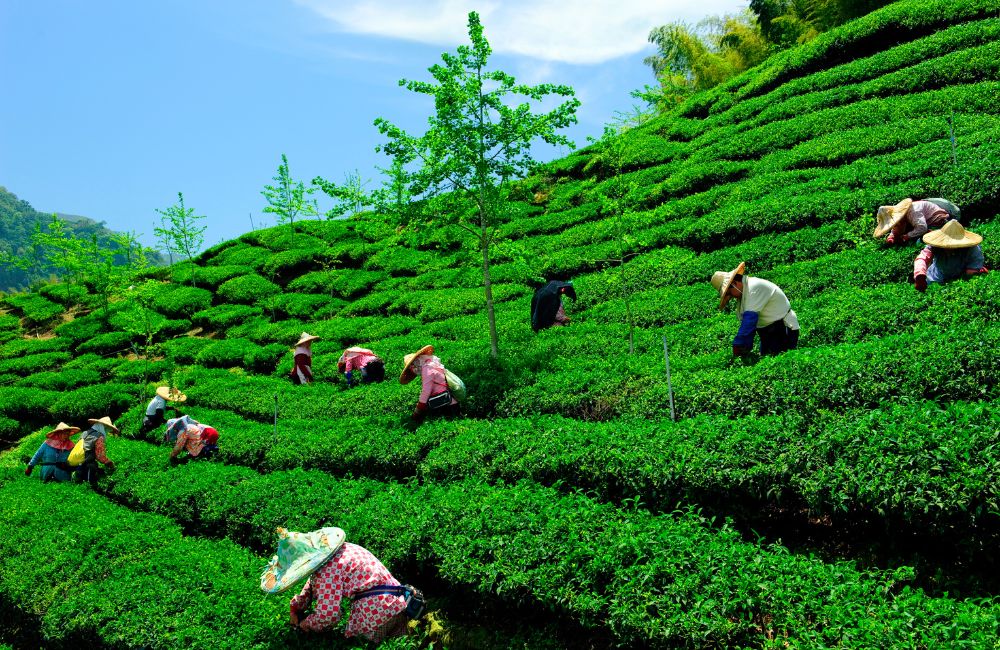
India isn’t just the world’s second-largest tea producer — it’s a nation that bleeds chai. From Darjeeling’s high-altitude charm to Munnar’s misty slopes, tea isn’t just a beverage here. It’s identity, legacy, and, in many ways, a mirror of inequality hidden beneath fragrant leaves.
In This Article:
- Darjeeling – The ‘Champagne of Teas’ with a Bitter Backstory
- Assam – The Backbone of India’s Chai Addiction
- Munnar – Beauty, Brews, and Battlegrounds
- Beneath the Brew — What We Refuse to Talk About
- Final Sip
Darjeeling – The ‘Champagne of Teas’ with a Bitter Backstory
Let’s start in Darjeeling, West Bengal. Known globally for its muscatel-flavored brew, Darjeeling tea is often auctioned at record-breaking prices abroad. But here’s the real question: who’s profiting?
While tea giants rake in profits with Geographical Indication (GI)-tagged tea exports, thousands of women pluckers in the region still earn barely ₹200–₹250 a day. Labor unrest, poor healthcare, and zero social security are frequent realities in these gardens. Colonial-era management systems still exist in many estates — and it’s 2025.
Assam – The Backbone of India’s Chai Addiction
Next stop: Assam, the tea capital of India. It produces more than 50% of the country’s tea, and its strong, malty brews are everyday staples across Indian homes. But beyond this strong cup lies a brewing storm.
Assam’s tea tribes — descendants of tribal laborers brought in during British rule — are still fighting for basic rights. Education, healthcare, fair wages — promises made during elections often dry up once the polls end. Politicians sip Assam tea during campaigns but rarely visit the workers behind it.
Munnar – Beauty, Brews, and Battlegrounds
Down south in Kerala, Munnar’s lush estates are a tourist favourite. But even paradise has cracks. While companies like Tata Tea run socially responsible models, even here, worker protests have erupted over long hours, low pay, and lack of permanent employment.
Add to that the environmental issues — overuse of pesticides, deforestation for new plantations, and water resource exploitation — and the romance fades quickly.
Beneath the Brew — What We Refuse to Talk About
Let’s be honest: we love our chai, but we don’t talk about the people behind it. The tea industry still thrives on outdated systems where labor is cheap and the profits flow upwards.
Why hasn’t any government — Left, Right, or Centre — prioritized structural reform in this ₹35,000 crore industry? Why do tea workers still live in broken housing, work without contracts, and retire without pensions?
And why do we only care when tea prices rise, but not when workers protest?
Final Sip
India’s tea estates are postcard-perfect — on the surface. But behind those picturesque shots of rolling hills and smiling workers is a hard truth. It’s time we wake up and smell not just the tea, but the exploitation that brews with it.
By – Nikita