


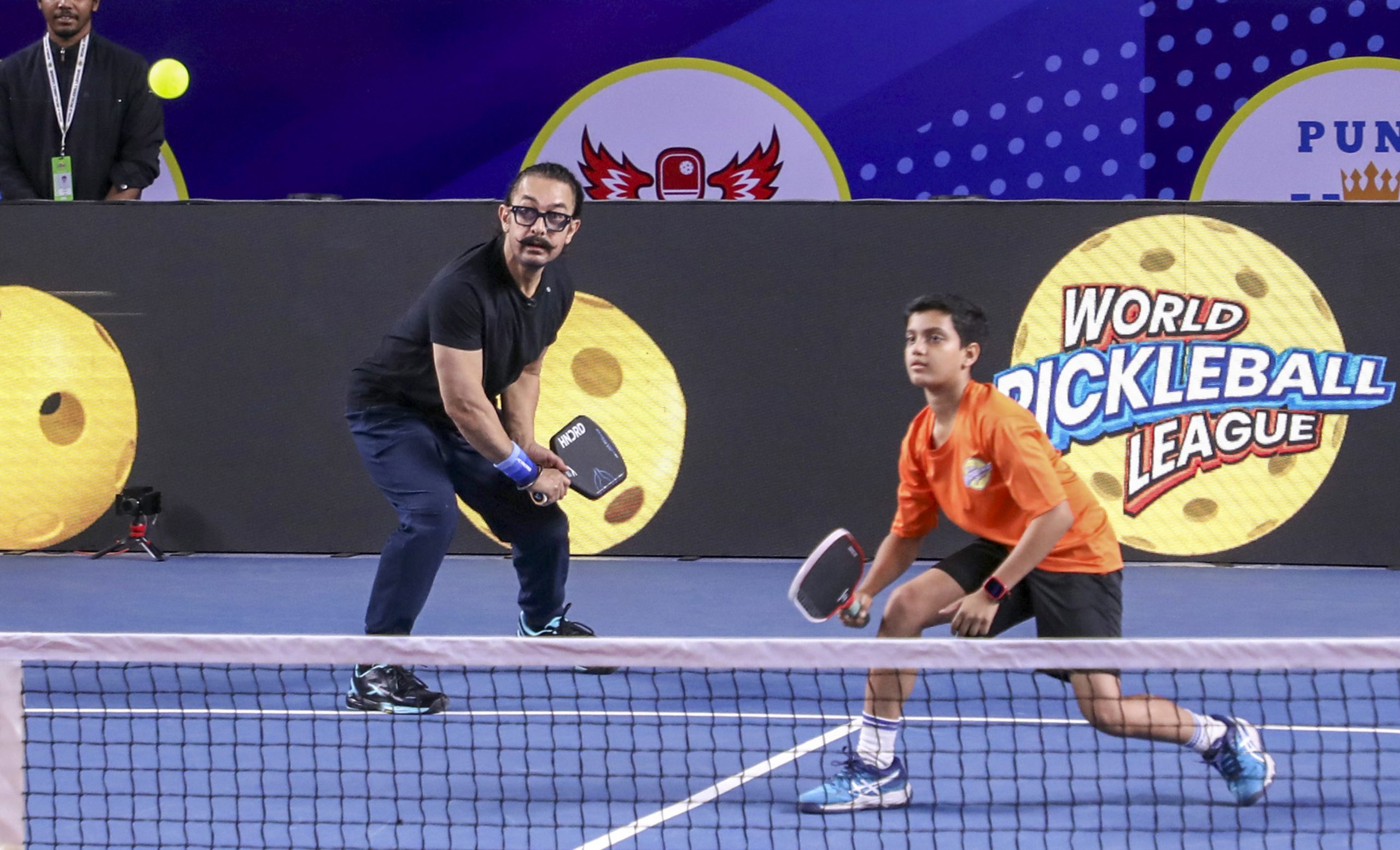
Aamir Khan’s “Mr Perfectionist” tag was built in an age when cinema moved slower—and audiences waited longer. Big films arrived like events, and the gap between projects often increased anticipation. But in 2026’s fast-scroll ecosystem—where OTT drops new titles weekly, clips travel faster than reviews, and attention resets every weekend—Aamir’s trademark patience is being re-read as a “quality gap”: not just time between films, but the risk of losing cultural momentum while the market keeps moving.
The Perfectionist’s Legacy in a Speed Economy
Aamir’s best work—Lagaan, Rang De Basanti, Taare Zameen Par, 3 Idiots, Dangal—came from obsessive prep, long development cycles, and a strong internal bar for story + impact. That model still produces “stickiness”: films that don’t just trend, but stay in public memory.
Yet OTT has changed what “winning” looks like. Today, being present matters almost as much as being excellent. Stars now compete not only at the box office, but in recommendation engines, meme culture, and weekly conversation. In that environment, scarcity can become a disadvantage: when you release rarely, every release becomes a referendum.
The Post-Laal Singh Chaddha Reckoning
The failure of Laal Singh Chaddha (2022) became a turning point. In later reflections, Aamir acknowledged that he became “a little overconfident,” and that the film’s costs escalated heavily—partly due to delays—creating a mismatch between scale and audience appetite.
That moment exposed the hidden danger of perfectionism: polishing can’t fix a core misread of what audiences want now. And in a high-cost market, a single miss can erase years of goodwill and slow a career’s rhythm.
OTT’s Biggest Pressure Point: The Window War
Aamir has been unusually vocal about distribution economics—especially the shrinking theatrical-to-digital window. He has called the current model “flawed,” arguing that an 8-week shift to streaming trains audiences to wait instead of buying tickets, weakening theatres.
This argument matters because it connects directly to “quality gap.” If the window is short, the market becomes more impatient. If films arrive slowly, audiences are more likely to move on. Aamir’s response has been to push back on the ecosystem itself—not just change his film choices.
The Comeback Proof: Sitaare Zameen Par and the YouTube Experiment
Aamir’s 2025 return with Sitaare Zameen Par showed he still has pull when the material lands—and it crossed major box-office milestones during its run.
But the bigger story was what happened next: instead of a conventional streamer deal, the film skipped OTT and went to YouTube Movies on a pay-per-view basis—an intentional challenge to the standard pipeline.
This move underlines the “Perfectionist in 2026” reality: Aamir isn’t only trying to protect his brand—he’s trying to re-engineer how films earn and reach audiences. That’s bold. It’s also risky, because experiments invite harsher scrutiny than routine releases.
Why Critics Say the “Quality Gap” Is Growing
In the OTT era, volume has become a kind of relevance. When peers appear constantly—films, series, cameos, interviews—public familiarity keeps refuelling. Aamir’s low-frequency approach flips the equation:
- Fewer releases = higher expectation per release
- Higher expectation = bigger backlash if tone feels off
- Bigger backlash = longer reset time (and usually longer gaps)
Perfectionism, then, becomes a double-edged sword: it raises the ceiling, but also raises the cost of a stumble.
The 2026 Slate: Evolution, Not Abandonment
If Aamir’s next phase succeeds, it will likely be because he’s adapting without discarding his core strengths.
1) The Dadasaheb Phalke biopic (with Rajkumar Hirani)
The Hirani–Aamir reunion for a Dadasaheb Phalke biopic was officially announced, with early plans pointing to a start timeline and a long development runway.
But Aamir has also spoken about delays and script work—signalling that the perfectionist loop (rewrite, refine, re-crack) is still very much active.
2) Ek Din (Aamir Khan Productions) – May 1, 2026
On the production side, Aamir Khan Productions is backing Ek Din, with an announced theatrical release date of May 1, 2026.
3) Lahore 1947 (producer) – August 13, 2026 (reported)
Another major production play is Lahore 1947, with reporting around an Independence-weekend 2026 release plan.
4) The Lokesh Kanagaraj “superhero” film
Aamir has confirmed a large-scale superhero/action collaboration with Lokesh Kanagaraj, with production timelines discussed for the second half of 2026, and later reaffirmations that the project remains on.
Taken together, the pattern is clear: fewer acting appearances, broader producer footprint, and selective “event” projects—plus distribution activism.
So—Does Perfectionism Still Win?
Not automatically. In 2026, perfectionism wins only when it’s paired with relevance and rhythm:
- Relevance: stories that speak to today’s anxieties, humour, anger, hope—now, not “after three years of refining.”
- Rhythm: not necessarily more films, but fewer dead zones—producer output, smart cameos, or controlled digital presence that keeps the audience connected between big titles.
Aamir’s model isn’t obsolete. It’s just no longer protected by the old ecosystem. In the hybrid era, the “quality gap” can become a strength—if the landing is precise and the pipeline stays alive. Otherwise, the gap stops feeling like craft… and starts feeling like absence.
—By Manoj H