


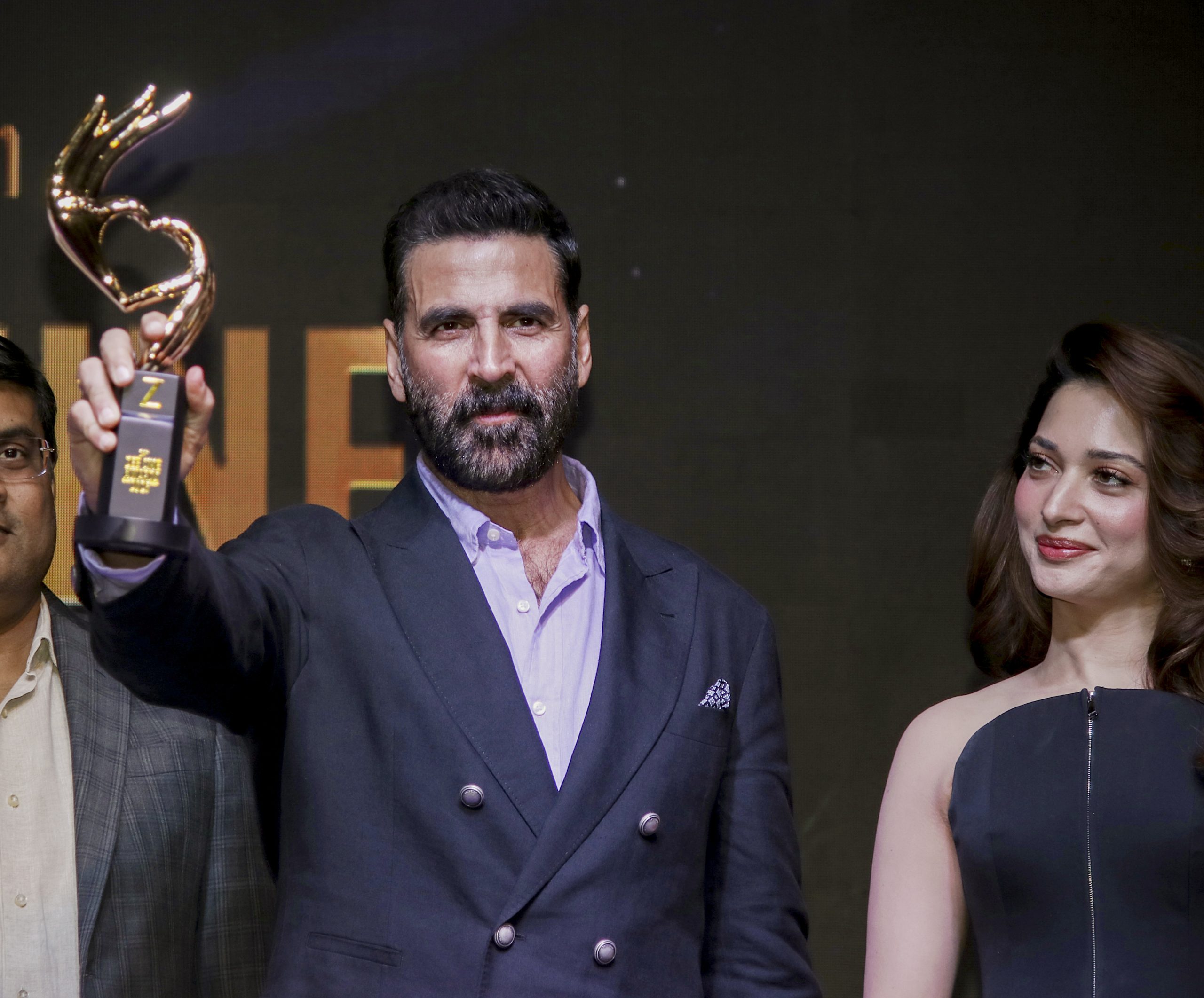
Akshay Kumar’s stardom has gone through multiple lives—90s action (“Khiladi” era), 2000s comedy dominance, and then a steady pivot into a distinct, high-repeatable screen persona: the patriotic, duty-first Indian everyman.
From the mid-2010s onward, films such as Holiday (2014), Baby (2015), Airlift (2016), Rustom (2016), Kesari (2019) and Mission Mangal (2019) helped cement that “nation before self” positioning. In more recent years, Sky Force (released in January 2025) extended the same emotional grammar—uniform, sacrifice, national pride—into a war-drama frame.
In pop culture shorthand, audiences and commentators increasingly read this as “Mr Bharat” energy—an image that echoes the older “Bharat Kumar” brand associated with Manoj Kumar’s patriotic cinema.
Why the image works (and why it sells)
1) It merges screen nationalism with off-screen discipline
Akshay’s public reputation—fitness, punctuality, regimented work ethic—fits neatly into roles built on order, duty and restraint. That alignment makes the persona feel less like a costume and more like an extension of “Akshay the brand.”
2) It plugs into the post-2010s mood
A large chunk of the mainstream audience has warmed to mission narratives—anti-terror plots, rescue operations, institutional pride, and “unsung heroes” storytelling. Akshay’s filmography offered a familiar, repeatable format: high concept + moral clarity + service-to-nation framing.
3) It borrows legitimacy from real-world causes
His association with Bharat Ke Veer—a contribution platform promoted by him and later granted trust status by the government—adds a parallel “support the forces” layer to the persona.
The Manoj Kumar connection: “Bharat Kumar” to “successor”
Akshay has publicly credited Manoj Kumar as a formative influence in how patriotism is expressed on screen. During tributes around Manoj Kumar, Akshay spoke about learning the emotion of love and pride for the country from him—and the idea that actors can lead that sentiment through cinema.
This is where the “Mr Bharat” reading becomes culturally sticky: it feels like a lineage—from Manoj Kumar’s era of explicitly patriotic films to Akshay’s contemporary, mission-driven nationalism.
The Independence Day optics: persona reinforcement in real time
Public messaging matters because it repeats the identity outside theatres. For instance, on Independence Day 2025, Akshay shared lines like: “Here’s to the freedom that defines us and the pride that unites us.”
That kind of language doesn’t create the brand, but it keeps the brand warm between releases.
Criticism and controversies: where the debate begins
The “nationalist hero” image is powerful precisely because it’s not neutral—and that’s where the pushback comes in.
1) “Is it patriotism—or packaging?”
Some commentators argue the persona is strategic positioning: a profitable lane that reliably converts into mass appeal and cultural relevance. International commentary has explicitly framed his nationalism-as-branding as a commercial choice that benefited his standing.
2) The “paper patriotism” argument
A recurring criticism is that some films risk turning nationalism into a checklist—flag, slogan, righteous hero—without deeper writing. This critique is less about whether the emotion is valid and more about how cinema performs it.
3) The ideological label debate
Stronger critiques go further and argue his cinema aligns too comfortably with establishment narratives. A notable long-form piece in The Caravan described Akshay’s positioning in the language of Hindu-nationalist cultural politics.
Others counter that audiences are free to read films politically, but an actor’s choices can still be driven by genre preference + box-office logic + personal taste.
The citizenship chapter (and why it became a flashpoint)
Nothing fuels a “nationalism” debate like perceived contradiction. Akshay’s past Canadian citizenship became a major optics issue for critics—used as evidence that the on-screen patriot persona is performative.
In 2023, he publicly confirmed he had relinquished Canadian nationality and received Indian citizenship.
That closed the legal-status question, but the episode remains part of the public conversation around authenticity vs branding.
So what is Akshay’s “Mr Bharat” image really?
It’s best understood as a hybrid:
- Genre strategy: he found a high-impact lane (national service + social reform + mission narratives) and owned it consistently.
- Personal brand fit: discipline and “no-nonsense” public identity matches the roles.
- Cultural timing: the audience appetite for such stories rose sharply in the 2010s and stayed strong.
- Contestation: the same lane invites political readings, and therefore backlash.
The lasting legacy (and what to watch next)
Whether strategic or sincere, Akshay Kumar has effectively redefined his late-career superstardom through the “nationalist hero” template—turning patriotism into a recognisable cinematic identity, much like action and comedy once were.
The real test for “Mr Bharat” in 2026 and beyond won’t be how loudly the films wave the flag, but whether the storytelling evolves—richer writing, less template, more texture—so the emotion feels earned, not manufactured.
—By Manoj H