


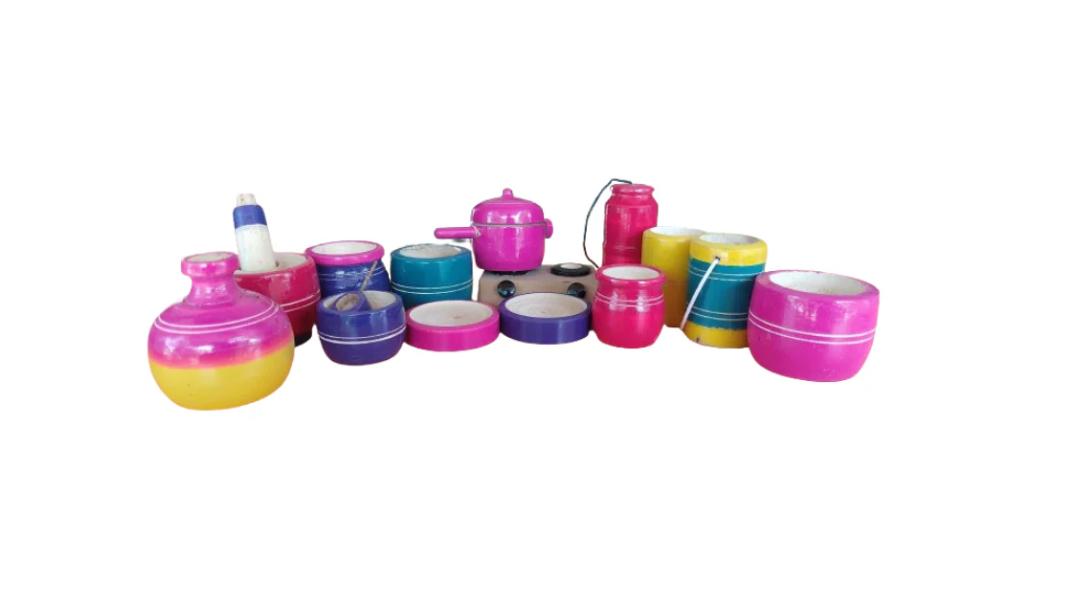
Ambasamudram, nestled in the Western Ghats of the Tirunelveli district, Tamil Nadu, has long held a cherished place in India’s rich heritage of traditional toy-making. Now, the region’s most iconic creation, the brightly coloured wooden toys known as Choppu Samaan, has received the prestigious Geographical Indication (GI) tag, a recognition announced in December 2025 that celebrates two centuries of artisanal craftsmanship and cultural legacy.
A Tradition Spanning Two Centuries
The journey of Choppu Samaan traces back approximately 200 to 300 years, with roots reaching into the very fabric of Tamil Nadu’s craft heritage. These handcrafted wooden toys, locally called “Ambasamudram kadasal choppu,” represent miniature kitchen utensils, tables, chairs, and decorative household items that have traditionally been used in pretend play by children across South India.
The Art of Handcrafted Excellence
What makes Choppu Samaan truly special is not merely its aesthetic appeal but the meticulous traditional process behind each piece. Artisans employ time-honoured techniques to transform raw wood into vibrant playthings that are both beautiful and safe for children.
The Production Process: The journey begins with air-seasoning wooden logs in the traditional manner, a process that takes six to nine months. Once seasoned, the wood is carefully cut into foot-long pieces and hand-carved using simple lathe tools, showcasing the carpenter’s dexterity and skill. Originally, artisans used premium timbers such as Manjal Kadamba (Neolamarckia cadamba), teak, and rosewood, but today, they have sustainably shifted to rubber wood (Hevea brasiliensis) and eucalyptus (Eucalyptus globulus) while maintaining the traditional quality through their craftsmanship.
Lacquering and Polishing: Following carving, the toys are lacquered with lac resin, a natural material that gives them their characteristic lustrous finish. The polishing step is particularly remarkable, artisans use leaves from the screw pine plant (Pandanus odoratissimus, called ‘Thalampoo’ in Tamil). These leaves are harvested from the banks of the Thamirabharani river, and only unbloomed leaves are selected to achieve the desired finish, demonstrating the specificity of traditional methods.
Vibrant Colours from Nature
The most visually striking feature of Choppu Samaan is undoubtedly their vibrant, eye-catching colours. Unlike modern plastic toys, these colours come exclusively from natural vegetable dyes, making the toys entirely non-toxic and child-safe. This eco-friendly approach means that even if children chew on these toys, no harm results, addressing a critical concern for parents seeking safe play objects.
Cultural Significance and Festival Tradition
Choppu Samaan holds profound cultural significance, particularly during Navaratri celebrations. During the festival season, especially in September and October, these toys feature prominently in Golu (festival of dolls) arrangements, making sales peak during this period. Beyond festive occasions, pilgrimage sites throughout Tamil Nadu remain key markets for these toys, where tourists and devotees alike appreciate their cultural value as authentic Indian handicrafts.
The GI Tag: Recognition and Revival
The awarding of the GI tag on December 2, 2025, represents a turning point for Choppu Samaan artisans. This recognition, facilitated by the Ambasamudram Bharani Mara Varna Kadasal Artisans’ Welfare Association and supported by organizations like Poompuhar, grants the craft intellectual property protection and enhances its market value. With this certification, Tamil Nadu’s GI portfolio has expanded to 74 products, establishing the state as a leading hub for heritage-based product identity.
Preserving Heritage for the Future
While the industry faces challenges, with the number of families involved declining from 600 in the 1970s to approximately 100 today, the GI tag offers renewed hope. These handcrafted toys represent more than playthings; they are tangible links to cultural traditions, sustainable alternatives to mass-produced plastic toys, and livelihood sources for skilled artisans keeping ancient techniques alive. Ambasamudram’s Choppu Samaan stands as a testament to India’s enduring craft traditions and the irreplaceable value of human creativity and heritage.
By – Sonali