


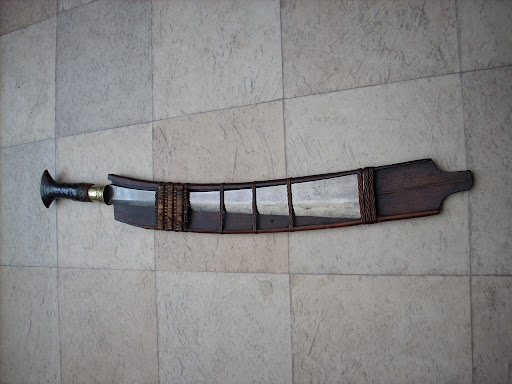
In the remote hills and river valleys of Arunachal Pradesh, a traditional weapon continues to hold deep cultural, social, and symbolic significance – the Dao, a broad-bladed sword that has been an inseparable part of tribal life for centuries. More than a weapon, the Dao represents identity, craftsmanship, and continuity among several indigenous communities of the state.
What Is the Dao?
The Dao is a single-edged sword or long knife, typically measuring between 45 cm and 60 cm in length, featuring a blade that is slightly curved or straight, and a handle made of sturdy wooden or bamboo. Traditionally forged by local blacksmiths, the Dao was designed for multiple purposes, from self-defense and warfare to agricultural work, hunting, and ritual use.
Unlike decorative swords, the Dao is known for its practical design, allowing it to function as a tool and a symbol of authority at the same time.
Communities Associated with the Dao
The Dao is widely used by tribes such as the Nishi, Adi, Apatani, Nocte, Wancho, Tangsa and Mishmi, though its design and ornamentation vary across regions.
For the Wancho and Nocte tribes of eastern Arunachal Pradesh, the Dao historically played a role in inter-tribal conflicts and ceremonies, while among the Adi and Nishi, it was essential for clearing forests, farming and hunting.
Each tribe developed its own distinct style, reflecting local materials, beliefs and social customs.
Craftsmanship and Making
The traditional Dao is hand-forged, using iron or steel obtained earlier through trade routes or recycled metal. The blade is heated, hammered and sharpened using indigenous techniques passed down generations.
Handles are commonly made from wood, bamboo, horn or bone, often wrapped with cane or fibre for grip. Some ceremonial Daos feature intricate carvings, brass fittings, or engraved patterns, signifying clan identity or social status.
The sheath, usually crafted from wood and bamboo, is sometimes decorated with beads or animal motifs.
Cultural and Ritual Significance
Beyond utility, the Dao holds ritual importance. It is often used during festivals, marriages and community ceremonies. In some tribes, gifting a Dao symbolises respect, alliance or manhood.
During traditional dances and festivals such as Nyokum, Solung and Mopin, performers carry the Dao as a representation of bravery, protection, and ancestral strength. It is also associated with the idea of safeguarding land and community.
From Weapon to Cultural Emblem
With modernization and stricter weapon regulations, the Dao is no longer used for combat. However, it remains a powerful cultural emblem. Today, Daos are prominently seen in cultural exhibitions, museums, state celebrations and tribal attire.
Artisans have also begun producing ceremonial and decorative Daos, catering to collectors, cultural institutions, and tourism markets, while maintaining traditional designs.
Preservation Efforts and Challenges
As younger generations move away from traditional occupations, the number of skilled Dao makers has declined. Cultural organisations, tribal councils, and state-supported craft initiatives are now working to document techniques, support artisans, and promote indigenous weapons as heritage crafts.
The Dao is increasingly being recognised not as a weapon, but as an intangible cultural asset, reflecting Arunachal Pradesh’s deep connection between nature, survival, and identity.
A Blade That Tells a Story
The Dao of Arunachal Pradesh stands today as a reminder of a time when tools were extensions of culture and survival depended on skill and tradition. Rooted in history yet adapting to modern contexts, the Dao continues to tell the story of the state’s resilient tribal heritage, a blade that has evolved from necessity to symbol, without losing its soul.
By – Sonali