


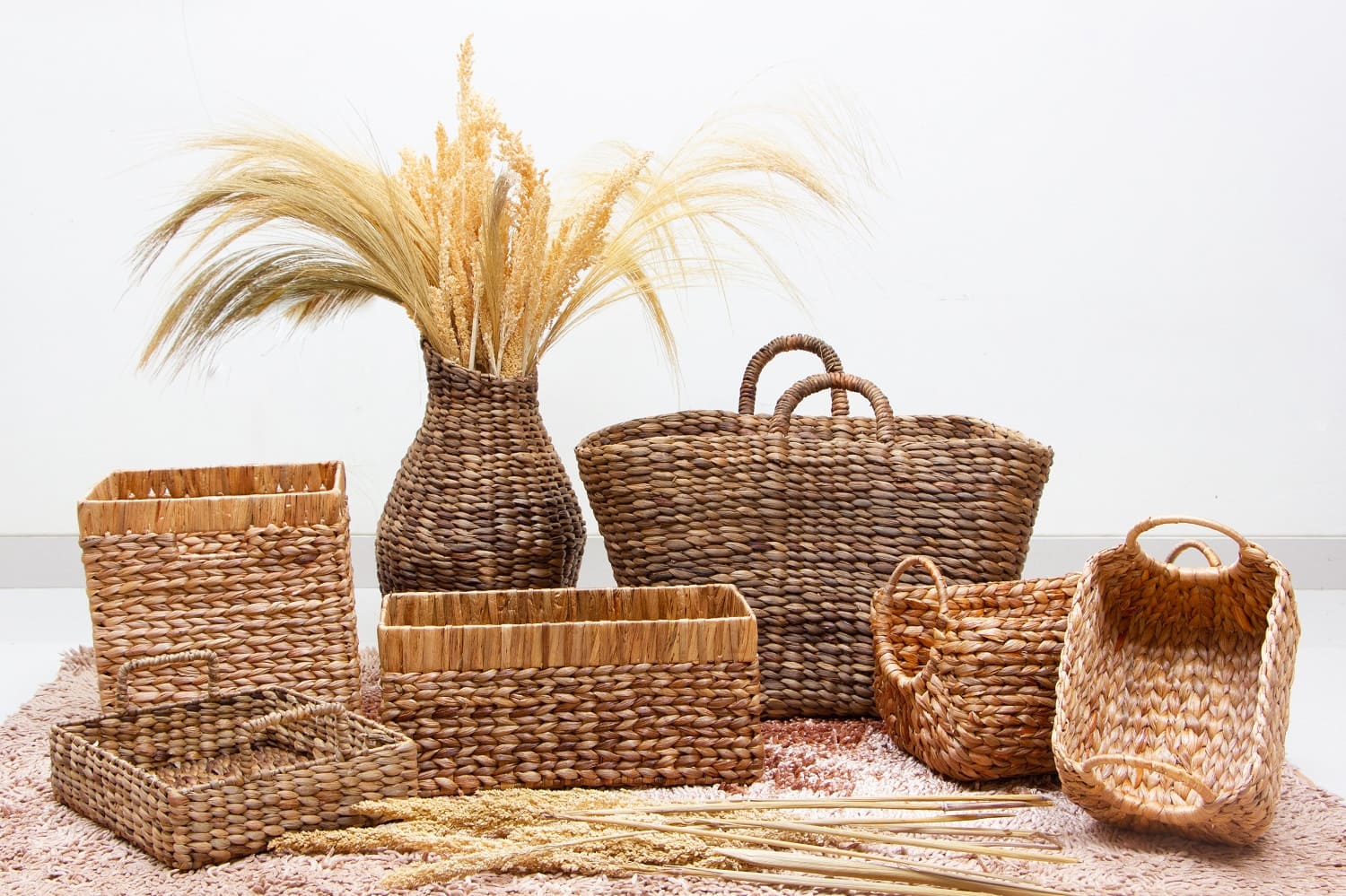
Assam has long battled pani meteka—the fast-spreading water hyacinth that clogs ponds, wetlands and slow-moving rivers. But in a powerful example of circular economy thinking, rural artisans are now flipping that problem into a product: eco-friendly handicrafts woven from dried water hyacinth stems—bags, baskets, mats, home utilities and more—creating livelihoods while easing pressure on local water bodies.
From nuisance to natural resource
Water hyacinth (locally, pani meteka) multiplies quickly and can overwhelm freshwater ecosystems—impacting fishing, transport and recreational use. That “weed problem,” however, also means abundant, low-cost raw material. ASRLM has explicitly positioned water hyacinth craft as an eco-friendly livelihood option—linking removal of the plant with income generation and environmental rejuvenation.
The craft model: clusters, training and scale
Assam’s organised push took shape through livelihood interventions that trained artisans and built local production capability. Under ASRLM, the initiative began as a pilot with around 600 people across six clusters—each tied to a specific district: Pub Mangaldoi (Darrang), Kachugaon (Kokrajhar), Dolongghat (Nagaon), Guijan (Tinsukia), Majuli (Majuli) and Dhemaji (Dhemaji).
Over time, the ecosystem expanded beyond training into market linkage and infrastructure support. Official ASRLM documentation also notes the establishment of six Common Facility Centres (CFCs)—a key step for standardising tools, improving finishing, and increasing output quality at the cluster level.
How pani meteka products are made
The process is deceptively simple, but quality depends on disciplined drying, flattening and weaving:
- Harvesting & cleaning: mature stems are collected, washed thoroughly, and sorted.
- Sun-drying: stems are dried to reduce moisture and improve strength for weaving.
- Flattening & prepping fibre: many products require flattening the stem into workable strips.
- Weaving & shaping: artisans braid/weave into baskets, mats, bags and utility forms—by hand or with support tools.
- Finishing: natural dyes and durable stitching/lining are often used for better appeal and longer life.
Craft references also note water hyacinth’s abundance as a material base—supporting steady production of functional, everyday products (including laptop bags and tiffin bags).
Livelihood impact: women-led income, dignity and local retention
One of the strongest outcomes is the women-led nature of the value chain. A Government of India press note documenting water hyacinth-based livelihood work in Assam reports that women artisans in one such initiative now make at least ₹10,000 per month, underscoring the sector’s income potential when training and market channels click into place.
Beyond income, the model reduces seasonal distress migration by creating work close to home, while also encouraging communities to treat invasive biomass as an economic input rather than pure waste.
Challenges that still matter
Even with momentum, growth will depend on execution in three areas:
- Market linkages at scale: ASRLM’s own roadmap stresses exhibitions, cataloguing, tie-ups with buyers/exporters, and linkages with marketing organisations—these need consistency, not one-off pushes.
- Quality consistency: standard sizing, finishing, durability and packaging remain crucial for repeat orders.
- Scaling without losing craft integrity: higher output should not mean “generic” product design—Assam’s advantage is story + sustainability + workmanship.
Why this story travels
Pani meteka craft is not just an eco-product trend; it’s a local solution with national relevance—turning an environmental stressor into a circular-economy livelihood that is community-led, women-driven, and increasingly formalised through training, infrastructure and GI recognition.
If you want your next purchase to mean more than utility, pick a pani meteka bag or mat—every weave helps clear waterways and keep rural livelihoods growing.
By – Sonali