


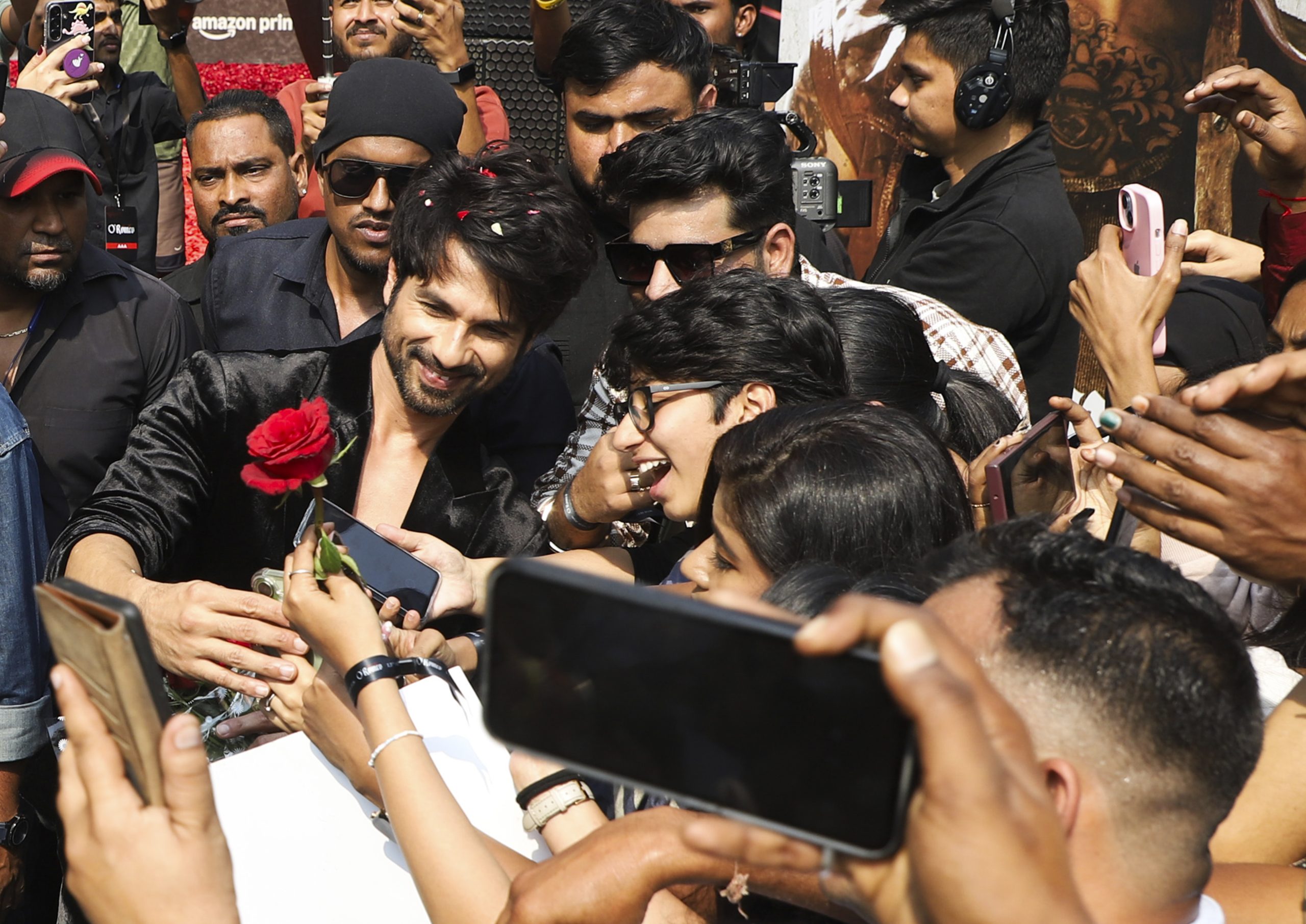
Promoting his upcoming film O’Romeo, actor Shahid Kapoor has offered a blunt diagnosis of why Hindi cinema has been struggling to consistently pull audiences to theatres: it’s not just shrinking attention spans—it’s also the industry’s own output and the way films are being sold.
In a recent conversation with Prakhar Gupta on his YouTube/podcast platform, Shahid said the popular “doomscrolling” explanation is only half the story. Yes, people are more restless—and creators aren’t immune either—but that doesn’t absolve filmmakers of responsibility for what’s landing on screens.
“Two-way process”: attention spans and what the industry is offering
Shahid acknowledged that viewers today are used to constant stimulation, arguing that consumption patterns have rewired how people sit through long-form narratives. He described it as “the candle… burning from both ends,” linking the audience’s impatience to a “dopamine hit,” and adding that creators face the same distraction loop—hurting focus and, by extension, craft.
But he didn’t stop at audience behaviour. Shahid put the onus back on the industry, stating that the bigger issue is quality: “It’s not that the audience doesn’t want to watch films… we are not making as many good films as we should,” concluding, “So it’s a two-way process.”
“Manufactured marketing” vs authentic audience response
Shahid also took aim at what he called “manufactured” marketing—promotion strategies that, in his view, can overwhelm the work itself and dilute the emotional contract between film and viewer.
He framed cinema’s magic as a live, collective experience: a roomful of people reacting in real time. But when publicity becomes too engineered, he suggested the spontaneity of that response gets compromised—“when that purity starts to be disrupted… it no longer feels the same.”
He stressed that marketing is unavoidable but questioned where it crosses an ethical or creative line and argued that if artists are chasing something “authentic, human, spontaneous,” they should “let it happen” instead of trying to control it.
Why the remarks are striking now
Shahid’s comments land at a moment when the Hindi box office has been volatile—big openings don’t always translate into sustained footfalls, while audience word-of-mouth can make or break a film quickly. His underlying argument is that the “audience has evolved” in practice: they’re quicker to disengage, quicker to judge craft, and less forgiving of content that feels overpackaged.
The episode featuring Shahid was published on Apple Podcasts on January 30, 2026 (UTC), and his remarks were widely reported across entertainment coverage the following day.
What emerges from his critique is not a dismissal of mainstream cinema, but a challenge to raise the baseline—better writing, sharper craft, and marketing that supports the film rather than “manufacturing” its reception.
—By Manoj H