


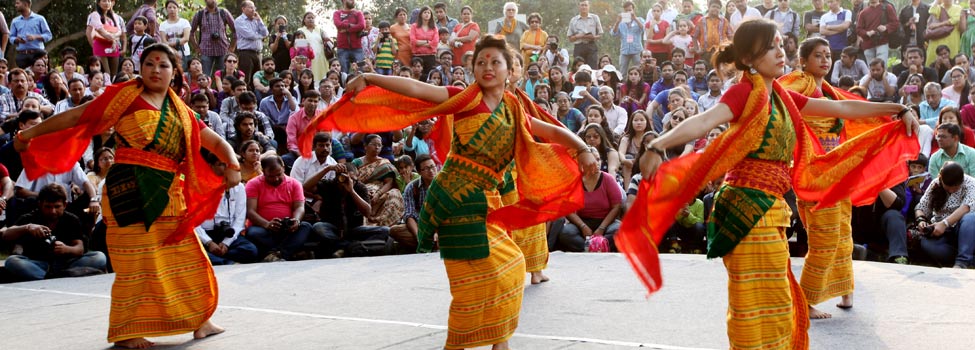
The Bagurumba, a vibrant folk dance rooted in the traditions of the Bodo community of Assam, has captivated audiences across Northeast India. Often called the “butterfly dance”, it’s famed for its delicate movements that invoke the grace of fluttering wings. Today, it continues to be a cultural highlight during festivals and cultural showcases.
Origins and Cultural Significance
Originating from the Indigenous Boro (or Bodo) people in the foothills of Assam’s evergreen forests, Bagurumba embodies a centuries-old connection with nature. The choreography, depicting birds, butterflies, flowing rivers, and swaying foliage, reflects these deep environmental ties. Though its precise beginnings remain shrouded in folklore, the dance symbolizes themes of joy, friendship, and harmony with the natural world.
The Stage: Costumes, Music & Movement
Visual Poetry in Motion
Performed exclusively by Bodo women, Bagurumba showcases traditional and colorful attire, namely the dohkhna, jwmgra (fasra), and aronai. The flowing fabrics evoke wings as dancers move in circular patterns, their gestures soft and rhythmic like butterflies alighting on petals.
A Symphony of Indigenous Instruments
Accompanying the dance are handcrafted instruments that add layers of rhythm and melody:
- Kham: a long cylindrical drum made of wood and goat skin.
- Sifung: a long bamboo flute with five finger holes, producing deep tones.
- Serja: a bowed, violin-like string instrument.
- Jota: a metallic percussion.
- Gongwna: bamboo wind instrument.
- Tharkha: made from split bamboo.
Melodic Roots
The dance’s musical composition follows an F major pentatonic scale, akin to traditional Chinese music, hinting at historical cross-cultural influences.
When & Why: Occasions & Community Spirit
Bagurumba is not reserved for fixed calendar dates. It finds life during festivals, harvest celebrations, and cultural programs, particularly during Bwisagu (also spelled Baisagu), a spring festival steeped in renewal and joy.
Rich with expressive energy, Bagurumba sparks communal participation; spectators often join in song or movement, regardless of age or experience, drawn by its youthful exuberance and poetic elegance.
Cultural Preservation & Modern Revival
Today, Bagurumba is more than a folk performance; it’s a living emblem of Assam’s cultural identity. With increasing attention from government bodies, cultural institutions, and tourism departments, the dance is gaining recognition and support to ensure the tradition endures. Educational programs, workshops, and performances help pass the art to new generations while celebrating Bodo identity in modern platforms.
Final Word
As a living, evolving tradition, Bagurumba remains a beautiful narrative woven through motion, melody, and cultural pride. Its graceful steps tell stories of nature and kinship, reminding us that some dances transcend performance, becoming timeless expressions of identity and belonging.
By – Sonali