


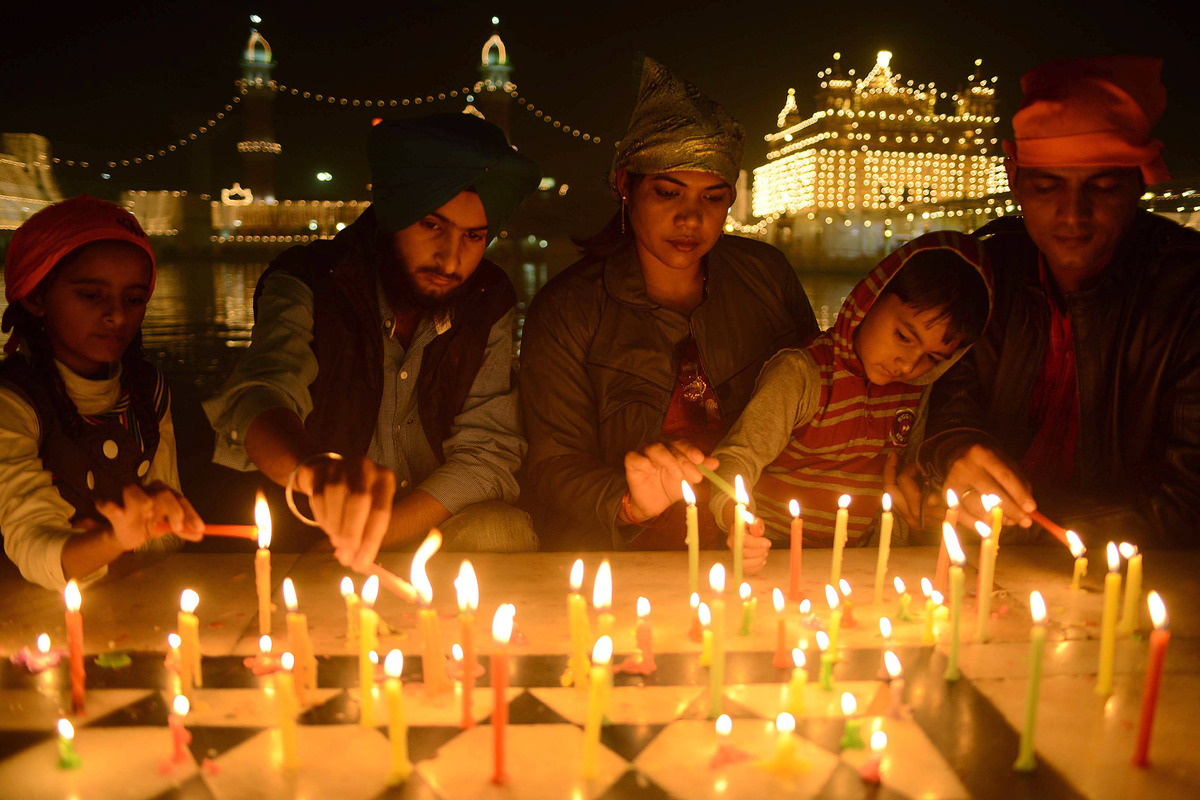
On the night the nation illuminates lamps in honor of Diwali’s triumph of light over darkness, Sikh communities across India and the world mark Bandi Chhor Divas, a celebration uniquely rooted in their own history of liberation. As millions gather to witness the Golden Temple’s gilded façade bathe in thousands of glowing diyas, the festival weaves together spirituality, community service, and the joy of freedom.
A Radiant Dawn of Liberation
Legend recounts that in 1619, Guru Hargobind Sahib, the sixth Sikh Guru, was imprisoned by the Mughal Emperor Jahangir in the Gwalior Fort. Unlike other captives, Guru Hargobind chose to wear two swords symbolizing spiritual and temporal authority. When negotiations for his release commenced, the Emperor agreed to free all prisoners who could hold onto the Guru’s cloak. The Guru arranged for 52 Hindu princes to cling to his cloak’s sweeping hem, thus securing their freedom alongside his own. This act of compassion and leadership earned the day the name Bandi Chhor Divas, the “Day of Liberation.”
Golden Temple Aglow
At the heart of Bandi Chhor Divas celebrations is the Harmandir Sahib– the Golden Temple in Amritsar. From sunset on Diwali night, the temple complex is adorned with glittering lights and floral garlands. Four massive fireworks displays punctuate the night sky above the Amrit Sarovar (the sacred pool), drawing pilgrims from across continents. Hundreds of volunteers maintain a continuous Langar kitchen that serves free meals to tens of thousands of visitors, embodying the Sikh tenet of seva (selfless service).
Global Observances Under One Banner
Beyond Punjab, Sikh gurdwaras worldwide mark the festival with evening prayers, kirtan (devotional singing), and community feasts. In London’s Southall, nearly 30,000 devotees gathered this week to witness a flotilla of floating candles on a makeshift sarovar. In Vancouver, the local Sikh Cultural Society organized an almsgiving drive, distributing warm clothes and food parcels to the homeless. Such events reinforce the community’s commitment to uplifting the marginalized.
Stories of Shared Light
This year’s Bandi Chhor Divas carried deeper resonance as Interfaith councils in Delhi and Mumbai collaborated with gurdwara committees for Diwali–Bandi Chhor Divas melas, inviting people from diverse faiths to experience Sikh traditions firsthand. Attendees sampled karah prasad (a sweet wheat pudding) and participated in gatka (traditional martial arts) demonstrations. “We celebrate together to honor our shared heritage of freedom and unity,” said Bhupinder Kaur, president of the Delhi Interfaith Forum.
The Message Echoes Beyond Borders
While Sikh scriptures emphasize the spiritual triumph over ignorance, Bandi Chhor Divas also serves as a reminder of political and social liberation. In the United States, the Sikh Coalition hosted a virtual panel this week featuring historians, human rights activists, and descendants of the 52 princes discussing the festival’s relevance in today’s global landscape. “The lesson of standing up for justice transcends centuries,” noted panelist Dr. Jaspreet Singh, a professor of South Asian studies.
A Beacon for the Future
As the diyas burn low and the fireworks fade, the spirit of Bandi Chhor Divas endures in the acts of charity and solidarity that follow. Across India and beyond, gurdwaras maintain free medical camps, blood donation drives, and disaster-relief collections in the days after the festival. These deeds ensure that the light kindled on this night extends throughout the year.
From Darkness to Dawn
When dawn breaks on Bandi Chhor Divas, it’s not only new lamps that glow, it is the light of hope rekindled in every heart. As Sikh families extinguish their lamps, they carry forward the promise of freedom, compassion, and unity, reminding the world that true illumination lies in extending the hand of liberty to all.
By – Sonali