


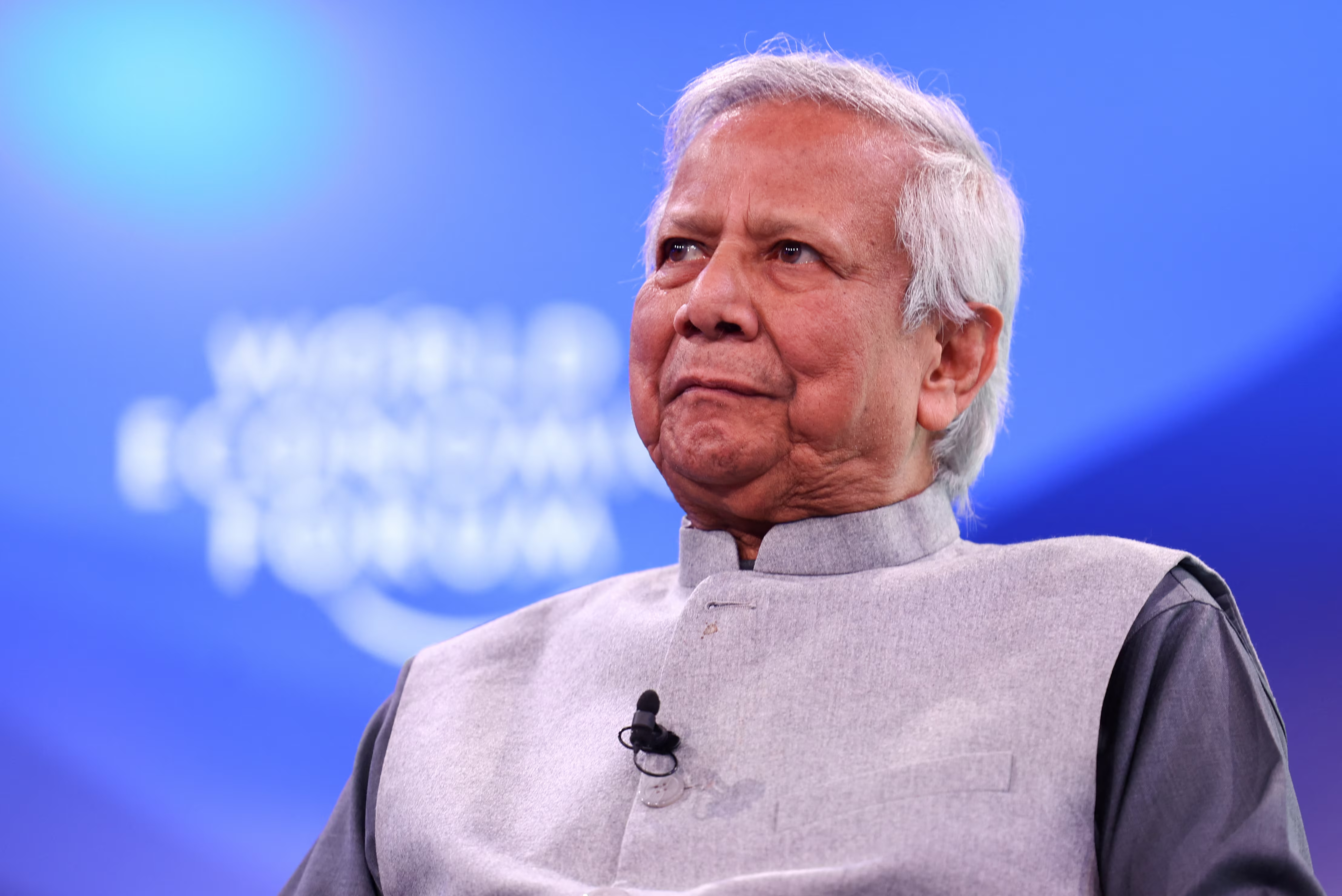
Bangladesh is grappling with escalating political and social unrest, marked by protests, election delays, and tensions between the interim government and the military. The crisis intensified in May 2025, with significant developments reported between May 19–28.
In This Article:
The interim government, led by Muhammad Yunus, faces opposition from the Bangladesh Nationalist Party (BNP), Jamaat-e-Islami, and the military. Discontent over delayed elections, the Awami League ban, and controversial policies like the Chittagong Port deal have fueled widespread protests and strained civil-military relations.
Political Turmoil and Election Delays
Since the ousting of Sheikh Hasina’s Awami League government in August 2024, Bangladesh’s interim administration under Nobel laureate Muhammad Yunus has struggled to stabilize the nation. The government’s ban on the Awami League on May 10, 2025, under the Anti-Terrorism Act, citing ongoing trials, has crippled one of the country’s largest political parties, with leaders in exile or hiding and hundreds of workers killed. The BNP, led by Khaleda Zia, demands elections by December 2025, while Yunus projects polls by mid-2026, citing electoral reforms. This delay has sparked protests by civil servants, teachers, and activists, disrupting cities like Dhaka.
Civil-Military Rift and Policy Controversies
Tensions between Yunus and Army Chief General Waker-Uz-Zaman have escalated, described as a “cold war” by local media. The military, initially supportive of the interim government, opposes Yunus’s decisions, including releasing convicted Islamist leaders and Bangladesh Rifles mutineers, seen as a betrayal. The army’s push for December elections and rejection of a proposed humanitarian corridor to Myanmar’s Rakhine state, viewed as a security risk, have deepened the rift. Public protests against Yunus’s plan to hand over Chittagong Port management to a foreign company further highlight public distrust, with torch rallies in Dhaka signaling widespread anger.
Regional and Social Implications
The unrest coincides with strained India-Bangladesh relations, exacerbated by Dhaka’s ban on Indian yarn exports and India’s retaliatory curbs on Bangladeshi garments, impacting the $10 billion trade-dependent garment industry. Allegations of attacks on Hindus and India’s concerns over Bangladesh’s warming ties with Pakistan and China add complexity. The arrest of actress Nusraat Faria for portraying Hasina in a film underscores the government’s crackdown on dissent, raising fears of authoritarianism.
A Nation at a Crossroads
With 170 million people affected by this instability, Bangladesh risks further polarization. Yunus’s planned talks with eight political parties in June aim to address reforms, but the military’s influence and public discontent pose challenges. The interim government’s vision for democratic reforms clashes with accusations of overreach, leaving Bangladesh teetering on the brink of a deeper crisis unless unity and dialogue prevail.
-By Manoj H