


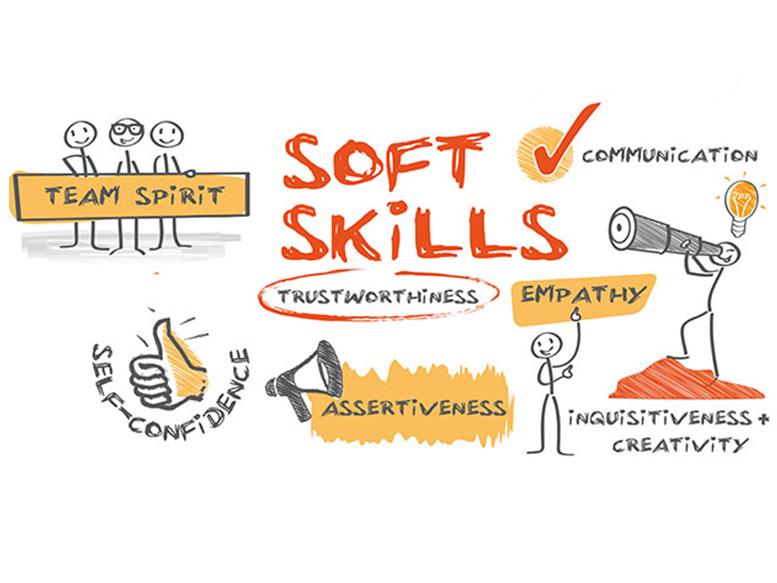
Employers worldwide are increasingly prioritizing soft skills over formal degrees, especially for entry-level and mid-career roles. Major firms like IBM, Accenture, and Siemens are dropping degree requirements in favor of skills-first hiring, arguing that practical interpersonal abilities and adaptability matter more than academic credentials.
In This Article:
- Emotional Intelligence
- Adaptability & Resilience
- Critical Thinking & Structured Problem-Solving
- Effective Communication in Hybrid Environments
- Collaboration & Virtual Teamwork
- Curiosity & Lifelong Learning
- Influence & Negotiation
- Data Literacy
- Cultural Intelligence & DEI Awareness
- Time Management & Organizational Discipline
- Breaking the “Paper Ceiling”: Why Degrees Don’t Guarantee Job-Ready Skills
- What This Means for Jobseekers
1. Emotional Intelligence: Managing Emotions for Team Success
Emotional Intelligence (EI), the ability to recognize, regulate, and respond to emotions in oneself and others, is now viewed as essential. A CareerBuilder survey reports that 71 percent of employers value EI over IQ when hiring or promoting. High-EI employees build inclusive teams, resolve conflicts, and drive engagement in hybrid settings.
2. Adaptability & Resilience: Thriving Amid Constant Change
With business models and tools shifting rapidly, adaptability is no longer optional. Employers want candidates who pivot seamlessly to new workflows, systems, or strategies. Similarly, resilience, recovering from setbacks and staying productive under stress, is cited as a top trait by hiring managers across industries.
3. Critical Thinking & Structured Problem-Solving
Automated systems can’t replicate human reasoning. Employers seek individuals who can analyze complex situations, challenge assumptions, and propose creative solutions. The World Economic Forum ranks critical thinking and problem-solving as the No. 1 and 2 skills for 2025.
4. Effective Communication in Hybrid Environments
In 2025’s remote-heavy workplaces, communication skill extends beyond basic writing or speaking. It includes tailoring messages across video calls, emails, visuals, and cross-cultural contexts. Indeed estimates that poor communication costs teams eight hours weekly per employee, about $12,500 annually in lost productivity.
5. Collaboration & Virtual Teamwork
Modern workforces are globally distributed. Employees must excel at cross-functional collaboration, using digital tools like Slack, Miro, or Asana to work together. High-performing collaborators contribute ideas, share knowledge, and build consensus, often without direct supervision.
6. Curiosity & Lifelong Learning
EY’s global talent lead Irmgard Naudin ten Cate names curiosity a critical trait in early-career professionals: the willingness to learn new skills continually and stay ahead of industry shifts. In a rapidly evolving job market, curiosity differentiates proactive candidates from passive ones.
7. Influence & Negotiation: Driving Mutual Outcomes
Influencing others and navigating conflicts productively, whether in project teams, client discussions, or salary talks, is vital. And the way it’s done matters: empathic listening paired with goal orientation, as described by Naudin ten Cate, is core to workplace negotiation.
8. Data Literacy: Turning Numbers Into Action
While not a “hard” coding skill, data literacy, interpreting and communicating insights from data, is now foundational across roles. Staff who can support decisions with evidence and spot trends are highly valued in marketing, HR, finance, and operations.
9. Cultural Intelligence & DEI Awareness
Diverse teams require more than tolerance; they need cultural intelligence (CQ). Employees who understand identity, bias, and equity contribute to inclusive environments and prevent cross-cultural missteps. McKinsey notes that companies highly diverse in leadership are 36 percent more profitable.
10. Time Management & Organizational Discipline
In digital workplaces buzzing with multiple channels and deadlines, effective time management shows you can juggle priorities, meet milestones, and work autonomously. Employers specifically seek individuals who can break large projects into manageable tasks and stick to productive routines.
Breaking the “Paper Ceiling”: Why Degrees Don’t Guarantee Job-Ready Skills
A recent jobs commission report from Australia warns that up to 90 percent of technically qualified applicants are rejected for lacking soft skills like communication, teamwork, and problem-solving. Meanwhile, companies removing degree requirements report improved diversity and performance under skills-first frameworks.
What This Means for Jobseekers
In today’s competitive climate, you can outperform degree holders by demonstrating real-world soft-skill examples during interviews or on your résumé, such as leading a volunteer project (leadership), stepping into a sudden role change (adaptability), or resolving a cross-cultural misunderstanding (cultural intelligence). Businesses no longer equate diplomas with capability; they want evidence of how you interact, learn, adapt, and lead.
Soft skills are now the new credentials, and they matter more than ever.
By – Sonali