


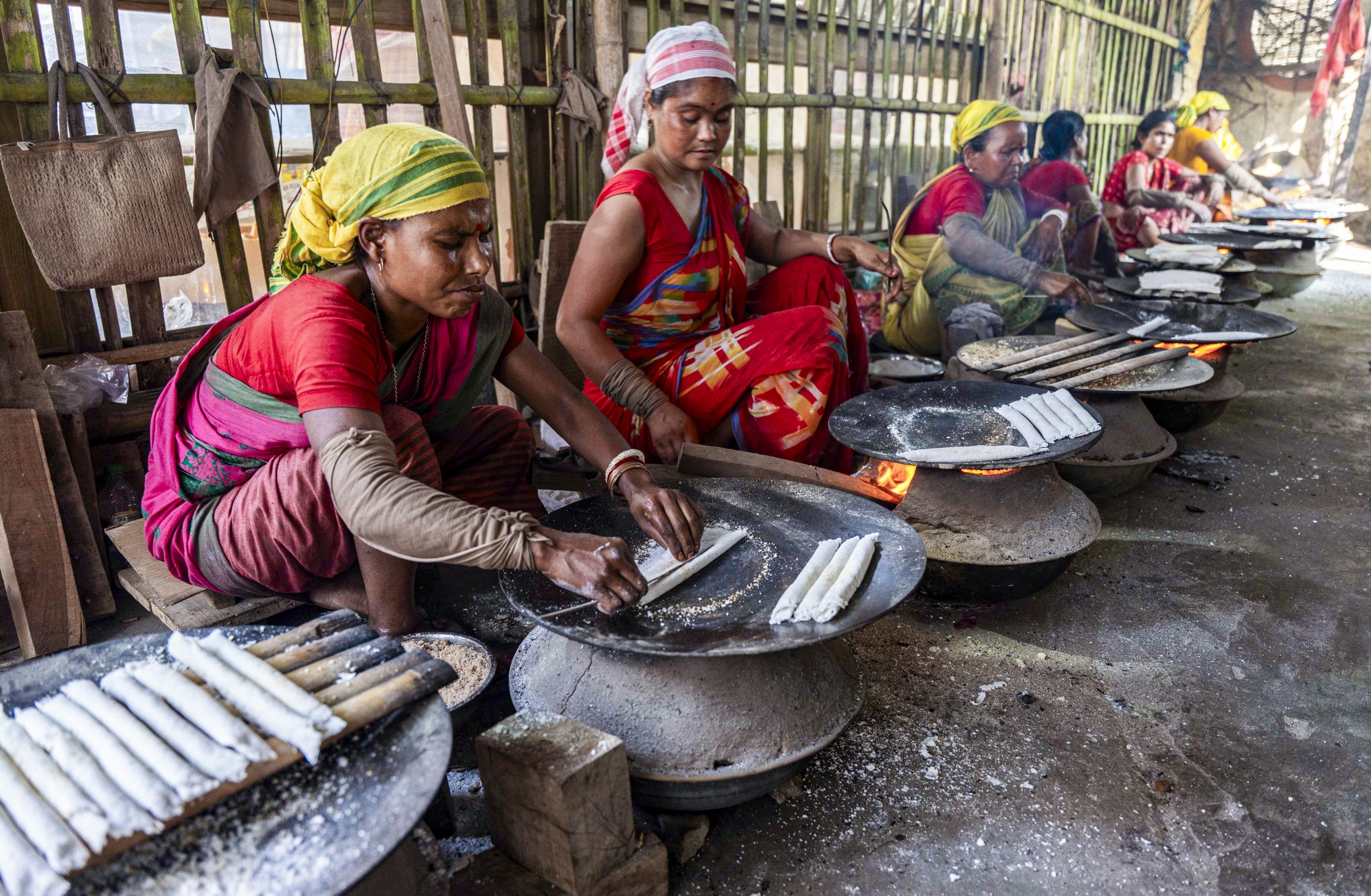
Assam is once again wrapped in festive warmth as Bhogali Bihu, also known as Magh Bihu, is celebrated across the state. Marking the end of the harvesting season in the month of Magh (January–February), the festival brings communities together in gratitude, food, and shared tradition—turning villages, towns and city neighbourhoods into spaces of collective celebration.
Harvest’s End, A Festival of “Bhog”
Bhogali Bihu is fundamentally a harvest festival, observed around mid-January, and rooted in the idea of “bhog” — enjoyment, abundance and feasting. With granaries full and farm work easing momentarily, the festival becomes both a thanksgiving to nature and a social reset: families reunite, friends gather, and communities celebrate what the season has yielded.
Preparations often begin days in advance—arranging ingredients, cleaning homes, and planning the community meal—building an atmosphere of anticipation that is as important as the festival day itself.
Uruka: The Night of Community Feasting
The celebrations begin on the eve called Uruka, a night dedicated to feasting and camaraderie. In many villages, people build temporary huts known as Bhelaghar using bamboo, straw and thatch—often near open fields or riverbanks—creating a shared space where food is cooked, served and celebrated together.
The Uruka spread is famously local and seasonal, centred on rice-based delicacies and winter favourites—til pitha, laru, and other traditional preparations that reflect the harvest’s freshness. The night is less about ceremony and more about togetherness: cooking as a collective act, stories exchanged across generations, and folk music that carries late into the winter air.
Meji at Dawn: Bonfires, Offerings and Renewal
At dawn on the main day, communities gather around the Meji—a large ceremonial bonfire—constructed from bamboo, dried leaves and crop remnants. Lighting the Meji is a pivotal ritual symbolising renewal and prayers for prosperity. Offerings—often traditional food items—are made to the fire as people seek blessings for the year ahead.
In many places, the ashes from the bonfire are later used in gardens and fields, continuing the agricultural symbolism of fertility and continuity into the next farming cycle.
Games, Gatherings and Cultural Colour
Bhogali Bihu is also a festival of play. Traditional games such as tekeli bhonga (pot breaking) and other community competitions add energy to the day’s celebrations, particularly in rural settings and organised community events.
Some regions historically hosted animal fights as part of local gatherings, but these have become increasingly contested due to animal-welfare concerns and evolving legal scrutiny. In recent years, reports have noted returns under regulatory frameworks in some pockets, even as objections and court challenges persist—making it prudent to view them as a debated, location-specific practice rather than a uniform festival feature.
Urban centres add their own flavour through cultural programmes, folk performances and winter fairs that spotlight Assamese food, crafts and textiles—creating a bridge between tradition and contemporary community life.
Significance: Food, Fire and Social Bonds
At its heart, Bhogali Bihu remains a powerful reminder of Assam’s agrarian roots and the strength of community living. It celebrates the cycle of sowing and reaping, honours nature’s generosity, and renews social ties through shared meals and collective rituals. From the togetherness of Uruka to the glow of the Meji, Bhogali Bihu continues to be a festival where food, fire and friendship merge into memory.
By – Sonali