


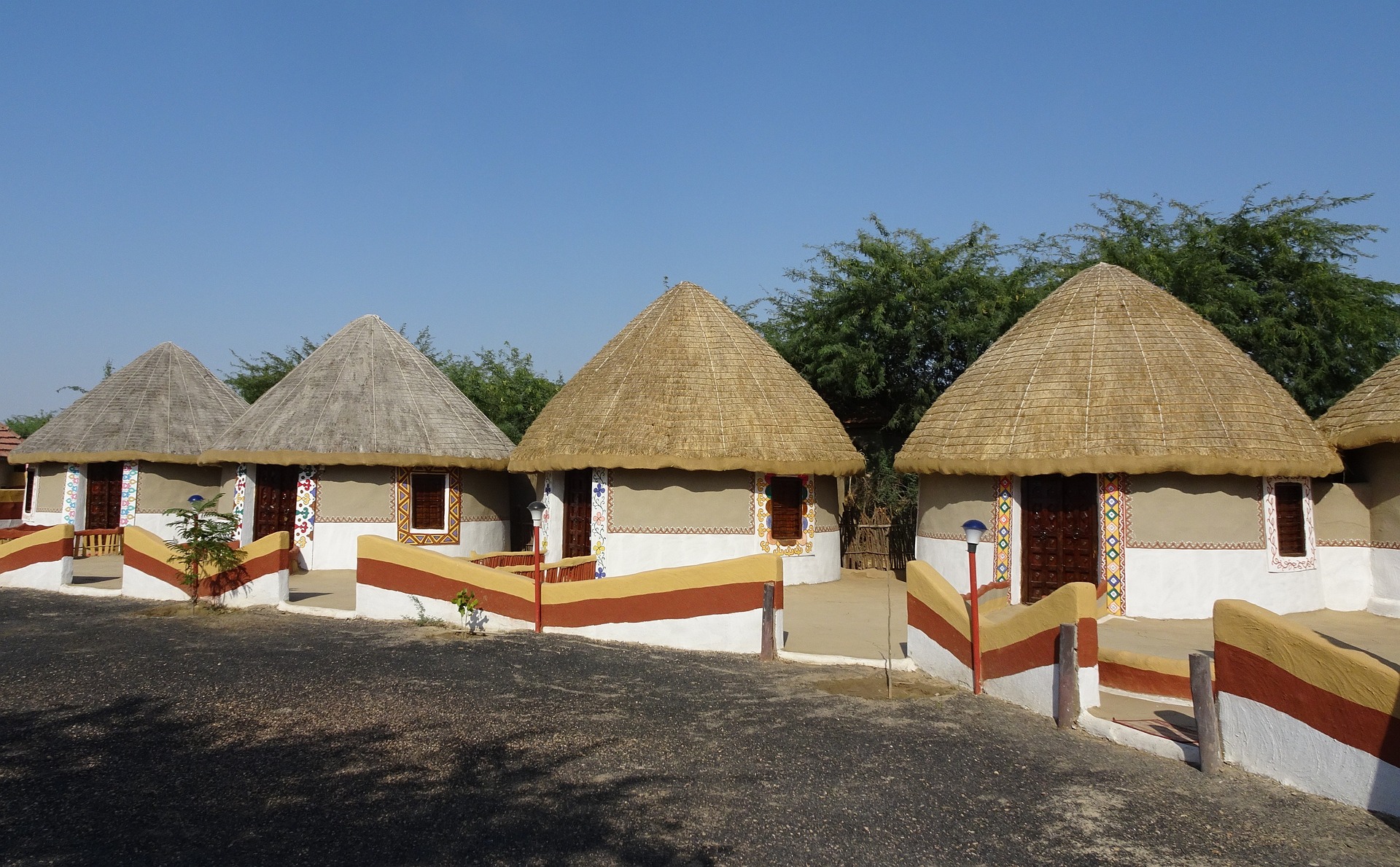
In the sun-scorched landscape of Kutch, Gujarat, stands a testament to humanity’s ingenuity: the bhunga, a circular mud hut that has defied centuries of earthquakes, sandstorms, and the unforgiving desert climate. These humble architectural marvels are far more than just shelters; they are living museums of a culture that has learned to harmonize with nature rather than fight against it.
The Origin Story: Born from Disaster
The bhungas’ remarkable journey began in tragedy. Following the devastating 1819 earthquake in the Rann of Kutch that claimed over 1,500 lives and ravaged buildings across Gujarat, the resilient communities of Kutch, particularly the Rabari, Ahir, and Meghwal tribes, engineered a revolutionary solution. They designed the distinctive circular mud hut, a structure that would prove its worth nearly two centuries later when the catastrophic 2001 Bhuj earthquake struck. While modern concrete buildings crumbled close to the epicenter, bhungas stood resolute, with minimal damage despite their proximity to the tremor’s core.
Architecture: Engineering Without Architects
Often referred to as “architect-less architecture,” bhungas showcase extraordinary indigenous knowledge acquired over generations. Each circular structure measures approximately 18 feet in diameter with foundations that plunge 24 inches deep, a deliberate design rooted in scientific precision rather than accident.
The circular shape is no mere aesthetic choice. This geometry transforms the bhunga into a natural fortress against seismic forces. When earthquakes strike, the circular walls act as arches, distributing lateral forces evenly in all directions rather than concentrating stress at vulnerable corners, a principle that concrete and rectangular buildings simply cannot match. The low mud walls, constructed from a potent combination of locally sourced mud, cow dung, and water, possess remarkable flexibility that absorbs and dissipates vibrations rather than resisting them.
The lightweight thatched roofs, crafted meticulously from bamboo frames and dried grass, further enhance seismic resilience. Their lighter weight means there are fewer forces pushing against them during shaking, and if they do break, the soft materials are not dangerous to people inside.
Climate Control: Nature’s Air Conditioning
Beyond disaster resistance, bhungas represent sophisticated climate management technology. The thick mud walls act as natural insulators, protecting interiors from direct sunrays and maintaining cool temperatures during blistering Kutch summers while retaining warmth during harsh winters. Small, strategically positioned wooden-framed windows enable optimal cross-ventilation and natural light penetration without allowing excessive heat infiltration.
The circular design further contributes to climate regulation. Wind flows around the curved structure without creating pressure buildup, reducing vulnerability to cyclones, another frequent hazard in the region. This seamless integration of structure and climate represents vernacular architecture at its finest.
Cultural Canvas: Art Meets Functionality
Step inside a bhunga, and you enter a realm of breathtaking artistry. The interior walls showcase “Lippan Kaam” (or Mattikam) intricate mirror work combined with white clay and colorful mud plaster that reflects sunlight, amplifies interior light, and creates visually spacious interiors. These designs are far from frivolous; they represent a woman’s creative expression and cultural identity, with motifs inspired by nature: flowers, plants, and animals that tell the story of Kutch’s landscape and its people.
External walls burst with vibrant paintings that serve as both protective layers and artistic declarations. This seamless fusion of art and architecture transforms bhungas into cultural repositories, preserving the heritage and craftsmanship of Kutch communities.
Modern Recognition and Preservation
The Gujarat government has recently recognized bhungas’ significance, actively promoting their construction through NGO partnerships, particularly following the 2001 earthquake recovery efforts. Today, these structures have evolved as tourist attractions, with some integrated into heritage tourism sites like Rann Utsav, where visitors experience traditional living enriched with modern amenities.
However, bhungas face challenges as younger generations embrace contemporary construction methods. Their preservation requires consistent maintenance, annual roof grass replacement, and regular mud plaster applications demands that modern lifestyles struggle to accommodate.
A Circular Future for Circular Wisdom
The bhunga stands as a powerful reminder that sustainability and resilience need not come from industrial materials or complex engineering. Sometimes, the most profound solutions emerge when communities listen to their environment, understand their vulnerabilities, and craft responses from local knowledge and available resources. In an era of climate change and increasing natural disasters, Kutch’s circular mud huts offer not just shelter but a blueprint for living harmoniously with nature, a wisdom that square corners and rigid concrete simply cannot match.
By – Sonali