


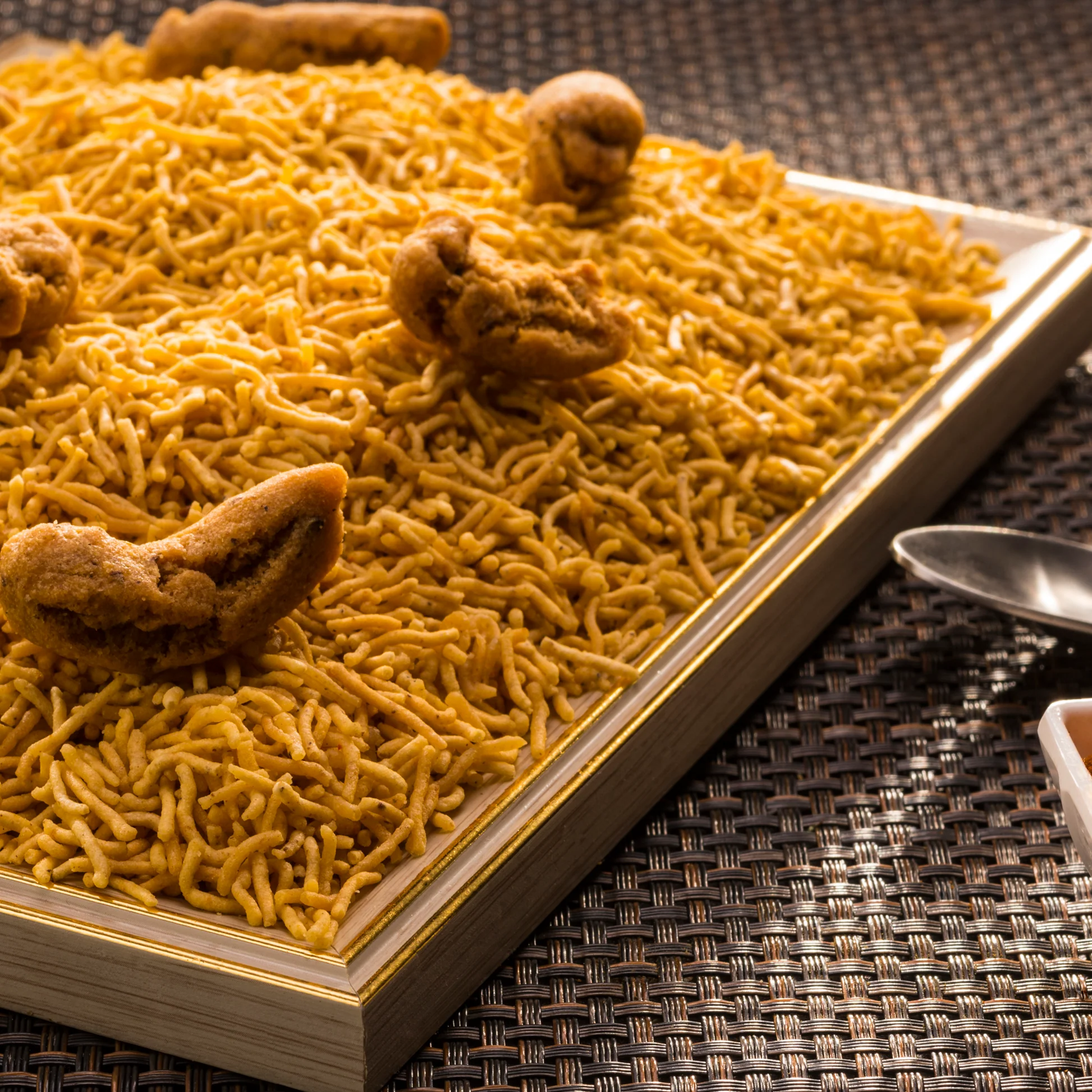
Bikaneri Bhujia, a spicy, crunchy snack from Bikaner, Rajasthan, continues to reign as India’s beloved savoury treat. Originating in 1877 under Maharaja Shri Dungar Singh’s reign, this light yellow delicacy, made from moth beans, gram flour, and a blend of spices, has become a cultural icon. Its unique taste, tied to Bikaner’s arid climate and saline water, and its GI tag since 2010, protect its authenticity. Artisans press the spiced dough through sieves and deep-fry it, sustaining a cottage industry that employs 2.5 million, mostly women, as #BikaneriBhujia trends on X.
In This Article:
- A Taste of Tradition
- Economic and Cultural Impact
- Challenges and Evolution
- A Timeless Snack
A Taste of Tradition
Born in the royal kitchens of Bikaner, Bikaneri Bhujia evolved from a novelty for guests into a household name. Unlike generic bhujia made from gram flour alone, its use of moth lentils, grown in the Thar Desert, imparts a distinct crispness and long shelf life. Spices like red chilli, black pepper, and cardamom, mixed with local longi mirch, create its fiery zing. The Bhujia Bazaar, alive with halwais frying batches daily, reflects this heritage, with over 30,000 kg produced locally and 20,000 kg from Haldiram’s factory, showcasing a blend of tradition and scale.
Economic and Cultural Impact
This snack supports a vibrant cottage industry, empowering women in Rajasthan’s villages with livelihoods. Its global reach—found in New Jersey Walmarts and on Amazon—caters to the Indian diaspora, adding an “Indianness” to their meals. Yet, the GI tag’s enforcement has sparked debate: while it shields Bikaner’s identity from copycats like PepsiCo’s failed Lehar, it raises questions about accessibility for non-local producers. Is this protectionism stifling innovation or preserving a legacy?
Challenges and Evolution
Despite its fame, Bikaneri Bhujia faces competition from modern snack giants and experiments with flavors like barbecue, diluting its traditional essence. The industry’s reliance on manual labor, while culturally rich, struggles with mechanization, as seen with Haldiram’s adapted noodle machines. Critics argue the focus on export and mass production might overshadow the artisanal craft that defines it.
A Timeless Snack
Bikaneri Bhujia’s journey from a royal treat to a global snack underscores its enduring appeal. As #RajasthanFlavors trends, its future lies in safeguarding authenticity while embracing innovation, ensuring the desert’s golden strands remain a taste of home for generations.
-By Manoj H