


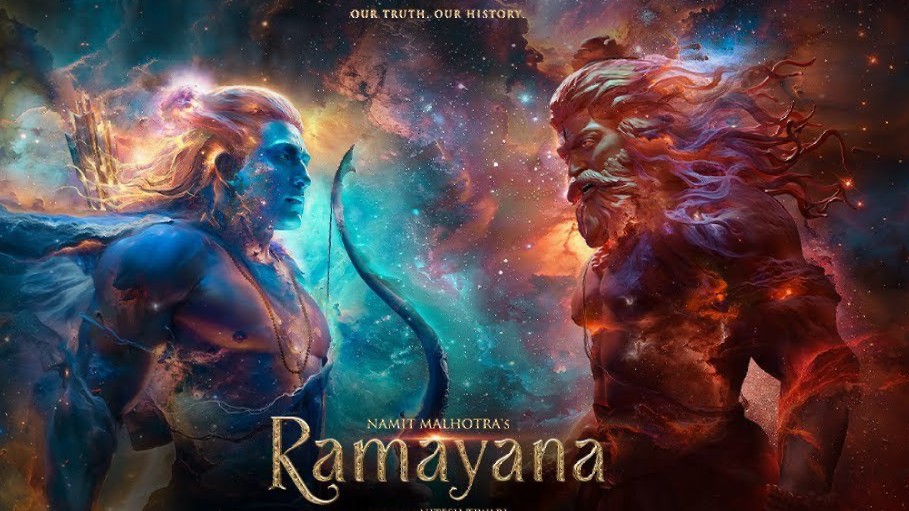
Bollywood’s love affair with the Ramayana and Mahabharata endures, weaving ancient myths into modern metaphors that resonate within India’s ₹101 billion cinema industry. From Ramesh Sippy’s Sholay (1975) to SS Rajamouli’s Baahubali (2015–2017) and upcoming projects like Nitesh Tiwari’s Ramayana trilogy (2026), these epics offer timeless narratives of duty, morality, and sacrifice. Reflecting the values of India’s 80% Hindu population, they connect with audiences from urban multiplexes to rural single-screens, while speaking globally through universal human struggles.
Epics as Timeless Blueprints
Bollywood gets myths right by harnessing their universal archetypes. Sholay, a “curry Western,” echoes the Mahabharata’s themes of loyalty and vengeance through Jai and Veeru’s bond, drawing over 25 crore footfalls and holding India’s box-office record for 19 years. Its 4K restoration at TIFF 2025, attended by Sippy and Bobby Deol, earned global praise, with an X user calling it “India’s mythic heartbeat.” Similarly, Baahubali’s epic rivalry, grossing ₹1,800 crore worldwide, mirrors the Pandava-Kaurava clash, resonating with 1.4 billion Indians navigating tradition and ambition. These films capture the emotional weight of Rama’s exile or Arjuna’s dilemmas, making ancient stories feel urgently contemporary.
Reflecting Modern Dilemmas
The epics serve as lenses for today’s issues, though not flawlessly. Om Raut’s Adipurush (2023), despite a ₹500 crore budget and 10 crore viewers, reimagined the Ramayana but faced criticism for simplifying Sita’s agency into CGI spectacle. Mani Ratnam’s Raavan (2010) rightly reframed Ravana as a complex anti-hero, reflecting modern power dynamics, yet its abstract narrative confused audiences. Nitesh Tiwari’s upcoming Ramayana, starring Ranbir Kapoor, promises a nuanced take, blending VFX with emotional depth for Gen Z. An X user from Mumbai noted, “Epics teach us how to face today’s chaos.” Yet, clichés like overblown divine interventions—think Adipurush’s Hanuman—risk turning profound myths into commercial props, diluting their philosophical core
Cultural Roots vs. Commercial Traps
Bollywood nails the epics’ role as cultural anchors—80% of Indians draw moral guidance from them, per a 2024 Pew survey. Films like Baahubali empower by exploring sacrifice, earning global fans. But repetitive retellings, like multiple Ramayana adaptations, exploit nostalgia, prioritizing profit over innovation. Critic Anupama Chopra warns of “mythic commodification” for Western appeal, risking “exotic India” stereotypes. As OTT platforms like Netflix rise, blending epics with fresh stories—like Aryan Khan’s The Bastards of Bollywood (2025)—could evolve the genre. For now, Bollywood’s epic obsession remains a vibrant dance of reverence and reinvention
-By Manoj H