


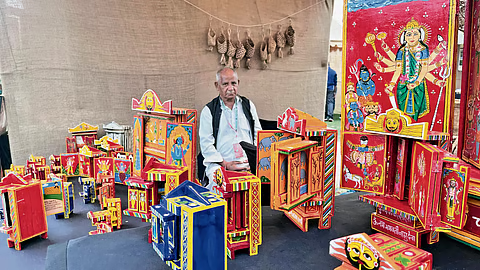
In the vibrant heart of Rajasthan, an age-old lineage of oral storytelling is slipping quietly into the past. Known as Kaavad Baanchana, this tradition enlivens generations through a painted wooden shrine, called a Kaavad, whose opening panels reveal tales of gods, heroes, and family legacies. Once a thriving form of spiritual and cultural education, Kaavad storytelling now fends off extinction, even as artists and enthusiasts strive to preserve its magic.
Origins and Artistry
The Kaavad, a miniature temple-like, hinge-opened shrine, is crafted by skilled Suthar or Jangid carpenters in villages like Bassi near Chittorgarh, Rajasthan. These artisans shape the box from softwoods such as mango, semal, neem, or adulsa, often priming the surface with “khaddi,” a regional soil paste that ensures durability and a painting-ready finish.
Panels unfold sequentially, typically between eight and sixteen, each hand-decorated with scenes from epics like the Ramayana and Mahabharata, as well as family genealogies and folklore. The base tone is often a vivid red, with other bright mineral or natural pigments bringing the visuals to life.
The Storytellers and Their Audiences
The libretto lies in the hands and voices of Kaavadiya Bhats (storytellers), descendants of the legendary Shravan Kumar. They roam from home to home, narratives unspooling panel by panel to receptive listeners known as jajmans (hereditary patrons). The synergy between craftsman, storyteller, and patron forms the lifeblood of Kaavad tradition, weaving together myth, family, and spiritual devotion.
Tradition in Crisis
Though the Kaavad tradition boasts centuries (estimates range from 400 to 500 years), its presence is waning. Urban migration, modern distractions, and commercial pressures have sidelined the storytellers. Today, Kaavads are more often packaged as decorative handicrafts for tourists, stripped of their narrative and devotional essence.
Efforts at Revival
Despite adversity, revival is afoot. Artisans and cultural patrons open workshops, organize storytelling festivals, and explore contemporary adaptations to carry Kaavad into a new era. Some educational initiatives now use Kaavad panels to teach children through interactive storytelling. There’s hope that, through innovation, this “travelling temple” will continue to dwell in public imagination.
A painted legacy
The Kaavad is more than painted wood; it is a vessel of collective memory, devotion, and creative legacy. Every hinge and hue houses a living mythology, waiting for its audience. Without rejuvenation, this poetic tradition risks fading from memory; yet with each workshop and custom commission, its doors open once more. In these fragile folds lies Rajasthan’s storytelling soul, yearning to be heard again.
By – Sonali