


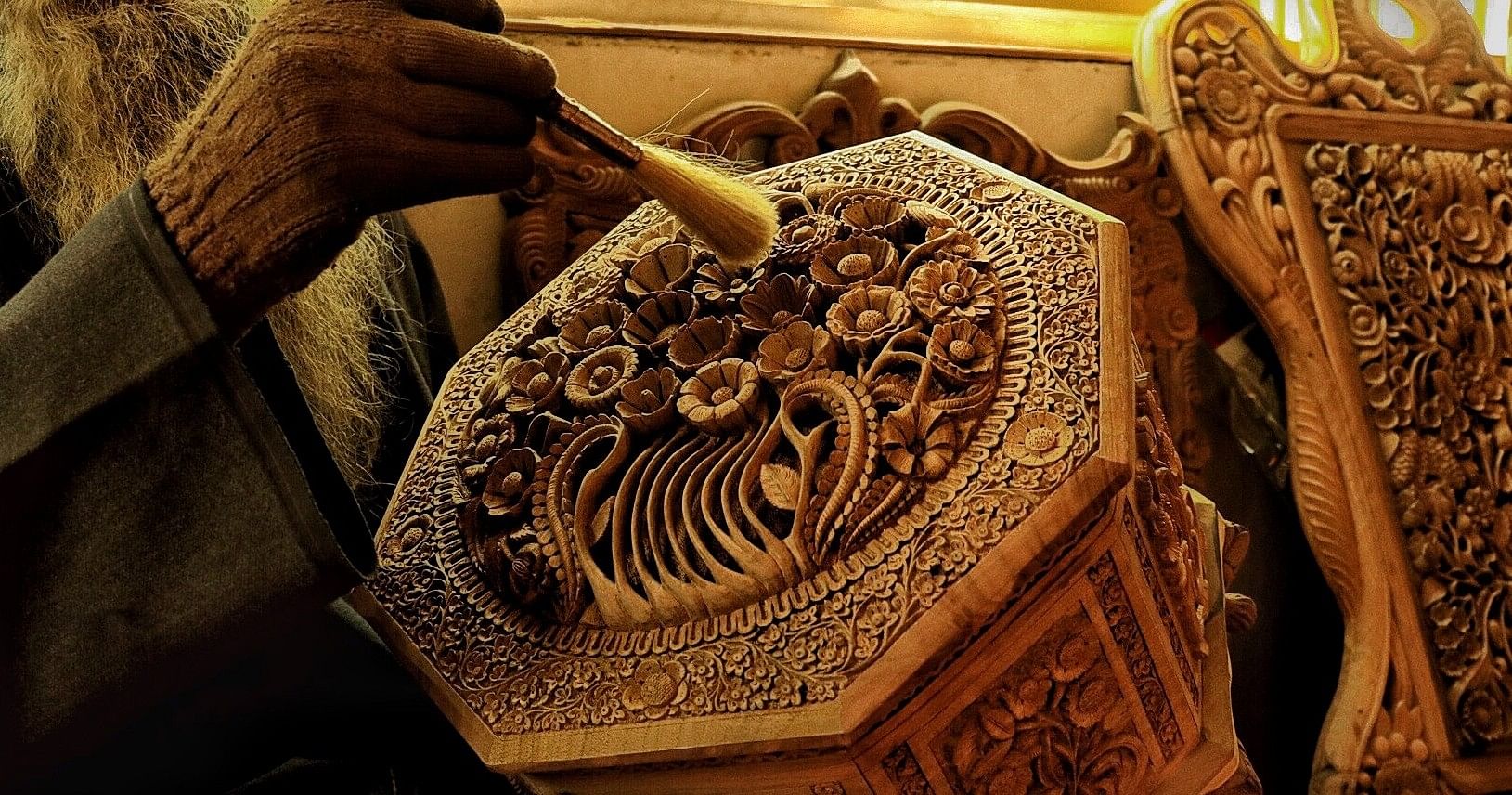
In the serene valleys of Kashmir, where ancient traditions still breathe through artisan hands, lies a craft so intricate that it takes over two decades of dedicated practice to master: walnut wood carving. This extraordinary art form transforms humble wooden planks into magnificent masterpieces that tell stories of cultural pride, artistic excellence, and centuries-old heritage. From royal palaces to contemporary homes, walnut wood carvings continue to enchant those who appreciate the marriage of skill, patience, and artistry.
A Legacy Born in Royal Courts
The roots of walnut wood carving extend deep into Kashmir’s golden age. Introduced to the region by Islamic missionary Sheikh Hamza Makhdoom during the reign of Sultan Zain-ul-Abidin in the 15th century, this craft was initially designed to elevate the region’s economy and artistic landscape. The royal patronage attracted master artisans from distant lands like Samarqand, Bukhara, and Persia, each bringing their unique expertise and vision to Kashmir’s workshops.
During this era, walnut wood carvings adorned only the most prestigious structures, grand palaces, sacred shrines, and elaborate mausoleums. The craftsmanship displayed in these historical monuments, such as the shrines of Noor-ud-din-Wali at Charar-e-Sharif and the Naqshband Mosque, remains unparalleled and continues to inspire artisans centuries later.
Crafting Perfection: The Meticulous Process
What sets walnut wood carving apart is not merely the material but the extraordinary process that transforms raw wood into refined art. The journey begins by selecting mature walnut trees that are at least 300 years old, with wood from the dark root being most prized for its strength and pronounced grain.
The carving process is an elaborate dance of precision and patience. After drying the wood planks for six months to a year, a critical step to prevent cracking, artisans begin the intricate work. The process involves multiple specialized stages: lakhun (drawing motifs with pencil), dagun (marking with chisels), zameen kadun (deeper digging for desired depth), guzar (shaping intricacies), kaanjiwaar (adding three-dimensional impressions), sumba (texture creation), and dagi (final intricate details).
Remarkably, master craftsmen often work freehand without pre-drawn sketches, relying on knowledge passed down through generations of oral and visual training. A single carved panel can require several weeks or months to complete, with artisans treating each piece like a meditation. The tools themselves are often handcrafted and passed down through families, becoming as precious as the art they create.
Design Evolution: From Tradition to Contemporary
Traditional walnut wood carvings feature exquisite geometric patterns and floral motifs inspired by nature, vines, leaves, chinar leaves, and intricate floral arrangements that reflect the Kashmiri landscape. However, the craft has continually evolved. During the Dogra period, designs incorporated German, Egyptian, and Swiss influences, along with animal sculptures and tray designs in natural forms.
Today, walnut wood carving experiences a remarkable renaissance in contemporary design. From luxury furniture pieces like dining sets and headboards to fashion accessories including jewelry and watch faces, the ancient craft finds relevance in modern sensibilities. Art installations, minimalist home décor, and even tech accessories now feature these intricate carvings, proving that heritage can seamlessly integrate with contemporary aesthetics.
The Artisans Behind the Art
Currently, approximately 3,000 skilled artisans work in Srinagar alone, with around 600 primarily involved in manufacturing walnut wood products. However, these craftsmen face significant challenges. Earning between ₹500 and ₹700 per day, artisans struggle with declining interest among younger generations and competition from mass-produced alternatives. Despite these obstacles, some artisans are pioneering innovative approaches, experimenting with minimalist forms, utility objects, and modular panels to ensure the craft’s survival.
A Craft Demanding Recognition
In 2012, walnut wood carving received the prestigious Geographical Indications (GI) tag from the Government of India, a recognition of its uniqueness and cultural significance. Additionally, UNESCO has acknowledged it as an intangible cultural heritage candidate. These accolades underscore the craft’s global importance, yet artisans continue demanding governmental intervention to protect authentic practices and support training for emerging carvers.
The Carved Future
Every piece of Kashmiri walnut wood carving carries within its grain the echoes of centuries, the hands of master carvers, the whispers of heritage, and the promise of tomorrow. In a world increasingly drawn toward mass production and fleeting trends, these hand-carved treasures remain steadfast guardians of artistic authenticity, reminding us that true beauty cannot be rushed, synthesized, or replicated. The future of this magnificent craft rests not just in the hands of today’s artisans but in the hearts of those who choose to preserve and celebrate this living heritage for generations yet to come.
By – Sonali