


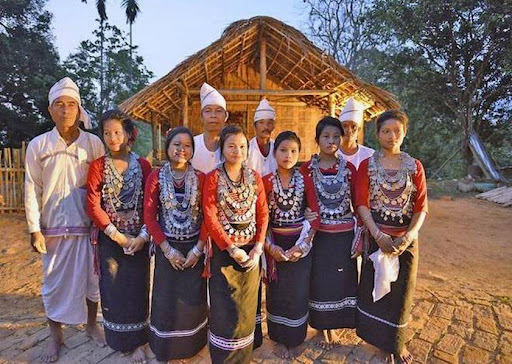
In the verdant hills and valleys of Tripura, where ancient traditions flow like the monsoon rivers through generations, the Sangrama festival emerges as one of the most significant cultural celebrations of the Reang (Bru) community. This sacred festival, usually celebrated in August during the Bengali month of Bhadra, represents the heart and soul of the second-largest tribal community in the northeastern state of Tripura.
The Essence of Sangrama Puja
Sangrama Puja, also known as Songrongma Puja, is far more than a religious observance—it is the annual manifestation of the Reang community’s spiritual connection with Mother Earth. The festival honors Sangrongma, the revered Earth Mother deity in Reang mythology, whose blessings are sought for prosperity, health, and agricultural abundance. This celebration typically falls on the new moon day (Amavasya) of the Bengali month of Bhadra, creating a mystical atmosphere where the darkness of the new moon symbolizes the potential for new beginnings.
The festival serves as the cornerstone of Reang cultural identity, bringing together scattered communities across Tripura and neighboring states of Mizoram and Assam. For a community that has faced numerous challenges and displacements throughout history, Sangrama Puja represents continuity, resilience, and the unbreakable bond with their ancestral roots.
Rich Tapestry of Traditions and Rituals
The Sangrama festival unfolds through a series of elaborate rituals that have been carefully preserved through oral traditions for centuries. The celebrations begin with the community priest, known as Aukchai, performing purification ceremonies and invoking the blessings of Sangrongma along with other deities from the Reang pantheon.
Central to the festival are offerings made to Mother Earth, including rice, flowers, rice beer, and locally harvested produce. These offerings symbolize gratitude for the year’s harvest and prayers for continued fertility of the land. The rituals are conducted in sacred groves or designated community spaces adorned with bamboo decorations, banana leaves, and traditional earthen lamps that create an ethereal atmosphere.
The festival also involves the worship of the fourteen Gods and Goddesses of Tripura, including deities like Mainouhma (goddess of paddy), Khuluhma (goddess of cotton), Goroia (god of wealth and prosperity), and Buraha (god of the jungle). This polytheistic approach reflects the Reang community’s deep connection with natural forces and agricultural cycles.
Cultural Celebrations and Community Bonding
What makes Sangrama Puja truly magnificent is its role as a cultural melting pot where traditional arts flourish in their purest form. The festival features mesmerizing performances of Hojagiri dance, the signature cultural expression of the Reang community, where women perform intricate movements while balancing earthen pitchers and lighted lamps on their heads.
Musical traditions come alive through folk songs sung in the Kau Bru language, accompanied by indigenous instruments like bamboo flutes, drums, and cymbals. These performances not only entertain but also serve as vehicles for transmitting oral histories, moral teachings, and cultural values to younger generations.
The festival emphasizes communal harmony and social solidarity, with elaborate feasting arrangements where the entire community shares meals prepared collectively. Traditional dishes made from locally sourced ingredients, including various rice preparations, meat delicacies, and bamboo shoot curries, are served alongside locally brewed rice beer, fostering a spirit of unity and celebration.
Historical Significance and Contemporary Relevance
The Sangrama festival carries profound historical significance for the Reang community, which traces its origins to ancient migrations and royal connections with Tripura’s ruling dynasties. According to community legends, the Reangs were granted asylum by Queen Gunoboti of Tripura, establishing their permanent presence in the region. The festival serves as a reminder of these historical bonds and the community’s rightful place in Tripura’s cultural landscape.
In contemporary times, the festival has gained renewed importance as a symbol of cultural preservation and identity assertion. The Reang community has been advocating for official recognition of Sangrama Puja as a state holiday, a demand that was finally acknowledged by the Tripura government in September 2025. Chief Minister Manik Saha announced that the cabinet had approved declaring Sangrama Puja as a restricted holiday, acknowledging its significance for the state’s second-largest tribal community.
Challenges and Cultural Resilience
Despite facing numerous socio-economic challenges, including displacement and marginalization, the Reang community has demonstrated remarkable resilience in preserving their cultural heritage. The Sangrama festival stands as a testament to this resilience, continuing to thrive even in the face of modernization and external pressures.
The festival also serves as a platform for addressing community issues and strengthening social bonds. During celebrations, village elders and community leaders discuss matters of collective importance, making decisions about cultural preservation, education, and community welfare.
The Festival’s Broader Impact
Beyond its religious and cultural dimensions, Sangrama Puja plays a crucial role in promoting eco-friendly practices and sustainable living. The festival’s emphasis on natural materials, organic offerings, and reverence for Mother Earth aligns with contemporary environmental consciousness, making it relevant for modern sustainable development goals.
The celebration also contributes to cultural tourism in Tripura, attracting visitors interested in experiencing authentic tribal traditions. This has economic implications for the community while raising awareness about Reang culture among broader audiences.
Preserving Ancient Wisdom for Future Generations
As Tripura continues to modernize and integrate with mainstream Indian society, festivals like Sangrama Puja become increasingly important as repositories of ancient wisdom and traditional knowledge systems. The festival’s agricultural connections, sustainable practices, and community-centric approach offer valuable lessons for contemporary society grappling with issues of environmental degradation and social fragmentation.
The younger generation of Reangs, many of whom are pursuing modern education and careers, find in Sangrama Puja a powerful connection to their roots and identity. The festival serves as an annual homecoming, bringing together diaspora communities and strengthening intergenerational bonds.
By – Sonali