


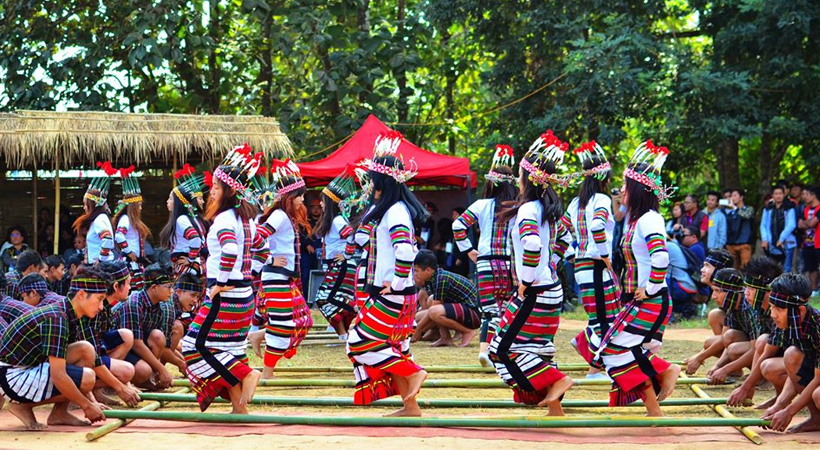
As India’s Northeast celebrates its cultural richness in 2025, Cheraw, the iconic bamboo dance of Mizoram, captivates audiences with its rhythmic precision and vibrant energy. Performed by the Mizo people, it involves men and women in synchronized harmony. Known as the Bamboo Dance, Cheraw features dancers weaving through clapping bamboo staves. Rooted in Mizoram, it’s also performed in Tripura and Manipur during festivals. Showcased at events like Chapchar Kut and the Hornbill Festival, it peaks during harvests and celebrations. Men clap bamboo poles rhythmically while women dance with intricate footwork, embodying unity and skill.
The Art and Origins of Cheraw
Cheraw, one of Mizoram’s oldest dances, dating back to the 1st century AD, is a mesmerizing display of coordination. Six to eight men hold pairs of bamboo staves, clapped rhythmically on a horizontal bamboo, while women dance, stepping in and out of the moving poles with precise footwork inspired by swaying trees or bird flights. Accompanied by gongs, drums, and modern instruments like accordions, the dance uses traditional Mizo costumes—Puanchei sarongs and Vakiria headdresses adorned with feathers. In 2010, Mizoram set a Guinness World Record with 10,736 Cheraw dancers in Aizawl.
Cultural Significance and Ritual Roots
Originally performed to ensure a pregnant woman’s soul found peace in the afterlife, Cheraw has evolved into a celebratory dance for festivals like Chapchar Kut and harvests. In Tripura, the Darlong community performs it during childbirth to instill confidence in expectant mothers, believing it aids their journey to heaven. The dance symbolizes unity and skill, with 70% of Mizoram’s festival events featuring Cheraw in 2025, drawing 60,000 attendees. Social media posts praise its “hypnotic rhythm,” with thousands sharing clips from Hornbill Festival 2024, amplifying its global appeal.
Modern Revival and Challenges
Cheraw thrives at cultural events like the Northeast Students’ Festival, with recent performances in Delhi (August 2024) showcasing its vibrancy. However, with only 2,000 professional dancers in 2025, down from 5,000 in the 1990s, due to urban migration and digital entertainment, preservation is a concern. Initiatives like Mizoram’s Cultural Department workshops and Tripura’s tribal festivals train 400 new dancers annually YouTube streams by groups like Ananta Dance Troupe boost visibility. In Tripura, the Darlong’s Cheraw performances remain a spiritual ritual.
A Dance of Unity and Future Promise
Cheraw’s intricate footwork and vibrant costumes, like the red-white-green Kawrchei blouse, reflect Mizo pride. Its presence in Tripura’s Lusai and Darlong communities highlights its regional adaptability. As a symbol of harmony, it bridges tribal traditions with modern stages, with posts on social media calling it “Mizoram’s heartbeat.” Will Cheraw continue to enchant global audiences, or face dilution in a digital age? With community efforts and festival showcases, this bamboo dance is poised to preserve its legacy for generations.
-By Manoj H