


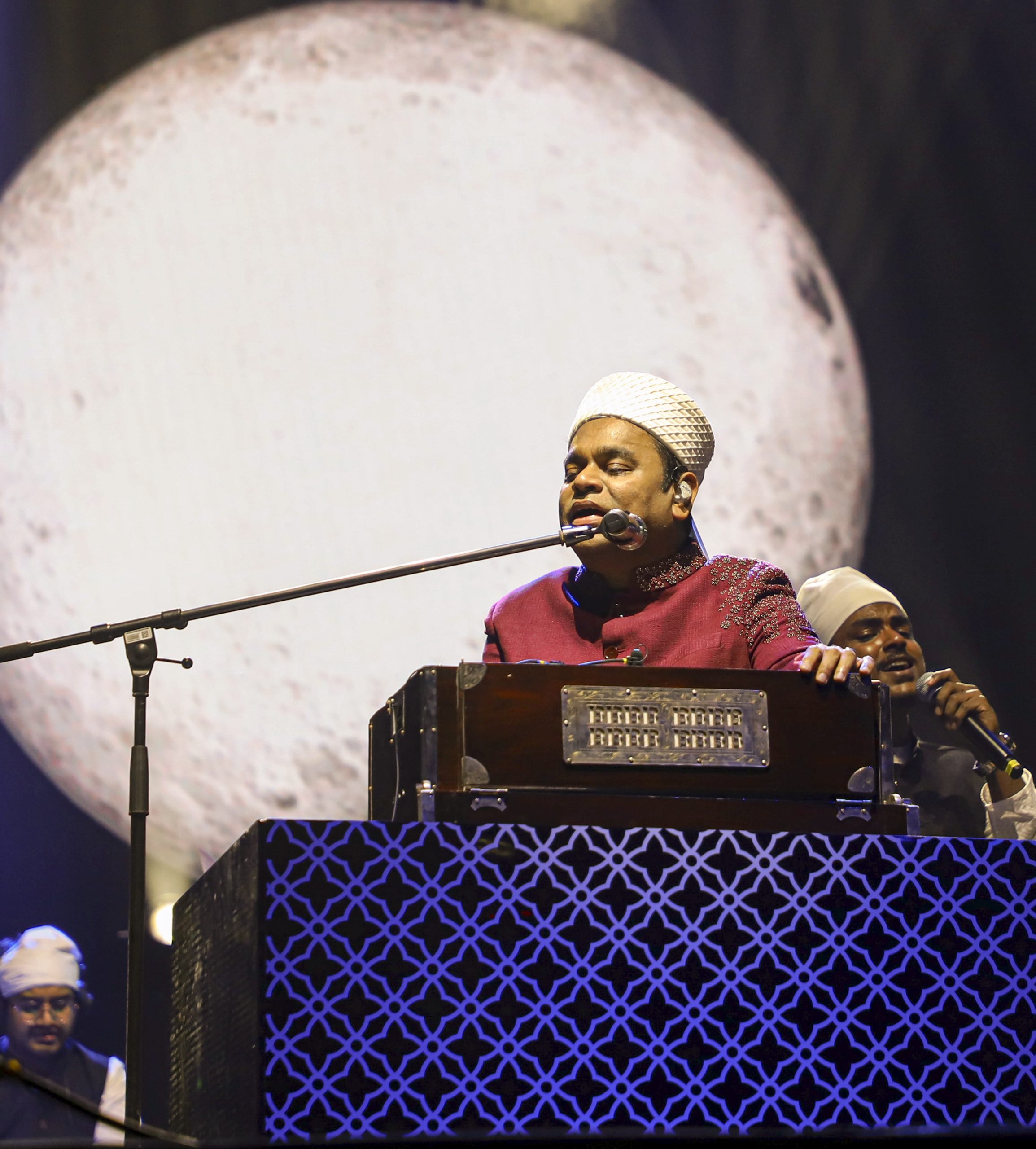
A.R. Rahman’s recent comments on shrinking Bollywood opportunities have snowballed into a full-blown culture-war moment after veteran bhajan singer Anup Jalota suggested the Oscar-winning composer should “convert back to Hinduism” if he believes religion is affecting his work. The remark, delivered in a video statement now circulating widely, has sharpened an already sensitive debate around identity, gatekeeping, and who gets to decide what “belongs” in mainstream Hindi cinema.
What Rahman Said (and Why It Blew Up)
The controversy began after Rahman spoke to BBC Asian Network about how his Bollywood work has reduced over the last several years. In the interview, he pointed to a “power shift” and suggested that decisions increasingly sit with “people who are not creative,” adding that it “might have been a communal thing… not in my face,” describing the process as “Chinese whispers.” The comments triggered heated reactions—some reading it as a candid industry diagnosis, others calling it an irresponsible communal inference.
Anup Jalota’s ‘Reconversion’ Suggestion
Responding to Rahman’s interview, Jalota released a Hindi video statement arguing that the composer has already received massive love and work, and then made his controversial suggestion: if Rahman truly believes he isn’t getting films because he is Muslim, he should “become Hindu again” and “try” to see whether work returns. The comment instantly became the most combustible soundbite in the story—because it reframes an industry debate as a personal-faith prescription.
Industry Pushback and the Split Reaction
The backlash has not been uniform—but it has been loud. Some voices rejected the premise of communal gatekeeping, while others defended Rahman’s right to describe what he believes he has experienced. Shankar Mahadevan, reacting to the larger controversy, struck an inclusive note—saying Rahman’s music “belongs to humanity” and that “talent has no religion.”
Director Imtiaz Ali also stepped in, calling Rahman’s remarks “misconstrued” while adding that he has not personally seen communal bias in the film industry—an intervention that further underlined how divided even sympathetic peers are on diagnosis vs. direction.
Rahman’s Clarification
As the debate escalated, Rahman issued a clarification via social media, stressing that his intentions were misunderstood and reaffirming his bond with the country—“India is my inspiration, my teacher and my home,” he said, adding that he never wished to cause pain. The message appeared aimed at cooling the temperature without retracting the larger concern that power and access can quietly reshape careers.
Why This Moment Matters
Beyond celebrity sparring, the episode exposes a deeper fault line: when an artist points to structural exclusion, the conversation can quickly become less about systems and more about personal identity—faith, loyalty, and “belonging.” That shift is precisely why Jalota’s remark has landed as incendiary: it turns a debate about gatekeeping into a demand for symbolic conformity.
A Unifying Horizon Awaits
This row isn’t just noise—it’s a stress test. As Indian entertainment globalises and audiences grow sharper about pluralism, the real question is whether the industry can debate fairness without reducing artists to labels. Because when music moves people, it does so for craft—not credentials.
-By Manoj H