


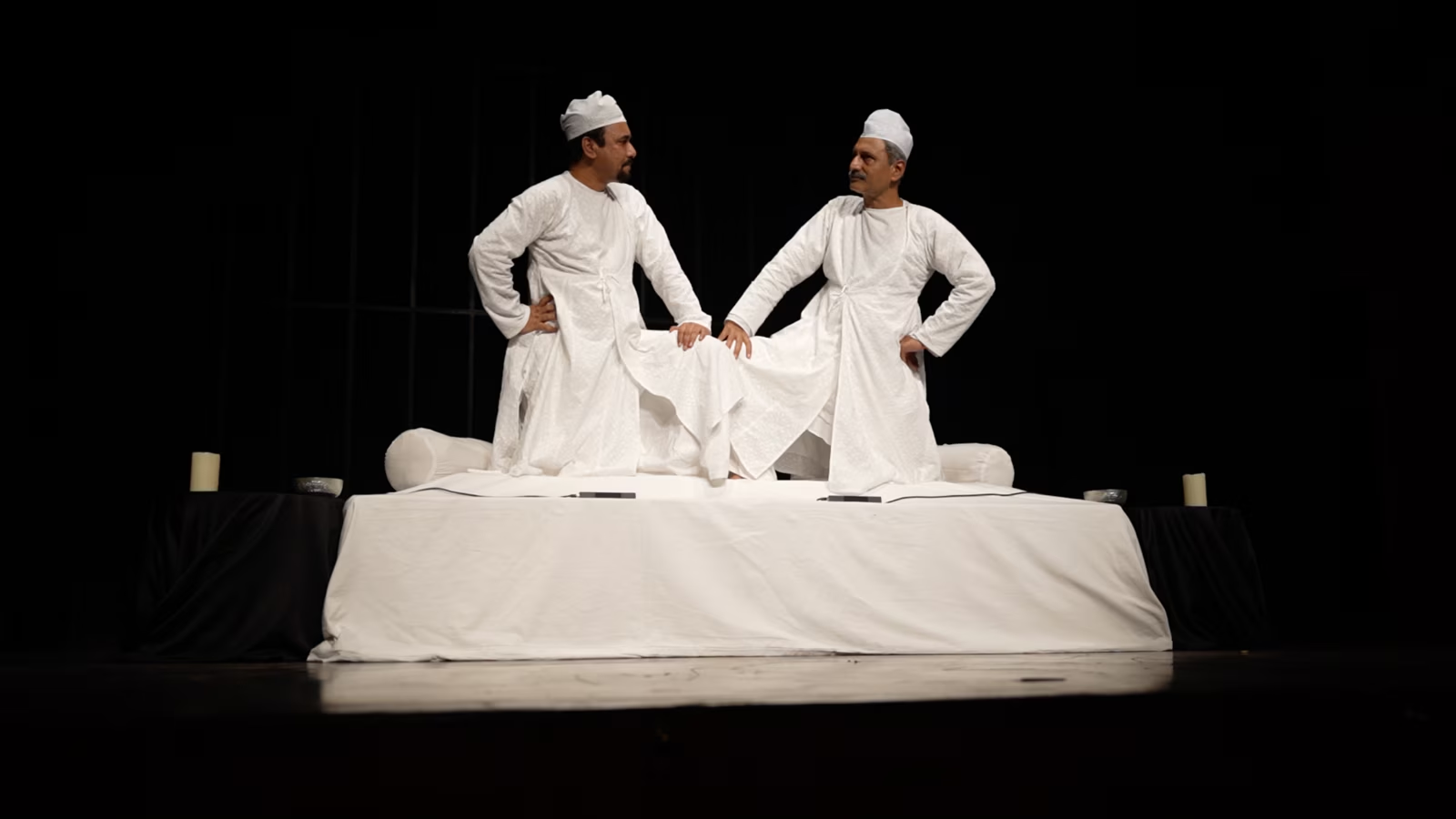
In an era dominated by digital media and cinematic spectacle, an ancient art form revived itself with nothing but voice, expressive flair, and the timeless craft of storytelling. Dastangoi, a 13th-century Urdu oral storytelling tradition, has once again found life and relevance in modern times. This “telling of tales” captivates audiences by transforming narrative into theater and history into live experience. With a steady and enthralling resurgence, Dastangoi is proving that simplicity and imagination remain potent in our fast-paced world.
Roots in Antiquity: From Persia to the Mughal Courts
The art of Dastangoi traces its roots back to medieval Persia, emerging during the Samanid Empire (819–999 CE) amid rich literary and cultural flourishing. The term itself fuses two Persian words, Dastan (“story”) and Goi (“to tell”), forming the literal meaning, “to tell a tale.”
With time, Dastangoi journeyed eastward to India through the Delhi Sultanate and the Mughal Empire. By the 16th century, it flourished in royal courts under Akbar and Jahangir, particularly through the riveting Dastan-e-Amir Hamza. Akbar famously commissioned 1,400 miniature illustrations, collectively known as the Hamzanama, to accompany these epic tales.
Glory, Decline, and the Last Dastango
Dastangoi reached its zenith in the 19th century, especially in Delhi and Lucknow, where dastangos captivated audiences in royalty’s courts, public squares, and even opium dens. According to historical accounts, the final flame of classical Dastangoi flickered out in 1928 with the passing of its last master, Mir Baqar Ali, signaling the art form’s decline amid colonial influence, cinema, and print media’s rising popularity.
A Revival Sparked: The 21st-Century Renaissance
The rebirth of Dastangoi began in 2004–2005 under the stewardship of Shamsur Rahman Faruqi, a renowned Urdu critic, and his nephew Mahmood Farooqui. The first modern performance, featuring tales from Dastan-e-Amir Hamza, took place at Delhi’s India International Centre, captivating new audiences and marking a turning point in cultural reclamation. Farooqui has since trained a brigade of storytellers and adapted both classic epics and modern narratives, ranging from folktales and the Mahabharata to contemporary accounts such as the Jallianwala Bagh massacre and Manto’s life.
The Art and the Artist: Dastango in the Spotlight
At the heart of Dastangoi stands the Dastango, a storyteller whose voice, posture, and lyrical expression are their sole instruments. Clad in white, sometimes wearing a Lucknavi cap, a Dastango presents stories extempore, weaving magic through tone and gesture alone, without props or music.
Among contemporary practitioners:
- Ankit Chadha, an acclaimed Hindi-Urdu storyteller, brought Dastangoi to institutions such as Harvard and Yale, even pioneering Musical Dastan.
- Syed Sahil Agha, trained at the National School of Drama, has incorporated music and performance into Dastangoi, crafting a dynamic modern variant.
Dastangoi Today: Stories Reimagined
Modern Dastangoi performs in festivals, heritage venues, and digital platforms, blending timeless epics with present-day narratives. Performers retell classics like Mahabharata, Amir Hamza, or modern folktales and even reinterpret significant historical events or literary works through the Dastangoi lens.
A notable example includes Dastan-e-Irfan-e-Budh, reenacting the life of Buddha with sources ranging from Jataka tales, Sanskrit Buddhacharita, canonical texts, and poetry, performed by Poonam Girdhani and Rajesh Kumar.
The Eternal Echo of Oral Tradition
In a world saturated with screens, Dastangoi remains a testament to storytelling’s enduring power. Its revival is more than nostalgia, it’s a revitalization of culture, language, and performance artistry. When a Dastango begins, the room hushes; stories unfold in voices that resonate deeper than any visual spectacle.
Dastangoi reminds us that the richest landscapes live in our minds. Its survival signals that even in the digital age, a single storyteller in white, armed with only voice and imagination, can still hold an audience captivated, one tale at a time.
By – Sonali