


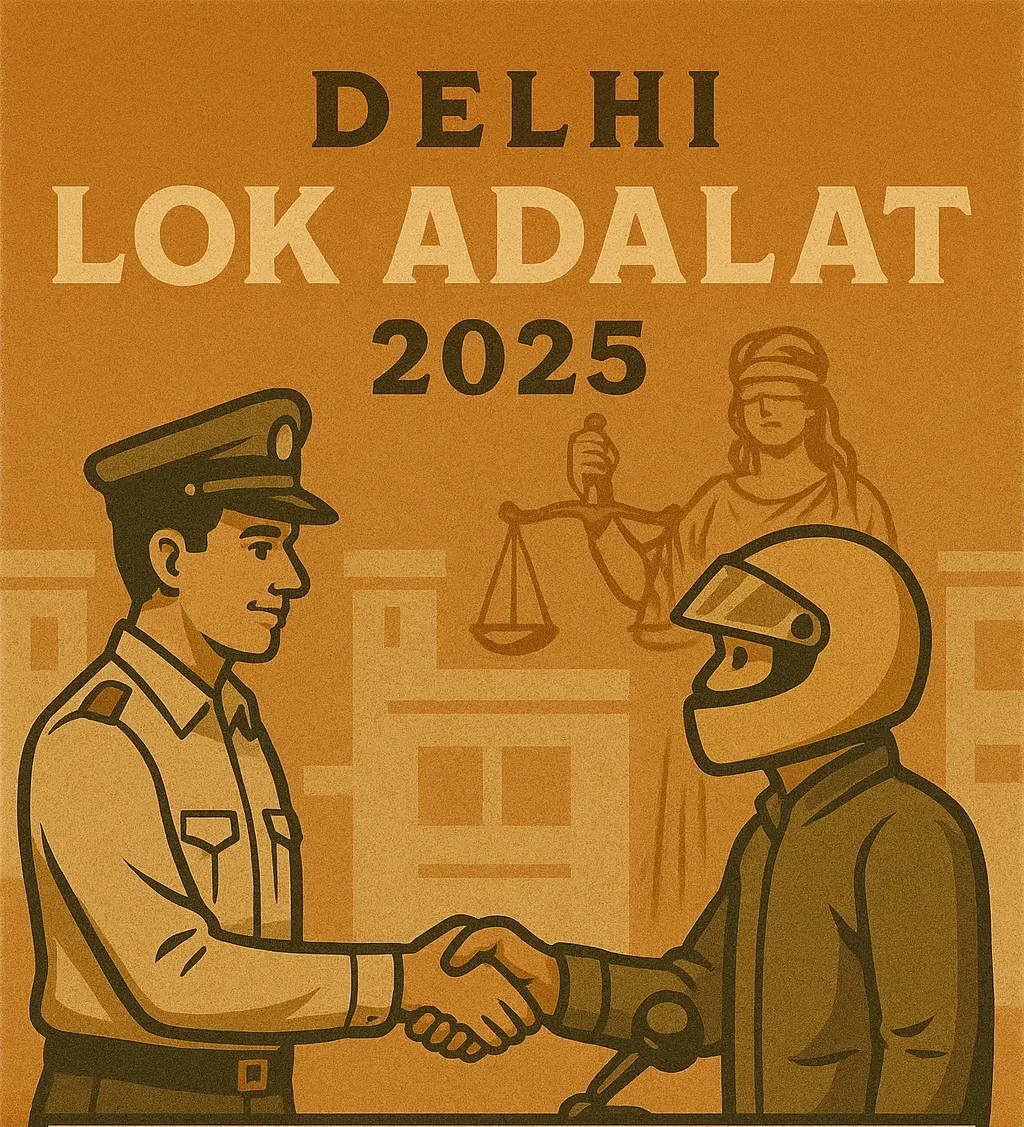
On May 10, 2025, the Delhi State Legal Services Authority (DSLSA), in collaboration with the Delhi Traffic Police, will host a National Lok Adalat across seven court complexes in Delhi to address pending compoundable traffic challans and notices. This initiative, part of a broader effort to reduce the burden on traditional courts, offers vehicle owners a unique opportunity to settle fines at reduced rates or even have them waived, ensuring swift resolution and legal closure. With up to 180,000 challans expected to be cleared in a single day, the May 10 Lok Adalat is a significant event for Delhi’s vehicle owners. Here’s everything you need to know about the process, eligibility, and benefits.
In This Article:
What is Lok Adalat?
Lok Adalat, meaning “People’s Court,” is an alternative dispute resolution mechanism in India designed to settle pending legal cases amicably. Established under the Legal Services Authorities Act, 1987, it handles compoundable offenses—those that can be resolved through fines or settlements—such as minor traffic violations. Unlike regular court proceedings, Lok Adalat is cost-effective, requires no lawyers, and delivers faster outcomes, often within a single hearing. For traffic challans, it provides a platform to negotiate fines, reducing financial burdens and clearing legal records.
Details of the May 10, 2025, Lok Adalat
The National Lok Adalat will take place on Saturday, May 10, 2025, from 10 AM to 4 PM across Delhi’s major court complexes: Dwarka, Karkardooma, Patiala House, Rohini, Rouse Avenue, Saket, and Tis Hazari. A total of 180 benches will be constituted, each handling up to 1,000 cases, aiming to settle 180,000 challans in one day. Only compoundable traffic challans and notices issued up to January 31, 2025, and listed on the Delhi Traffic Police portal (traffic.delhipolice.gov.in) are eligible for settlement. Non-compoundable offenses, such as serious crimes, or challans already transferred to regular, evening, or digital courts are excluded.
Vehicle owners are limited in the number of cases they can settle: private vehicle owners can address up to seven notices or challans (five notices and two challans), while commercial vehicle owners are restricted to two. This cap ensures equitable access to the Lok Adalat’s resources given the high volume of pending cases.
How to Participate: Step-by-Step Process
To take advantage of the May 10 Lok Adalat, vehicle owners must prepare in advance and follow these steps:
- Download Your Challan: Starting May 5, 2025, at 10 AM, visit the Delhi Traffic Police website (traffic.delhipolice.gov.in/notice/lokadalat) to download your e-challan. Enter your vehicle number, notice number, or the last five characters of your chassis or engine number to access pending challans. A daily limit of 60,000 downloads applies, with a total cap of 180,000, so act early to secure your slot.
- Print the Challan: A printout of the challan or notice is mandatory, as no printing facilities will be available at the court premises. Check the printout for the designated court complex and time slot.
- Register for a Token: Visit the same website, select the “Delhi State Legal Service Authority” option, and fill out the token registration form with your name, contact number, vehicle registration number, and challan details. Submit the form to receive a confirmation link to download your Lok Adalat token, which is free of charge.
- Attend the Hearing: Arrive at the specified court complex on May 10 before your allotted time slot. Present your challan printout and token to the Lok Adalat panel, which will review your case and determine the settlement amount, often at a significant discount. Pay the settled fine on the spot to clear your challan.
- Online Payment Option: If attending in person is not feasible, you can settle challans online via the Delhi Traffic Police website. Enter your vehicle or notice number, review the details, select a payment method, and complete the transaction. A confirmation SMS will follow, but discounts may be less substantial compared to in-person settlements.
Benefits of Settling Challans at Lok Adalat
The Lok Adalat offers several advantages for vehicle owners:
- Cost Savings: Fines are often reduced by 50% or more, depending on the magistrate’s discretion. For example, a user reported settling Rs. 50,000 worth of challans for just Rs. 500 at a previous Lok Adalat.
- Swift Resolution: Cases are resolved in minutes, avoiding lengthy court proceedings and eliminating the need for legal representation.
- Legal Closure: Settling through Lok Adalat clears pending legal issues, ensuring eligibility for a No Objection Certificate (NOC) for your vehicle.
- Convenience: The process is streamlined, with online registration and payment options, making it accessible for busy individuals.
Challenges and Recommendations
While the Lok Adalat is efficient, challenges exist. The daily download limit of 60,000 challans may lead to a rush, and latecomers risk missing out. The high volume of cases and limited court bandwidth have prompted discussions to increase Lok Adalat frequency, but no changes have been confirmed for 2025. Additionally, only compoundable offenses qualify, so owners with non-compoundable violations must pursue regular court channels.
To maximize your experience, download and print your challan early, verify the court details, and arrive on time. If opting for online payment, review challan details carefully to avoid errors. For those unable to attend on May 10, additional Lok Adalats are scheduled for September 13 and December 13, 2025.
The Delhi National Lok Adalat on May 10, 2025, is a golden opportunity for vehicle owners to clear pending traffic challans efficiently and economically. By leveraging this accessible, cost-effective platform, Delhiites can resolve fines, avoid legal hassles, and contribute to easing the judicial burden. Whether attending in person at one of the seven court complexes or settling online, act promptly to secure your slot and take advantage of potential discounts. For the latest updates, visit traffic.delhipolice.gov.in and stay informed through Delhi Traffic Police’s social media channels.
-By Manoj H