


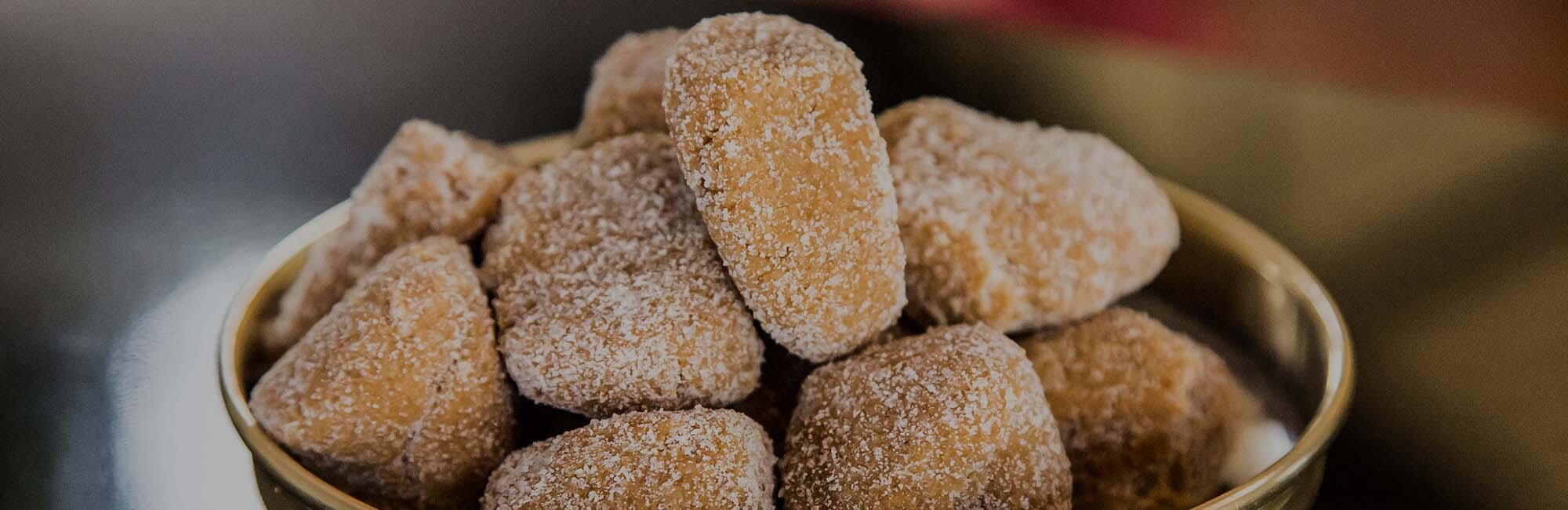
Karnataka’s culinary heritage shines; Dharwad Pedha, the iconic sweet from the city of Dharwad, stands as a testament to tradition and resilience, yet faces modern challenges threatening its legacy. Crafted by artisans like the Thakur family and Mishra Pedha, this GI-tagged delicacy is made by skilled confectioners.A caramelized, milk-based sweet with a grainy texture, it’s celebrated for its rich, nutty flavor. Born in Dharwad’s Line Bazaar, it’s now sold across Karnataka, Maharashtra, and globally. Originating in the early 19th century, its popularity endures despite a 2025 production dip. Made from slow-cooked buffalo milk and sugar, its labor-intensive process is both its charm and its challenge.
A Historical Sweet Born from Adversity
Dharwad Pedha’s story began around 1850 when Ram Ratan Singh Thakur, fleeing a plague in Unnao, Uttar Pradesh, settled in Dharwad. Using milk from local Dharwadi buffaloes, raised by the Gavali community, he crafted pedhas that gained fame for their golden-brown hue and unique texture. His grandson, Babu Singh Thakur, elevated the sweet’s reputation at Line Bazaar, earning it the moniker “Line Bazaar Pedha.” Awarded a Geographical Indication (GI) tag in 2007 (GI No. 80), it’s protected for its regional authenticity, using milk, sugar, and ghee, simmered for hours to achieve a caramelized, granular consistency. In 2025, Mishra Pedha, producing 10 tons daily across 250 stores, dominates, but the Thakur family’s original recipe remains a closely guarded secret.
The Art and Science of Pedha-Making
Crafting Dharwad Pedha is a meticulous art. Full-fat buffalo milk is boiled in a heavy-bottomed pan for three hours, reducing to half its volume, then mixed with sugar and ghee.Stirred on low heat until golden-brown, the mixture gains a doughy texture, is cooled, shaped into balls, and rolled in castor sugar for a signature crunch. Unlike softer pedhas from Mathura, Dharwad’s version is chewier, with a caramelized depth, boasting 12-14% total soluble solids and a 30-day shelf life. A 2024 study by Kousali Institute found 90% of Hubli-Dharwad consumers have tasted it, with Mishra Pedha leading due to accessibility. However, its labor-intensive process limits scalability, with only 5,000 artisans involved.
Cultural Significance and Consumer Love
For locals like Anjali, a Dharwad teacher, “Pedha is our pride, eaten at festivals or just because,” per Media India. Its nutty flavor and grainy texture make it a ritualistic treat during Diwali, weddings, and temple offerings, with 48% of buyers aged 33-45. Exports to the US, UK, and Middle East surged 20% post-GI tag,, but competition from mass-produced imitations and Nagpur’s pedhas, which 25% of consumers prefer for lower cost, per Krishi Jagran, threatens its market
-By Manoj H