


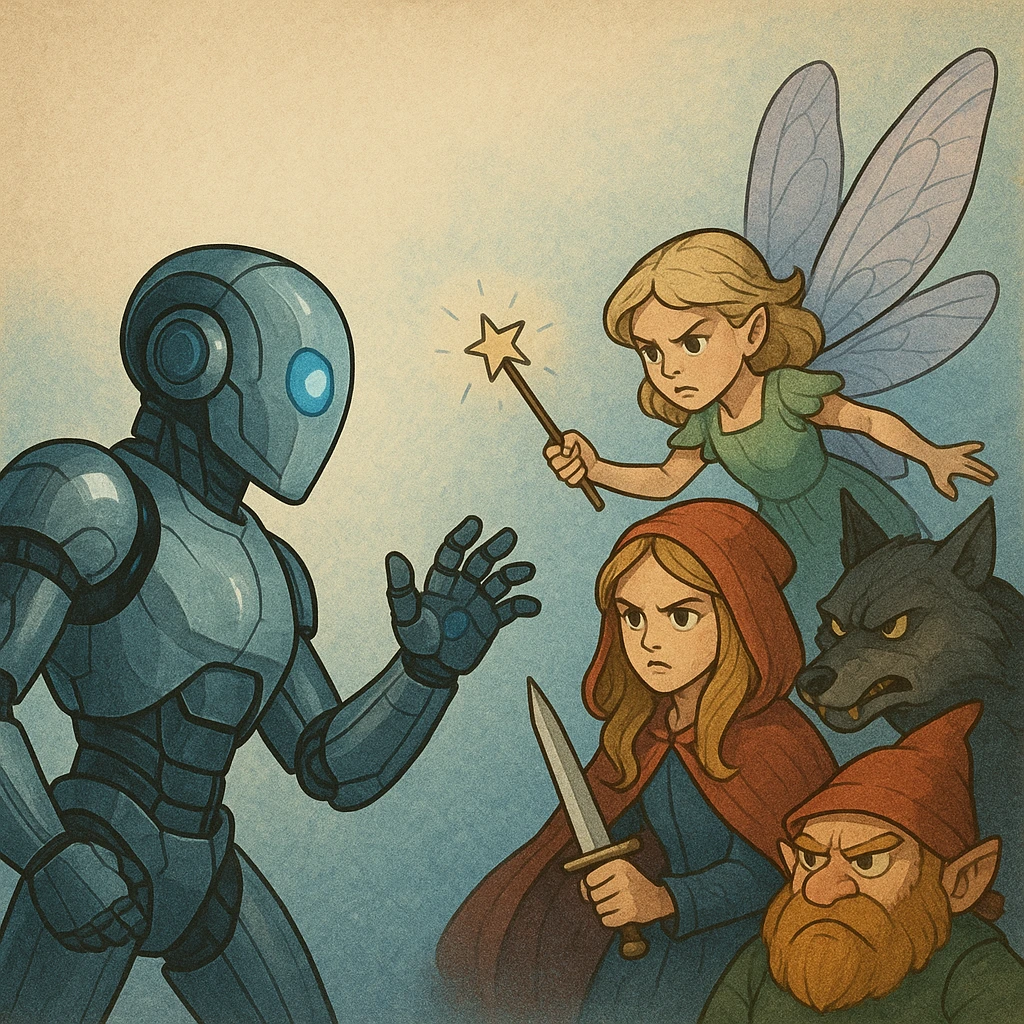
In 2025, as artificial intelligence reshapes lives globally, from Silicon Valley to Mumbai, fairy tales—timeless stories of magic and morality—face scrutiny for relevance. Children, adults, and educators ponder their value in an era of algorithms and virtual realities. AI offers instant answers, yet fairy tales provide emotional wisdom. Through books, films, and digital platforms like X, these tales adapt, teaching resilience and ethics in a tech-driven world.
In This Article:
- The Enduring Power of Fairy Tales
- AI’s Challenge to Storytelling
- Lessons for an AI World
- A Timeless Necessity
The Enduring Power of Fairy Tales
Fairy tales, from Cinderella to India’s Panchatantra, distill universal truths. A 2024 Oxford study found that 80% of children exposed to fairy tales develop stronger empathy and problem-solving skills. Stories like Hansel and Gretel teach resourcefulness, resonating in crises like climate change, a topic trending on X in 2025. Unlike AI’s data-driven logic, fairy tales offer narrative frameworks to process fear, hope, and morality, vital in an era where 60% of adults report tech-induced anxiety, per a 2024 WHO report.
AI’s Challenge to Storytelling
AI tools like Grok 3 generate stories instantly, but lack the emotional depth of folklore. A 2025 Pew Research survey notes 65% of parents prefer traditional tales over AI-crafted ones for their nuanced lessons. Fairy tales evolve—Disney’s Frozen reimagines female empowerment, while Indian retellings of Ramayana on streaming platforms blend myth with modern values. X posts tagged #FairyTales in 2025 show a 30% rise in digital adaptations, proving their adaptability.
Lessons for an AI World
Fairy tales counter AI’s cold efficiency with human-centric lessons. The Tortoise and the Hare teaches perseverance over speed, a counterpoint to AI’s instant gratification. They also foster critical thinking—essential when 40% of online content is AI-generated, per a 2024 MIT study, risking misinformation. Fairy tales’ archetypes—heroes, villains—help navigate ethical dilemmas, like AI’s role in privacy, debated fiercely on X.
A Timeless Necessity
In an AI-driven 2025, fairy tales remain vital. They ground us in human values, spark imagination, and guide ethical choices where algorithms fall short. As tech accelerates, these stories—shared around digital campfires—ensure we stay connected to our humanity, proving their timeless necessity.
-By Manoj h