


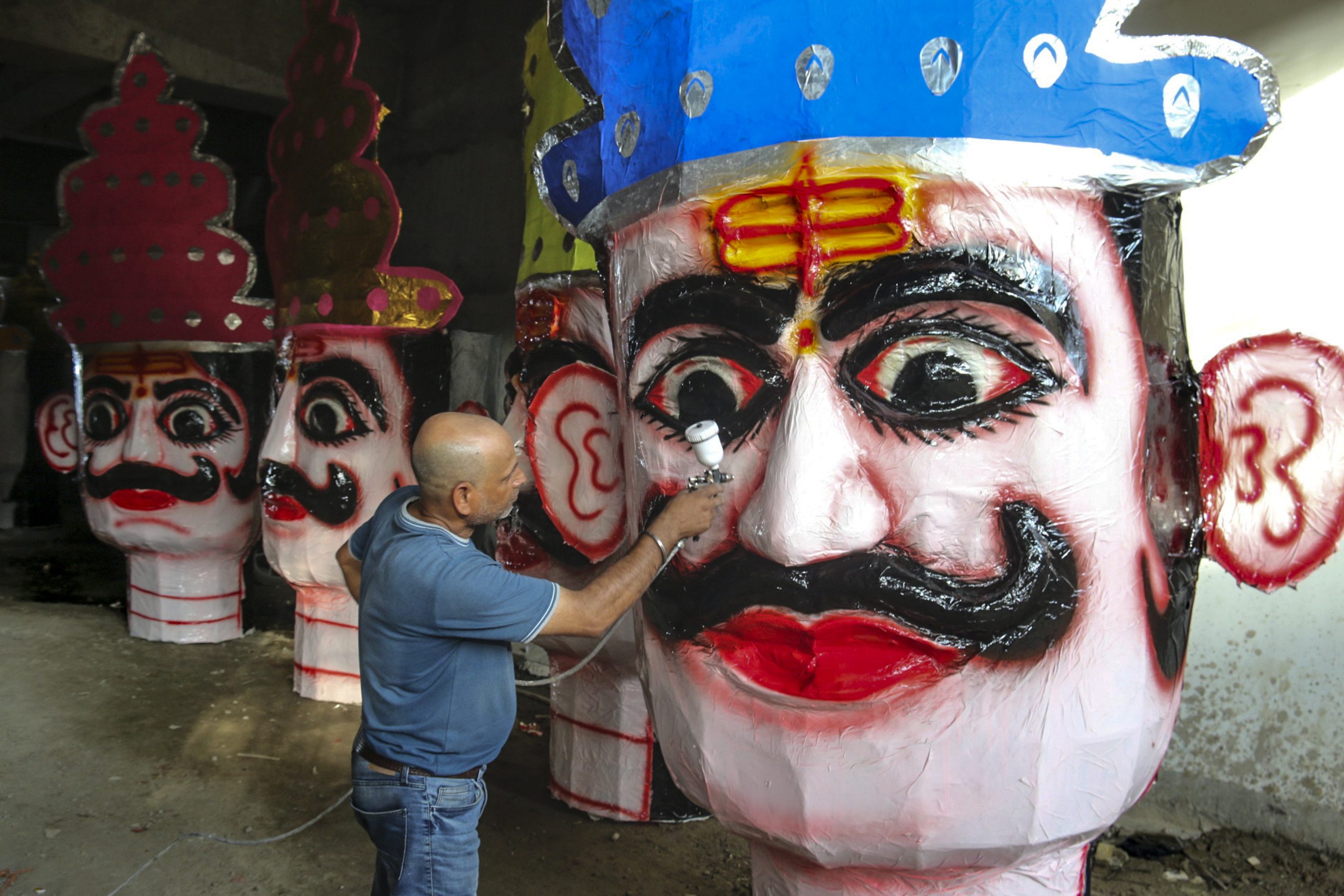
Dussehra, celebrated across India, marks the triumph of good over evil, commemorating Lord Rama’s victory over Ravana and Goddess Durga’s defeat of Mahishasura. Observed on the tenth day of Navratri, this vibrant festival, rooted in the Ramayana, unfolds through Ramlila performances, effigy burnings, and community festivities in cities like Ayodhya, Varanasi, and Delhi. Beyond its mythological grandeur, Dussehra invites introspection, urging individuals to confront their “inner Ravanas”—ego, anger, and greed—through spiritual practices and self-discipline. In India’s diverse 780-language tapestry, the festival’s universal message resonates with 1.4 billion people, amplified by 467 million social media users in the ₹101 billion cultural sphere.
The Symbolism of Ravana’s Ten Heads
Ravana, the demon king in the Ramayana, is depicted with ten heads, symbolizing ten negative traits: ego (ahamkara), anger (krodh), greed (lobh), lust, jealousy, pride, attachment, delusion, hatred, and fear. Dussehra’s burning of Ravana’s effigy signifies destroying these vices to embrace dharma (righteousness). Spiritual leaders like Sri Sri Ravi Shankar emphasize this inner battle, noting, “Ravana’s ego led to his downfall; humility is our victory.” The festival’s rituals—prayers, fasting, and Ramlila reenactments—encourage self-reflection, aligning with the pursuit of inner purity during Navratri’s culmination.
Conquering Ego: The First Inner Ravana
Ego, Ravana’s primary flaw, fuels self-importance and blinds judgment. In 2025, urban India’s fast-paced culture amplifies ego through social media validation, with 60% of youth reporting self-esteem tied to likes, per a 2024 study. Conquering ego involves humility—practicing gratitude, volunteering, or meditating, as seen in community drives during Dussehra. In Delhi’s Ramlila Maidan, thousands gather to witness Ravana’s effigy burn, a reminder to shed arrogance. Mindfulness practices, promoted by figures like Sadhguru, help individuals recognize ego’s traps, fostering empathy in personal and professional lives.
Taming Anger and Greed
Anger, another head of Ravana, disrupts relationships and health, with 30% of urban Indians reporting stress-related outbursts, per Apollo Hospitals. Dussehra’s rituals, like chanting mantras or joining processions, channel emotions constructively. Greed, Ravana’s desire for Sita, mirrors modern materialism—India’s luxury market grew 12% in 2024. Spiritual leaders advocate detachment through charity; during Dussehra, communities in Varanasi distribute food, embodying generosity. Yoga and journaling, popularized on platforms like X, help curb these vices, aligning with the festival’s call for self-control.
A Universal Call to Action
Dussehra’s message transcends religion, uniting India’s diverse communities. In 2025, digital Ramlilas and #DussehraVibes trends amplify its reach, with 2 million X posts celebrating the festival. Rural areas like Uttar Pradesh’s villages host vibrant fairs, while urban centers stage grand enactments. The burning effigy, a spectacle in 90% of Indian cities, symbolizes shedding inner flaws. Yet, challenges like commercialization threaten authenticity, urging preservation of its spiritual core.
Slaying the Inner Demons
Dussehra 2025 isn’t just a festival—it’s a mirror reflecting our flaws. By confronting ego, anger, and greed, it asks: Can we embody Rama’s virtues in a modern world? As Ravana’s effigy burns, India answers yes, embracing a path to inner victory.
-By Manoj H