


In Bollywood, some stories take the scenic route to immortality. Films that stumbled at the box office often found redemption through television reruns, streaming rediscoveries, campus memes, and word-of-mouth, eventually graduating to the coveted status of cult classics. The recent wave of re-releases and restorations has thrown a spotlight on this journey, with Andaz Apna Apna returning to cinemas in a 4K remaster and reigniting conversations about how theatrical verdicts can be swiftly overturned by time and affection. The resurgence of Tumbbad on the big screen massively improved its original run, underlining how second lives can be longer and louder than first impressions. Collectively, these cases demonstrate that a film’s opening weekend reveals its sales performance, but its long-term success reveals its longevity.
Andaz Apna Apna (1994)
When Rajkumar Santoshi’s madcap comedy opened in 1994, it collected just about ₹5.15 crore net in India and was perceived as a disappointment despite featuring Aamir Khan and Salman Khan at the cusp of superstardom. Santoshi has argued that delays, poor publicity, and a patchy release pattern meant audiences didn’t even know it was an out-and-out comedy, dampening its initial reception. Over time, television reruns, home video, and the film’s endlessly quotable dialogues turned it into a generational rite of passage. In April 2025, the film returned to theatres in a restored 4K remaster with Dolby 5.1, affirming its cult afterlife and inviting a new cohort to discover Amar and Prem’s anarchic charm.
Jaane Bhi Do Yaaro (1983)
Kundan Shah’s scathing satire was too sharp for its first bite at the box office, but its afterlife has been an education in how audacity ages into acclaim. A dark, absurdist take on corruption spanning politics, media, and business, the film’s tone and form were out of step with the commercial expectations of its time, even as its ensemble cast planted seeds of a future classic. Television circulation and campus conversations did the rest, with the Mahabharata sequence and Tarneja–Ahuja–DeMello triangle becoming shorthand for a cynical civic commons. Today, it is taught, quoted, and canonized, an early sign that Indian cinema could mix black humour with political bite and still endure.
Agneepath (1990)
Mukul Anand’s brooding crime saga, led by Amitabh Bachchan’s gravelly reinvention as Vijay Deenanath Chavan, confounded contemporary audiences and underperformed at the box office despite its ambition. The film’s gritty aesthetic and stylized dialogue took time to permeate popular culture, eventually gathering a steadfast following that saw its stature grow on television and video. Its later reputation was strong enough to inspire a successful 2012 remake, while the original’s cult adored its operatic showdown with Kancha Cheena and a morally scorched Mumbai underworld. What began as a stumble became a standard-bearer for the anti-hero arc in mainstream Hindi cinema.
Swades (2004)
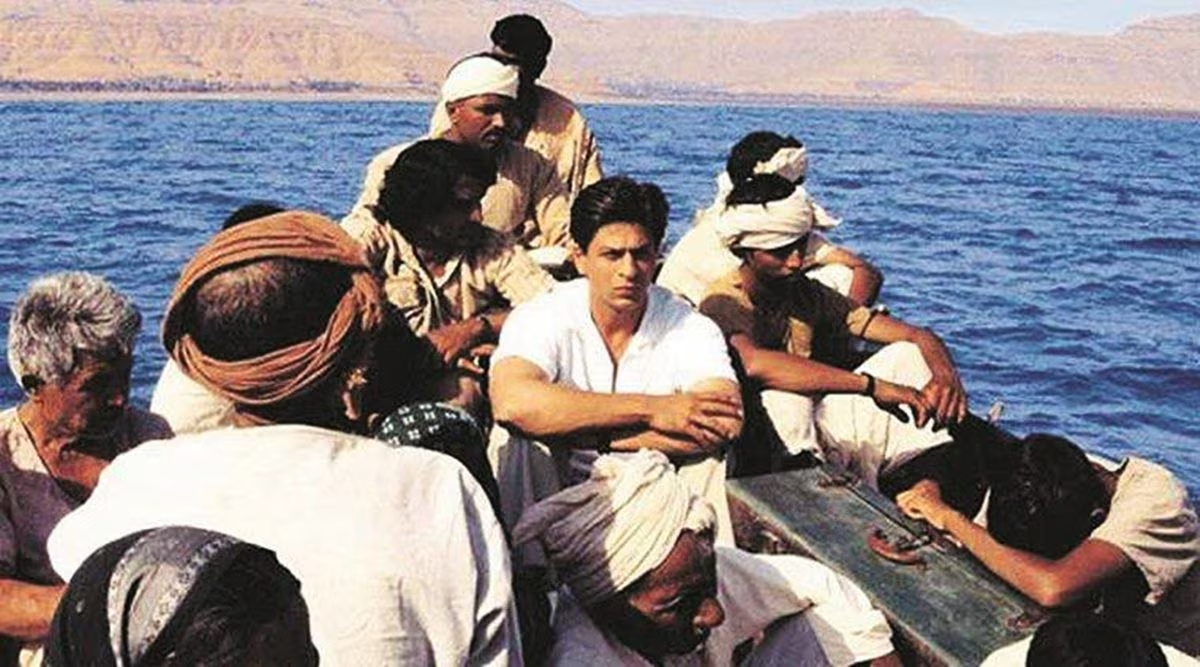
Ashutosh Gowariker’s deeply felt migration-homecoming drama met a muted commercial response, especially in overseas markets, where its first weekend numbers fell short of expectations despite Shah Rukh Khan’s star power. Contemporary reactions called it too earnest and didactic, with audiences impatient during village council scenes even after trims to the runtime. Yet its humane gaze, A.R. Rahman’s meditative score, and SRK’s restrained performance steadily reframed the film as a modern classic of conscience, inspiring countless essays and rediscoveries on streaming. In hindsight, the film’s quiet radicalism- lighting a bulb, not staging a brawl—was simply ahead of its time.
Lakshya (2004)
Farhan Akhtar’s coming-of-age war drama opened soft and finished with a flop verdict, taking about ₹23–24 crore net in India against a considerably higher cost, before gradually earning affection for its craft and character arc. Theatrical underperformance contrasted with the film’s long-tail reception, boosted by cable TV, DVDs, and later streaming, where its mountain warfare imagery and narrative of purpose resonated with younger viewers and defence aficionados. Its US run was modest, but as with many cult titles, geography mattered less than the repeat-viewing bond that grew over years. What once looked meandering now feels meditative, and its anthems and ethos continue to recruit new fans in every graduating batch.
Tumbbad (2018)
Rahi Anil Barve and Anand Gandhi’s rain-soaked fable of greed debuted to critical applause but modest commercial returns, with an original lifetime near ₹12 crore net in India on an estimated ₹15 crore budget. Word-of-mouth was fierce, and its formal audacity, a uniquely Indian gothic horror steeped in myth, primed it for rediscovery. In 2024, a nationwide theatrical re-release turned the tide spectacularly, adding over ₹30 crore net and effectively transforming its box office trajectory from flop to hit when counted cumulatively. Its second coming confirmed what cinephiles had insisted all along: some films are built not for an opening weekend, but for eternity’s echo.
The Second Life of Cinema
In the end, these six titles remind us that box office numbers are only the first verdict, never the final one. Changing politics, evolving taste, streaming rediscoveries, and late-blooming fan communities have all conspired to rescue these films from the “flop” label and install them as reference points for a new generation of viewers and filmmakers. Their journeys from empty theatres to packed retrospective screenings and meme culture prove that risk-taking, formally ambitious cinema often needs time to find its audience. As Bollywood navigates an era of algorithms and opening-weekend obsession, the afterlife of these movies is a quiet but powerful counter-narrative: genuine originality may fail on Friday, but it rarely stays forgotten. In the long run, it is the films that dare and endure that end up rewriting the industry’s idea of success.
By – Sonali