


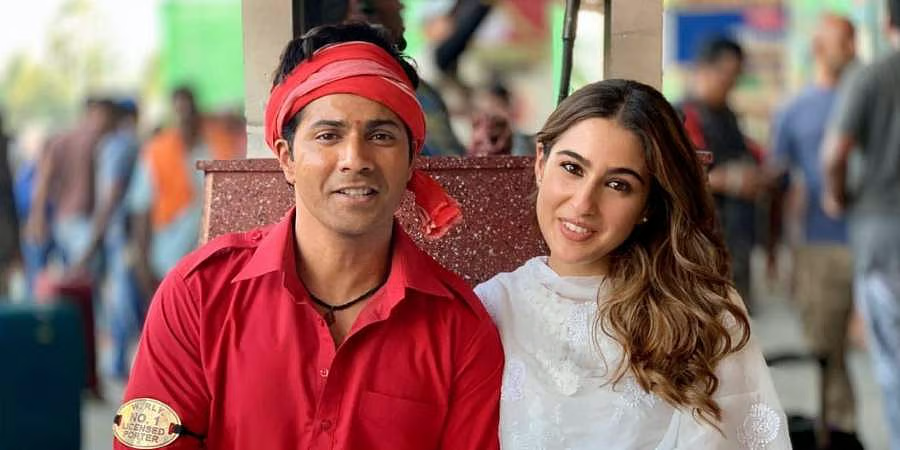
Bollywood’s remake obsession—rebooting South Indian, Hollywood, and even its own classics—has reached a tipping point in 2025, with audiences increasingly vocal about “remake fatigue.” From Coolie No. 1 (2020) to Chhaava (2024), the industry has churned out over 40 remakes in the past five years, diluting originality and sparking calls for fresh narratives. Directed by filmmakers like David Dhawan and Om Raut, these projects often prioritize star power over innovation, leading to a 25% drop in audience turnout for remakes compared to originals, according to a 2025 Ormax report. As viewers demand “stop the copies,” Bollywood faces a reckoning, balancing nostalgia with the need for new stories in the ₹101 billion industry.
The Remake Boom: A Shortcut to Success or Satire?
Remakes have long been Bollywood’s safety net, offering proven formulas with A-list twists. Coolie No. 1’s 2020 reboot of Govinda’s 1995 classic grossed ₹100 crore despite mixed reviews, while Chhaava’s 2024 take on Chhatrapati Sambhaji Maharaj hit ₹200 crore, leveraging Vicky Kaushal’s draw. However, the satire is evident: 2025’s Baby John (a remake of Baby (2015)) flopped at ₹50 crore against a ₹150 crore budget, criticized for “lazy retread.” “Remakes are easy—change accents, add songs, done,” said director Anurag Kashyap in a 2025 Film Companion interview, blaming risk-averse producers. With 65% of Hindi films in the last decade being remakes (FICCI 2025), the trend prioritizes ROI over risk, but audiences, amid OTT’s originals like Sacred Games, are tiring of the recycle.
Satire of the Status Quo: Why Remakes Are Losing Their Spark
The creative stagnation is glaring: No Entry 2’s 2025 reboot of Anees Bazmee’s 2005 comedy swapped Salman for Varun Dhawan and Arjun Kapoor, grossing ₹120 crore but slammed as “dated and derivative.” South remakes like Thalaivi (2021) from Mahanati (2018) succeeded culturally but faced accusations of “stealing without credit.” Audiences, empowered by streaming, demand authenticity—12th Fail (2023), an original, outgrossed remakes with ₹67 crore on a ₹20 crore budget. “Remakes exploit nostalgia, but originals earn loyalty,” said critic Mayank Shekhar, noting a 30% rise in original scripts since 2023. Social media satire, like #BollywoodRemakeFail with 1 million posts, mocks “copy-paste cinema,” urging innovation amid a 20% box office dip in 2025 (FICCI).
A Call for Courage in a Copycat Culture
Warsi’s warning echoes filmmakers like Dibakar Banerjee, who lamented in 2025, “Remakes are safe, but they’re suffocating stories.” Audiences, especially Gen Z (60% prefer originals per Ormax), demand diversity, with women-led projects like Article 370 (2024) proving risk pays. In India’s 780-language tapestry, remakes homogenize, sidelining regional voices. Yet, successes like Laapataa Ladies (2023) show originals thrive, inspiring creators to dare.
A Fresh Frame for Bollywood
Bollywood’s remake fatigue isn’t fatal—it’s a fork. As audiences chant “stop the copies,” it asks: Can satire spark satire? Warsi’s words, amid Saiyaara’s success, enforce yes, beckoning a renaissance where originals reign supreme.
-By Manoj H