


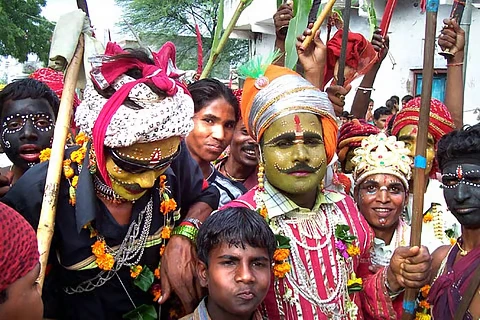
In the tribal belts of southern Rajasthan, particularly in Udaipur, Rajsamand, and Chittorgarh, the Bhil community has preserved a mystic, immersive, and defiant tradition called Gavari. This 40-day ritual theatre is not merely performance art — it is a spiritual journey, a social commentary, and a celebration of tribal identity and ecological harmony.
In This Article:
- What Makes Gavari Unique?
- Oral Wisdom in Action
- Recognised Yet Vulnerable
- Moving Ahead: A Folk Soul That Refuses to Fade
Held annually during the monsoon months (usually August to September), Gavari is performed without any written script, microphones, or instruments. Yet it mesmerizes audiences and scholars alike with its raw energy and deeply rooted oral tradition.
What Makes Gavari Unique?
- Duration: A 40-day ritual festival during which no non-vegetarian food, alcohol, or even leather is allowed.
- Participants: Male performers from Bhil villages — often farmers — who portray gods, demons, queens, and clowns.
- Spiritual Process: No rehearsal or stage, the performers enter trance-like states believed to be possessed by deities.
- No Commercial Gain: No tickets, no profit — the performances are considered offerings to the divine.
The performance includes music, dialogue, satire, and symbolic dance, with characters such as Bhairu Baba, Ravana, and Queen Hadmati taking center stage. Gavari’s narratives blend mythology, tribal memory, and moral lessons, often challenging patriarchy, feudalism, and environmental destruction.
Oral Wisdom in Action
Unlike conventional folk arts, Gavari is not scripted and thrives entirely on oral transmission from elders to youth. The Bhils see this as an act of resistance against cultural erasure and domination by mainstream religious and entertainment forms. It is also used to voice local concerns, be it over land rights, gender roles, or natural resource depletion.
Recognised Yet Vulnerable
While Gavari has received increasing attention — even being showcased in cities and academic festivals — it still faces threats:
- Lack of institutional support
- Shrinking village participation due to migration and schooling conflicts
- Risk of dilution through commercialization
Despite these challenges, many Bhil elders and youth continue to defend it as a sacred inheritance. Efforts by scholars and cultural activists to document and archive Gavari have increased in recent years, including petitions for UNESCO heritage recognition.
Moving Ahead: A Folk Soul That Refuses to Fade
Gavari is not just a tribal performance — it is a ritual of resilience. In a rapidly modernizing world, the Bhils’ sacred theatre reminds us of a time when art was prayer, dance was protest, and storytelling was survival.
By – Nikita